

Daily Dose Of Jazz…
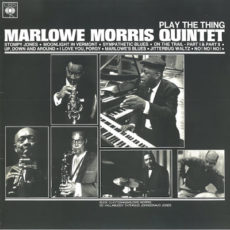
Marlowe Morris, born May 16, 1915 in New York City, New York and learned drums, harmonica, and ukulele as a child. He accompanied June Clark from 1935 to 1937, then played solo for a few years before playing with Coleman Hawkins in 1940–41.
After serving in the Army during World War II, he worked with Toby Browne, Al Sears, Sid Catlett, and Tiny Grimes in addition to leading his own trio in the early and middle 1940s. Marlowe also appeared in the film Jammin’ the Blues in 1944. He quit playing full-time and worked in a post office in the late Forties, then returned in 1949 to play primarily solo organ.
He led a trio in the 1960s with Julian Dash as one of his sidemen, recording for Columbia Records. Morris also recorded with Lester Young, Ben Webster, Big Joe Turner, Sister Rosetta Tharpe, Joe Williams and Jimmy Rushing.
A distant relative of jazz pianist Fats Waller, pianist and Hammond organist Marlowe Morris passed away on May 28, 1978 at the age of 63 in New York City.

More Posts: bandleader,history,instrumental,jazz,music,organ,piano
Daily Dose Of Jazz…
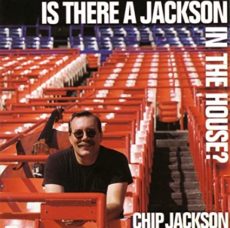
Chip Jackson was born on May 15, 1950 in Rockville, New York. He became a jazz bassist and over the course of his career, he became a member of the Chuck Mangione Quartet, Manhattan Jazz Orchestra, Pratt Brothers Big Band, Red Rodney Quintet, The Danny Gottlieb Trio, The Super Septet, Woody Herman And His Orchestra, Woody Herman And The Thundering Herd.
As a sideman and session musician, he has recorded with Al Di Meola, Teddy Edwards, Danny Gottlieb, Elvin Jones, Jack Walrath, Ernestine Anderson, Michael Wolff, Liza Minelli, Sonny Fortune, Anita O’Day, Ian Shaw Chris Connor, and Gerry Mulligan among others.
Bassist Chip Jackson, who was Billy Taylor’s favorite, continues to perform and record.
More Posts: bandleader,bass,history,instrumental,jazz,music
The Quarantined Jazz Voyager
The Quarantined Jazz Voyager wants you to be safe and encourages your diligence in staying healthy by not rushing to get back to normal. As we continue to practice social distancing by staying home, we can listen to great music and share that music with each other weekly to give you a little insight into the music choices during this sabbatical from jet setting investigations of jazz around the globe.
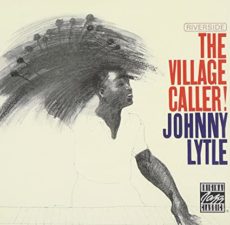
The world will be back and so will I. Until that outcome comes to fruition, this week’s entry is the 1964 album by vibraphonist Johnny Lytle titled The Village Caller, released on the Riverside Record label.
The quartet that filled out his quintet comprised of Milton Harris on organ, bassist Bob Cranshaw, drummer William “Peppy” Hinnant, and percussionist Willie Rodriguez recorded eight tunes of which four were contributed by Lytle. The compositions recorded are: The Village Caller (Lytle), On Green Dolphin Street, Can’t Help Lovin’ Dat Man, Pedro Strodder (Lytle), Kevin Devin (Lytle), You Don’t Know What Love Is, Unhappy, Happy Soul (Lytle), and Solitude.

More Posts: adventure,club,genius,jazz,museum,music,preserving,quarantine,restaurant,travel
Daily Dose Of Jazz…
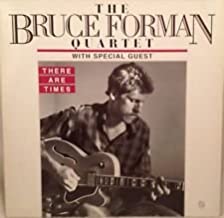
Bruce Forman was born in Springfield, Massachusetts on May 14, 1956 and first took piano lessons at an early age before picking up the guitar at age thirteen. In 1971, his family moved to San Francisco, California where he led his own groups in the area and performed with local jazz musicians, such as Eddie Duran, Vince Lateano, and Eddie Marshall.
He would go on to perform and record with nationally renowned musicians, such as Ray Brown, George Cables, Joe Henderson, Freddie Hubbard, Bobby Hutcherson, and Woody Shaw.
He performed regularly at the Monterey Jazz Festival and played with Richie Cole from 1978 to 1982. Bruce recorded his first of sixteen albums to date, Coast To Coast, in 1981. His most successful album as a leader was 1992’s Forman on the Job, which hit #14 on the U.S. Billboard Top Jazz Albums chart.
As a sideman he has recorded with Richie Cole, Clint Eastwood, Dan Hicks, Roger Kellaway, Mark Murphy, Charlie Shoemake, Lanny Morgan, Tom Harrell, Rare Silk, Dave Eshelman, Lorez Alexandria, Geoff Muldaur, Les DeMerle, Tony Monaco, Molly Ringwald, Chuck Deardorf. Guitarist Bruce Forman continues to perform, record and tour.
More Posts: bandleader,composer,guitar,history,instrumental,jazz,music

Daily Dose Of Jazz…
Squire Gersh was born William Girsback on May 13, 1913 in Astoria, Oregon. In the Thirties, he played in San Francisco, California with Lu Watters, Bob Scobey, Turk Murphy, and Mutt Carey. He went on to record with Watters in 1942 and with Murphy multiple times between 1950 and 1966.
Gersh’s agile double bass playing may be heard on Some Of These Days, recorded by Darnell Howard’s Frisco Footwarmers in San Francisco in 1950. He replaced bassist Arvell Shaw and accompanied Louis Armstrong on recording sessions with is All-Stars in “The Edsel Show” on October 13, 1957 and went on a tour of South America with Armstrong between 1956–58.
He then went on to play in Europe with Kid Ory and Red Allen in 1959, along with drummer Alton Redd and pianist Cedric Haywood making up the rhythm section. Never leading his own recordings, little is known about the musician from the Sixties until his death. Tubist and double-bassist Squire Gersh, who played in the traditional jazz genre, passed away on April 27, 1983 in San Francisco.