

Daily Dose Of Jazz…
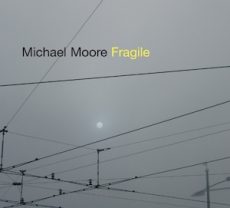
Michael Moore was born December 4, 1954 and raised in Eureka, California. He studied music at Humboldt State and in 1977 graduated from the New England Conservatory of Music, where he studied with Jaki Byard and Gunther Schuller, and was a classmate of Marty Ehrlich. He played in a variety of musical contexts, especially those in support of theatre and dance groups.
By 1982 he was a regular member of Misha Mengelberg’s Instant Composers Pool and had moved to Amsterdam. He was also a member of Georg Gräwe’s Grubenklang Orchester. Michael is one-third of the Clusone Trio with cellist Ernst Reijseger and drummer Han Bennink. Originally meant only to play a single date at a festival in Clusone, Italy, the trio toured irregularly for several years and recorded six albums, including one of freely-interpreted Irving Berlin compositions.
His debut recording as a leader was in 1992 but it was with 1994’s Chicoutimi that he began to earn recognition as a composer. The drummerless trio on this album had Fred Herschon piano, and bassist Mark Helias was inspired by the duo recordings of Lee Konitz and Gil Evans.
He put together a jazz quintet in 2005 and the album Osiris. In 2013, he performed with InstanPool, a group of international musicians making improved music and occasionally playing a composition.
Saxophonist and clarinetist Michael Moore, who has recorded twenty-two albums as a leader, continues his journey in performing and recording.

More Posts: bandleader,clarinet,history,instrumental,jazz,music,saxophone
Daily Dose Of Jazz…
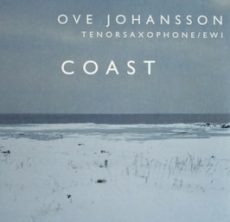
Ove Johansson was born on December 3, 1936 and didn’t start playing the tenor saxophone until the age of 13. However, he gave the clarinet a chance for a couple of years. Very early in his career he got into a professional jazz group playing before starting his own groups where he spent most of the time as a band leader.
For a short period Ove was a sideman with Swedish saxophonist Lars Gullin. From 1972 to 1994 he was a teacher of saxophone, improvisation, ensemble and harmony at the School of Music, Gothenburg University. He went on to start his own small record label LJ Records in 1989 and recorded his own and new Scandinavian jazz music internationally.
The end of the Fifties saw Johansson leading his own groups and a driving force of the Swedish jazz scene. He was musical director of Mwendo Dawa. His musical work stretched from straight ahead, free form and electronic jazz to the acoustic and electro acoustical mix of today.
He toured Europe, North and South America, and China, with Mwendo Dawa. He toured with the trio Natural Artefacts with performances both in the world of improvisation music as well as the world of electro acoustic music.
Tenor saxophonist and composer Ove Johansson, who produced 35 albums with his own material and with the group, died on December 25, 2015.
More Posts: bandleader,composer,history,instrumental,jazz,music,saxophone
On The Bookshelf
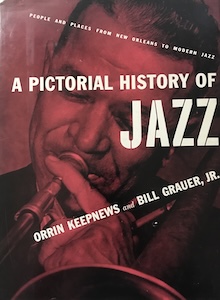
A Pictorial History Of Jazz | Orrin Keepnews & Bill Grauer Jr.
A classic photographic collection documenting jazz history, particularly up to the mid-1960s, though some note its coverage of later styles is limited. Praised for its extensive and captivating black-and-white photographs, the text may be less substantial than the images and the coverage of later jazz movements is not as thorough.
The book is often described as a valuable visual reference for jazz enthusiasts, and some consider it an essential purchase, though older editions may be harder to find in good condition.
A Pictorial History Of Jazz: 1966 Crown Publishers, Inc.

Daily Dose Of Jazz…
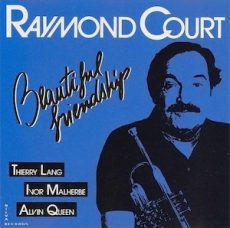
Raymond Court was born on December 2, 1932 in Lausanne, Switzerland. He began playing trumpet in his late teens, but by age 20 was playing in Raymond Droz’s band from 1952 to 1956.
Later in the 1950s he played with Flavio Ambrosetti and Kurt Weil, and the early 1960s saw him with Daniel Humair, Martial Solal, and Rene Urtreger.
Starting in the mid-Sixties, he began concentrating on a new career in woodworking and cabinetry, but returned to music after about a decade. He recorded as a leader in the 1980s and with Weil again and Charly Antolini in the 1990s.
Trumpeter Raymond Court died March 03, 2012.
More Posts: bandleader,history,instrumental,jazz,music,trumpet
Daily Dose Of Jazz…
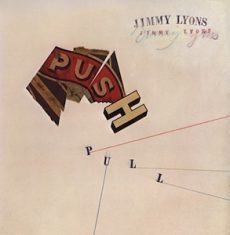
Jimmy Lyons was born on December 1, 1931 in Jersey City, New Jersey and raised there until the age of nine, when his mother moved the family to Harlem and then the Bronx in New York City. In the mid-1940s he got his first saxophone and took lessons from Buster Bailey.
After high school he was drafted into the United States Army and spent 21 months on infantry duty in Korea before spending a year playing in army bands. Once discharged he enrolled at New York University but by the end of the Fifties, Lyons was supporting his music by working for the United States Postal Service.
1960 saw Jimmy followed Archie Shepp into the saxophone role in the Cecil Taylor Unit. His post-Parker sound and strong melodic sense became a defining part of the sound of that group, from the 1962 Cafe Montmartre sessions onwards. During the 1970s, he ran his own ensemble, with bassoonist Karen Borca and percussionist Paul Murphy and was part of the loft jazz movement.
Lyons’ group and Cecil Taylor Unit continued a parallel development throughout the 1970s and 1980s, often involving the same musicians, including trumpeter Raphe Malik, bassist William Parker and percussionist Murphy.
In 1976, Lyons performed in a production of Adrienne Kennedy’s A Rat’s Mass directed by Cecil Taylor at La MaMa Experimental Theatre Club in the East Village of Manhattan.
Alto saxophonist Jimmy Lyons, who recorded eight albums as a leader, twenty-nine as a sideman and performed in the free jazz genre, died from lung cancer at the age of 54.
More Posts: bandleader,history,instrumental,jazz,music,saxophone