

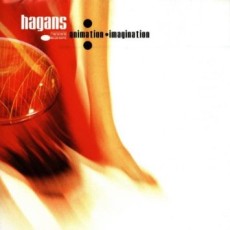
Daily Dose Of Jazz…
Tim Hagans was born on August 19, 1954 and grew up in Dayton, Ohio. His early inspiration came from Miles Davis, Freddie Hubbard and Thad Jones. In 1974 he joined the Stan Kenton band with whom he played until 1977, when he then toured with Woody Herman. Leaving for Europe he lived in Malmo, Sweden, which was a hotbed of the European jazz scene. He toured extensively and played with Dexter Gordon, Kenny Drew, Horace Parlan and Thad Jones. He would later dedicate For the Music Suite, a 40-minute piece for jazz orchestra to Jones.
Tim’s first recorded composition, I Hope This Time Isn’t The Last, appears on Thad Jones Live at Slukefter. In 1987 he moved to New York City and has since performed with Maria Schneider, the Yellowjackets, Steps, Secret Society, and Gary Peacock. He has worked extensively with producer and saxophonist Bob Belden on a variety of recordings and live performances, including their ongoing Animation/Imagination project.
As an educator Hagans has taught master classes at universities both stateside and abroad including the University of Cincinnati and Berklee College of Music. He has held the position of Artistic Director and Composer-in-Residence for the Norrbotten Big Band in Lulea, Sweden for which his Avatar Seesions: The Music of Tim Hagans was nominated for a Grammy. He has had several commissions by the NDR Big Band, Jazz Baltica, and the Barents Composers Orchestra.
Trumpeter Tim Hagans has been honored with awards, a featured subject in the documentary Boogaloo Road, a featured soloist on the soundtrack for the film The Score with Marlon Brando, Edward Norton and Robert DeNiro. He currently performs, tours, and records with the Tim Hagans Quartet: Tim Hagans, trumpet; Vic Juris, guitar; Rufus Reid, bass, and Jukkis Uotila, drums.

Inspire A Young Mind
More Posts: trumpet
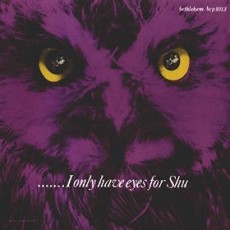
Daily Dose Of Jazz…
Eddie Shu was born Edward Shulman on March18, 1918 in New York City and learned violin and guitar as a child before picking up the saxophone as a teenager. He began his professional career in 1935 in Brooklyn and for the seven years leading up to his service in the U.S. Army, he performed in vaudeville and night clubs as a ventriloquist and played harmonica with the Cappy Barra harmonica Band.
While serving in the Army from 1942 to 1945 with Stan Harper, the two were assigned to a special unit to entertain the troops. He also played in various bans including with Maurice Evans in the Pacific. After the war and through the 1950s Eddie performed with Tadd Dameron, George Shearing, Johnny Bothwell, Buddy Rich, Les Elgart, Lionel Hampton, Charlie Barnet, Chubby Jackson, and Gene Krupa.
By the 1960s Shu moved to Florida, playing locally as well as with the Louis Armstrong All-Stars, Lionel Hampton and Gene Krupa once again. He was a member of the vocal jazz group Rare Silk in 1980. During this period, he performed with this group in and around Boulder, Colorado and also performed a 6-week Department of Defense tour. He would record his final date on the Island Jazz Label “Shu-Swings” With The Joe Delaney Trio, playing tenor and alto saxophones, clarinet, trumpet and also revisit’s his 1954 78 single “Ruby” on chromatic harmonica.
Eddie Shu died on July 4, 1986 in St. Petersburg, Florida while living in Tampa. The swing and jazz multi-instrumentalist also had a high proficiency on the accordion and was a popular comedic ventriloquist.
Dose A Day – Blues Away
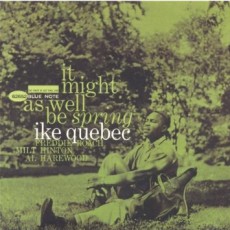
Daily Dose Of Jazz…
Ike Quebec was born Ike Abrams Quebe on August 17, 1918 in Newark, New Jersey and was both an accomplished dancer and pianist. He switched to tenor sax as his primary instrument in his early twenties, and quickly earned a reputation as a promising player. His recording career started in 1940, with the Barons of Rhythm and from 1944 and 1951 he worked intermittently with Cab Calloway.
Over the course of his career Quebec recorded or performed with Frankie Newton, Hot Lips Page, Roy Eldridge, Trummy Young, Ella Fitzgerald, Benny Carter, Sonny Clark, Dodo Green, Jimmy Smith and Coleman Hawkins. He recorded as a leader for Blue Note records in the Forties era, and also served as a talent scout for the label, helping pianists Thelonious Monk and Bud Powell come to wider attention. Due to his exceptional sight-reading skills, he was also an un-credited impromptu arranger for many Blue Note sessions.
His struggles wit drug addiction and the fading popularity of big band music forced Ike to record only sporadically during the 1950s, though he still performed regularly. He kept abreast on new developments in jazz, and his later playing incorporated elements of hard bop, bossa nova and soul jazz. He occasionally recorded on piano, as on his 1961 Blue & Sentimental album, where he alternated between tenor and piano, playing the latter behind Grant Green’s guitar solos.
In 1959 he began what amounted to a comeback with a series of albums on the Blue Note label. Blue Note executive Alfred Lion, though always fond of his music, was unsure how audiences would respond to the saxophonist after a decade of low visibility. So in the mid-to-late 1950s, they issued a series of singles for the juke-box market and audiences ate them up, leading to a number of warmly-received albums. However, his comeback was short-lived when Ike Quebec, the tenor saxophonist with the big breathy sound, passed away from ling cancer on January 16, 1963.

Daily Dose Of Jazz…
William John Evans was born August 16, 1929 in Plainfield, New Jersey and grew up in a turbulent household of abuse. While staying with his aunt family somewhere between age 3 and five he soon began to play what he had heard during his brother’s class and soon he would also receiving piano lessons. At age 7, Bill began violin lessons and also flute and piccolo but eventually dropped those instruments, though it is believed they later influenced his keyboard style.
From age 6 to 13 Evans would only play classical music scores of Mozart, Beethoven and Schubert. During high school he was exposed to Stravinsky and Milhaud but also the jazz of Tommy Dorsey and Harry James. At 13 he stood in for a sick pianist in Buddy Valentino’s rehearsal band where he got his first deviation from the written music, in an arrangement of Tuxedo Junction, leading him to listen to Earl Hines, Coleman Hawkins, Bud Powell, George Shearing, Stan Getz and Nat King Cole among others.
Bill was soon playing dances and weddings throughout New Jersey and then formed his own trio, met Don Elliott, and bassist George Platt who taught him the harmonic principles of music. He would go on to study at Southeastern Louisiana University and in 1955 he moved to New York City where he worked with bandleader and theorist George Russell. In 1958, he joined the Miles Davis Sextet, where he was to have a profound influence. In 1959, the band, then immersed in modal jazz recorded Kind of Blue, the best-selling jazz album of all time.
In late 1959, Evans left the Miles Davis band and began his career as a leader with Scott LaFaro and Paul Motian, a group now regarded as a seminal modern jazz trio. In 1961, ten days after recording the highly acclaimed Sunday at the Village Vanguard and Waltz for Debby, LaFaro died in a car accident. After months of seclusion he re-emerged with bassist Chuck Israel. In 1963, Evans recorded his first innovative solo project Conversations with Myself, and in ’66 met bassist Eddie Gomez who he would work with for eleven years.
He would work with Don Elliott, Tony Scott, Mundell Lowe, Jerry Wald, Lucy Reed, George Russell, Dick Garcia, Art Farmer, Barry Galbraith, Milt Hinton, Joe Puma, Charles Mingus, Oliver Nelson, Eddie Costa, John Coltrane, Cannonball Adderley, Paul Chambers, Philly Joe Jones, Sam Jones, Marc Johnson, Tony Bennett, Marty Morell, Joe LaBarbera and the list goes on.
Despite his success as a jazz artist, Bill suffered personal loss and struggled with drug abuse. Both his girlfriend Elaine and his brother Harry committed suicide, and he was a long time user of heroin and later cocaine. As a result, his financial stability, personal relationships and musical creativity all steadily declined during his later years.
On September 15, 1980 pianist, compose and arranger Bill Evans who played in the modal, third stream cool and post-bop genres, passed away at age 51in New York City from complications due to peptic ulcer, cirrhosis, bronchial pneumonia and untreated hepatitis. His recordings for Riverside, Fantasy and Verve record labels left a seminal collection for the avid and casual listener, he was inducted in the Down Beat Jazz Hall of Fame, was nominated for 31 Grammys, winning seven awards, and was posthumously awarded the Grammy Lifetime Achievement Award.
Give The Gift Of Knowledge
More Posts: piano
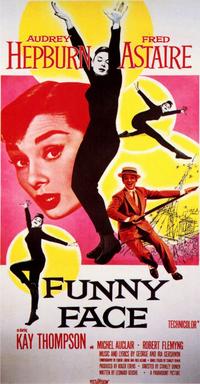
Hollywood On 52nd Street
George and Ira Gershwin composed S’Wonderful and How Long Has This Been Going On were composed for the 1927 Broadway musical Funny Face by George and Ira Gershwin. S’Wonderful was used in the 1951 musical movie An American In Paris before making its appearance in this film. How Long Has this Been Going On was dropped from the Broadway musical and makes its introduction when Audrey Hepburn sing it in this 1957 movie musical of Funny Face that also starred Fred Astaire in a reprisal of his Broadway role. Although having the same title as the Broadway musical, the plot is totally different and only four of the songs in the stage musical are included. Kay Thompson also stars in a supporting role as Astaire portrays still photographer Dick Avery, loosely based on photographer Richard Avedon.
The Story: Maggie Prescott (Thompson) is a fashion magazine publisher and editor for Quality magazine, looking for the next big fashion trend. She wants a new look to be both “beautiful” and “intellectual”. She and famous fashion photographer Dick Avery want models that can “think as well as they look.” The two brainstorm and come up with the idea to find a “sinister-looking” bookstore in Greenwich Village and discover “Embryo Concepts.”
They put Jo Stockton (Hepburn) in the first shot and toss her out of the store until the shoot ends. Jo wants to go to Paris to hear famed philosopher Emile Flostre speak on empathicalism. Dispatched on an assignment, New York City-based fashion photographer Avery is struck by Jo’s beauty, a shy bookstore employee he’s photographed and he believes has the potential to become a successful model. He gets Jo to go with him to France, where he snaps more pictures of her against iconic Parisian backdrops. In the process, they fall for one another, only to find hurdles in their way.
Joao Gilberto & Lonette McKee/Dexter Gordon
Sponsored By

www.whatissuitetabu.com