

Daily Dose Of Jazz…
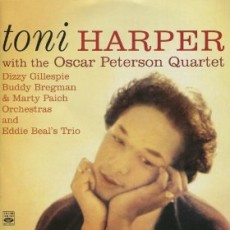
Eddie Beal was born June 13, 1910 in Redlands, California. He started on drums but switched to piano in his teens. Early in the 1930s he worked in the orchestras of Earl Dancer and Charlie Echols and 1933 to 1936 he toured China with Buck Clayton. Following that stint he freelanced in California with Maxine Sullivan and others until 1941.
After military service from 1941–43, Beal accompanied Ivie Anderson and then led his own trio accompanying Billie Holiday at one point. He also worked in the Spirits of Rhythm. As a composer, he penned the tunes “Softly” (covered by Holliday) and “Bye and Bye”, a hit for The Turbans. He plays on the soundtrack to the 1951 film The Strip, he also makes an appearance in the film.
His later recording credits included but not limited to work with Toni Harper, Jimmy Mundy, Herb Jeffries, Helen Humes and Red Callender. He led his own group in Las Vegas, Nevada in 1973-74, and in 1974-75 he played with Tommy Dorsey.
Pianist Eddie Beal passed away on December 15, 1984 in Los Angeles, California.

Give A Gift Of Jazz – Share
More Posts: piano
Daily Dose Of Jazz…
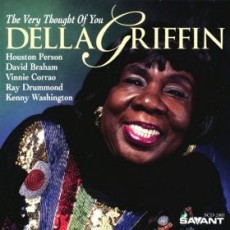
Della Griffin was born June 12, 1925 in Newberry, South Carolina but grew up in New York, the 19th of 20th children. She greatly admired and was influenced by Count Basie, Charlie Barnet, and most specifically Billie Holiday. She began singing when she was 12 and a few years after her graduation in 1943 from Jamaica High School in Queens, New York, she began singing professionally.
1950 found Griffin and Frances Kelley forming one of the first all female R&B singing group that played in small clubs whenever they could for about a year. In 1951, Della invited Jerry Blaine, the owner of Jubilee Records, to hear the group perform. So impressed by the group that he signed them the next day and in January 1952 Jubilee released “The Enchanters” first record, they began touring, dropped their second record and two members left the group.
Della and Kelley were determined to continue their careers and replaced the two members becoming the “Dell-Tones” after lead singer and drummer Della. They went on to record with Brunswick and Rainbow record labels, and toured with Jimmy Forrest. By 1957 the Dell-Tones slowly began to drift apart and Della left to perform on her own.
Over the years Griffin migrated towards jazz touring with and playing in support to many artists including Sonny Stitt, Benny Green, Illinois Jacquet, and Etta Jones. She began performing again in New York City clubs including the Blue Note and The Blue Book where she stayed for years.
In 1984, Della was hit by a car and took a break from singing. She came back as a featured singer that garnered her more attention than her drumming. Recording with Houston Person, she began performing overseas at age 88, she has since all but ceased her performances and appearances. While singing remained her passion, vocalist Della Griffin, who was also proficient on the drums, alto saxophone, and piano, transitioned in New York City on August 9, 2022, at the age of 100..
Inspire A Young Mind
Daily Dose Of Jazz…
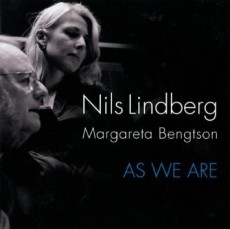
Nils Lindberg was born on June 11, 1933 in Uppsala, Sweden to a family of musicians from Gagnef, Dalecarlia. His musical taste and influence come from the traditional folk music of his home. He studied piano as a child and classical composition at the Royal College of Music in Stockholm with Lars-Erik Larsson and Karl-Birger Blomdahl.
Lindberg is known both as a jazz composer and musician, but also compases for choir and symphony. Several of his works are written in a style combing elements of jazz, Swedish folk music and classical music. He has recorded sixteen albums as a leader since his debut with Sax Appeal in 1960.
For several years Nils Lindberg worked together with one of Sweden’s leading vocalists Alice Babs, as a composer, arranger, pianist and conductor. He has also written arrangements for Duke Ellington, with whom Babs performed and recorded with. He has collaborated with internationally renowned artists like Josephine Baker, Mel Tormé and Judy Garland, and has toured Europe and Brazil, as well as the United States, where he has also been invited to give lectures.
Nils Lindberg, pianist and composer was awarded the Jussi Björling scholarship in 1990 and the medal Litteris et Artibus in 2006 for his contributions to music. He continues to compose, perform, record and tour.
Dose A Day – Blues Away
More Posts: piano
Daily Dose Of Jazz…
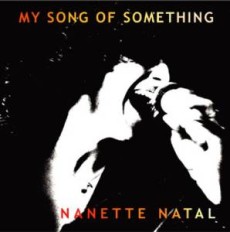
Nanette Natal was born on June 10, 1945 in Brooklyn, New York. She started her professional career as a classical singer in 1960 and during this period she was a member of the Helen Hayes Young People’s Theater Guild. In the early ’60s, she performed numerous concerts in New York with that group. She then went on to work the Bitter End Coffee House Circuit, performing her own material, which developed into blues and rock, singing and playing guitar and performing at universities and concert halls throughout the country.
By the ’70s, she recorded for Vanguard and Evolution Records, worked with Mahalia Jackson, Odetta, Bonnie Raitt and Rick Nelson along with TV appearances, most notably with Barbara Walters on The Today Show. She was also active on the club circuit playing such venues as the Gaslight and the Au Go-Go.
Unhappy with the constrictions of the record companies, it was in the mid-Seventies that she dissolved her recording contracts and set herself upon a path to develop her musical expression and in 1977 she turned to jazz as that vehicle. Nanette’s defining moment in her mind to pursue a jazz career occurred during a demo recording session for Columbia Records. She was asked to record a pop record and she sang Duke “Sophisticated Lady”. Dramatically changing the phrasing she was subsequently told by the engineer that she was not a pop singer, but a jazz singer.
From 1977 to the mid-’80s, Natal became a strong influence on the downtown loft scene. It was at this time that she started to teach privately, setting up her production company and label, Benyo Music Productions, and releasing five albums from 1980 to 1995.
Nanette Natal, one of the more creative jazz singers continues to perform and teach in New York and work on such interesting and daring projects as a one-woman opera. She also writes a monthly column “Creative Fire-Singing as a Spiritual Practice” which expresses her views on the art and techniques of jazz vocalizing.
Take A Dose On The Road
More Posts: vocal
Daily Dose Of Jazz…
Karl Latham, born on June 9, 1961 is currently based in New York. He received a B.S.S. from Ohio University and studied music performance at Rutgers University, Ohio University and Berklee College of Music, including private studies with drumming greats Gary Chester and Joe Morello.
Latham is known for his exceptional ability to dig into a variety of musical styles, playing straight-ahead jazz, avant-garde, funk, rock, Latin, and more. As a freelance performer he has performed with wide spectrum of notable artists such as Bernie Worrell, Dave Valentine, Dave Samuels, Chuck Loeb, Ali Ryerson, Claudio Roditi, Clark Terry, John Lee, Andy Snitzer, The Dizzy Gillespie Alumni All-Stars, Slide Hampton; Edgar Winter, Johnny Winter, Yotam Silberstein, Charlie Elgart, Michal Urbaniak, The Real Deal Big Band and for the Broadway hit musical “Bring it On” just to name a few of his drumming exploits.
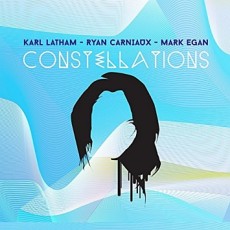
Karl is widely recognized as a veteran of the modern European Jazz scene since 1993, has released 7 CDs with Atilla Zoller, Randy Brecker, Cameron Barnes, Seamus Blake, Joel Frahm, Joe Lovano and others. He is a member of the electric jazz jam group, Unit1, with Mark Egan and John Hart, was ranked 7th drums, in the 2013 35th Annual Jazz Station Poll. He is also a member of “Constellations” with Ryan Carniaux and Mark Egan and is co-leader of Big Fun(K) with saxophonist/composer Don Braden and has released two CD’s as a leader. In addition to performing, recording and touring he is a long-standing adjunct professor at several New Jersey colleges and teaches workshops, master classes and clinics in the USA and abroad.
Put A Dose In Your Pocket
More Posts: drums