

Daily Dose Of Jazz…
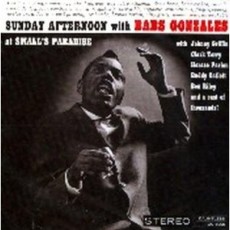
Babs Gonzales was born Lee Brown on October 27, 1919 in Newark, New Jersey and he and his brothers were all called Babs. He studied piano at a young age and learned to play drums. He sang in clubs; wore a turban in Hollywood in the late 1940s, calling himself Ram Singh; worked as a chauffeur for Errol Flynn; called himself Ricardo Gonzales (Mexican rather than ‘Negro) so as to get a room in a good hotel.
Gonzales was a pioneer in the scat vocalese style who did what he could to popularize bop. He had stints with Charlie Barnet and Lionel Hampton’s big bands, and then led his own group Three Bips & a Bop from 1946 to1949, recording for Blue Note during 1947- 1949, including the earliest version of “Oop-Pop-A-Da”, later covered by Dizzy Gillespie. Among his sidemen on these dates were Tadd Dameron, Tony Scott, Roy Haynes, James Moody, J.J. Johnson, Julius Watkins, Art Pepper, Wynton Kelly, Don Redman and Sonny Rollins making his recording debut.
When Capitol Records decided to flirt with bop around 1950, Babs was voicing the sessions. He worked with James Moody; recorded with Jimmy Smith, Johnny Griffin, and Bennie Green, who was one of the first Americans to perform at Ronnie Scott’s club in London as early as 1962. Spending a lot of time in Europe Babs was considered quite a colorful jazz personality there. A hard-working promoter of jazz, he also published three autobiographies; “I Paid My Dues — Good Times”, “No Bread” and “Movin’ On Down De Line”.
Babs Gonzales, who used his voice as a musical instrument incorporating slang, strange and funny new words in rhythmically complex phrases died on January 23, 1980. He would later become more of a cult figure, leaving a recorded legacy that is considered collector’s items for the die-hard bop aficionados. Though his place in jazz history is often blurred, he was present during the bop revolution and was ever the consummate hipster.

More Posts: vocal
From Broadway To 52nd Street
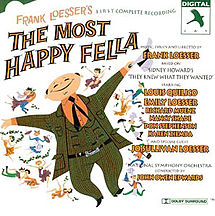
The Most Happy Fella opened at the Imperial Theatre on May 3, 1956 with Jo Sullivan, Robert Wede and Art Lund in the starring roles performing music composed by Frank Loesser. The musical ran for 676 performances and rendered unto jazz the classic tune Joey, Joey, Joey.
The Story: Rosabella comes to Napa Valley to marry the handsome young man who sent her his picture and proposed by mail. Certain that she has found someone to really love her, she soon discovers that Joe is just a hired hand and the man who proposed is Tony, an aging Italian vintner. He sent Joe’s picture fearing that one of himself would have disheartened her. The shock sends Rosabella into Joe’s arms. Eventually she realizes that Tony is an honorable, loving man. When he offers to accept not only her but the baby she is now pregnant with, she comes to love him.
Broadway History: Off-Broadway shows, performers, and creative staff are eligible for awards from the New York Drama Critics’ Circle Award, the Outer Circle Critics Award, the Drama Desk Award, the Obie Award (presented since 1956 by The Village Voice), the Lucille Lortel Award (created in 1985 by the League of Off-Broadway Theatres & Producers), and the Drama League Award. Although Off-Broadway shows are not eligible for TonyAwards, an exception was made in 1956 (before the rules were changed), when Lotte Lenya won for “Best Performance by a Featured Actress in a Musical”, for the Off-Broadway production of The Threepenny Opera.
Sponsored By

www.whatissuitetabu.com
Daily Dose Of Jazz…
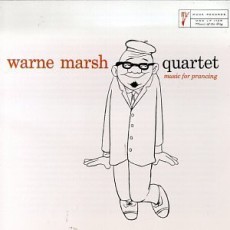
Warne Marion Marsh was born October 26, 1927 in Los Angeles, California into an affluent family, his father was a cinematographer, mother a violinist and his aunt May Marsh an actress.
Tutored by Lennie Tristano and, along with Lee Konitz became one of the pre-eminent saxophonists of the Tristano-inspired “Cool School”. Of all of Tristano’s students, Marsh came closest to typifying Tristano’s ideals of improvised lines, in some respects, even transcending the master himself. He often recorded in the company of other Cool School musicians, and remained one of the most faithful to the Tristano philosophy of improvisation. His distinctively pure tone without the inflections popular among many other tenor saxophonists at that time such as honks, growls, etc. set him apart from other Lester Young and Ben Webster-influenced saxophonists.
Warne’s rhythmically subtle lines are immediately recognizable and have been called by Anthony Braxton as “the greatest vertical improviser.” In the 1970s he gained renewed exposure as a member of Supersax, a large ensemble that played orchestral arrangements of Charlie Parker solos. Marsh also recorded one of his most celebrated albums, “All Music”, with the Supersax rhythm section during this period.
Marsh died onstage at the Los Angeles club Donte’s on December 18, 1987, in the middle of playing the tune “Out of Nowhere”. Though he remains something of a cult figure among jazz fans and musicians, his influence has grown since his death. Younger players such as Mark Turner have borrowed from his music as a way of counterbalancing the pervasive influence of John Coltrane.
More Posts: saxophone

Daily Dose Of Jazz…
Terumasa Hino was born in Tokyo, Japan on October 25, 1942. His initial exposure to music began at four was with his father, a step dancer and trumpeter, taught him tap-dancing. He soon began performing with the trumpet when he was 9 years old, later adding flugelhorn to his arsenal. In the Fifties, Hino began his career as a professional jazz musician and by 1965 after working with several noted jazz artists, he joined Hideo Shiraki’s Quintet. He remained with the band till 1969, leaving to lead his own band full-time, which he formed in 1964.
1969 saw Hino releasing his successful third album “Hi-nology” to critical acclaim and was soon performing at jazz festivals and clubs worldwide before settling in New York City in 1975. Once there he found work with numerous jazz musicians including among others Gil Evans, Elvin Jones, Jackie McLean, Ken McIntyre, Dave Liebman, Hal Galper, Carlos Garnett, Greg Osby and Sam Jones in between leading his own group, which is credited by the jazz guitarist John Scofield for him turning from fusion to jazz.
From the 1980s, he spent more time in Japan and helped incorporate several elements such as avant-garde and fusion into his music. Trumpeter Terumasa Hino has a current catalogue of fifty-one albums and he continues to perform, record and tour around the world.
More Posts: flugelhorn,trumpet
Daily Dose Of Jazz…
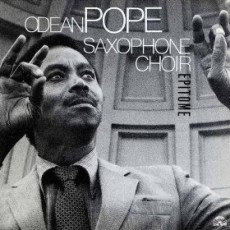
Odean Pope was born October 24, 1938 in Ninety Six, South Carolina to musical parents but was reared in Philadelphia, Pennsylvania when the family moved when he was ten. His lifelong study of music began at the Graniff School of Music and the Benjamin Franklin High School music program.
Pope grew up in a rich musical environment with other Philadelphia jazz luminaries as John Coltrane, Lee Morgan, Kenny Barron, Jimmy and Percy Heath, Clifford Brown, Philly Joe Jones, Dizzy Gillespie and Benny Golson to name a few. Early in his career, the young tenor saxophonist, while at Philadelphia’s Uptown Theater, played behind a number of noted rhythm and blues artists including James brown, Marvin Gaye and Stevie Wonder, however, it was Coltrane who chose him as his replacement in Jimmy Smith’s group when he left to join Miles Davis in New York.
He went on to play briefly with Jimmy McGriff in the 1960s and late in the decade began working with Max Roach and touring Europe. Odean was a member of Philadelphia group Catalyst in the early and mid-1970s, and in 1977 assembled the “Saxophone Choir” consisting of nine saxophones and a rhythm section. He became a regular member of Roach’s quartet in 1979 and has recorded extensively with him, in addition to numerous releases as a leader.
His never-ending quest to study his craft led him to study orchestration, modern harmony, African rhythms, be-bop art forms and arrangement with Kenny Clarke at the Paris Conservatory. He would go on to study with Ray Bryant, Jimmie Merritt, and Hasaan Ibn Ali and with Max Roach for some twenty-two years. Pope is known for saying, “Studying with Max was like going to the highest institution in the world.”
Odean perfected the techniques of circular breathing and multiphonics, both allowing him to stretch his solo improvisations from dazzling elevations to the throbbing, husky sounds for which he is so well known, to all kinds of delicacy in getting from one to the other.
Pope has won “Best Tenor Saxophone Player” at the North Sea Jazz Festival, received numerous citations from the City of Philadelphia, and has received awards from the Pew Fellowship, the Rockefeller Foundation and the Chamber music America. He started the jazz studies program at the Settlement Music School and he continues to give master classes in the Philadelphia School District as well as nationally and internationally.
More Posts: saxophone