


Daily Dose Of Jazz…
Dianne Reeves was born on October 23, 1956 in Detroit, Michigan to a very musical family. Her father was a singer, mother Vada Swanson played trumpet, her cousin George Duke. Raised in Denver by her mother after her father died, she took piano lessons and sang at every opportunity. Inspired at age 11 to sing, she discovered she wanted to be a singer when a teacher brought students together. Subsequently her uncle, Charles Burrell, a bass player with the Denver Symphony Orchestra, introduced her to the music of jazz singers, from Ella Fitzgerald to Billie Holiday and was especially impressed by Sarah Vaughan.
By 16, Reeves was singing in the high school big band at Denver’s George Washington High School and that same year the band played at the National Association of Jazz Educators, taking first place. It was there she met trumpeter Clark Terry, who became her mentor. A year later she began the study of music at the University of Colorado prior to moving to Los Angeles in 1976. There her interest in Latin-American music grew and she began experimenting with different kinds of vocal music and finally decided to fully pursue a career as a singer. She met Eduardo del Barrio, toured with his group “Caldera”, sang in Billy Childs’ jazz band “Night Flight” and later she toured with Sergio Mendes.
From 1983 until 1986 Reeves toured with Harry Belafonte as a lead singer and immersing herself in world music for the first time. The following year she became the first vocalist signed to the reactivated Blue Note/EMI label. Dianne is well known for her fluent improvisational style that mixes elements of jazz with R&B, for which she has won four Grammy awards since her first release in 1977, “Welcome To My Love”. She has 18 albums to her credit as a leader and more than two dozen collaborations with Nicholas Payton, Christian McBride, Eddie Henderson, Solomon Burke, Tom Browne, Gordon Goodwin, Joe Sample, George Duke, both Chico and Von Freeman, Ronnie Laws, McCoy Tyner, Wayne Shorter and the list goes on. She was featured prominently as the vocalist performing in the studio adjacent to that of Edward R. Murrow in the 2005 film Good Night, and Good Luck.
Considered one of the most important contemporary jazz singers, Dianne Reeves continues to perform, tour and record, her latest import album being “Beautiful Life”.
More Posts: vocal
Daily Dose Of Jazz…
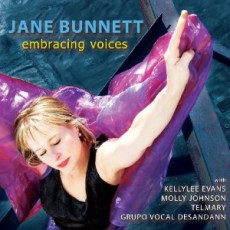
Jane Bunnett was born on October 22, 1956 in Toronto and began her musical educational as a classical pianist then switched to woodwinds at the Royal Conservatory. Inspired by Charles Mingus and Rahsaan Roland Kirk in 1979 San Francisco, she was studying jazz at York University. This led her to study with Barry Harris, James Newton, Frank Wess and James Moody and ultimately Steve Lacy in Paris in 1991.
Her debut recording “In Dew Time” featured an ambitious mix of Canadian and American players – pianist Don Pullen, tenor Dewey Redman and Vincent Chancy on French horn. This led to touring Canada and Australia and recording of her sophomore project a year later followed by two more by 1994.
Jane has become one of the foremost jazz musicians in Canada, and has gained recognition around the world for her improvising talents, technical proficiency, and writing and band leading abilities. She has received accolades and won awards from the Village Voice, SOCA, Downbeat Magazine, the National Jazz Awards of Canada, the Smithsonian Institute and the Jazz Journalist Association, her work has been nominated for several Grammy awards and received Canada’s highest award, the Order of Canada.
With sixteen albums under her belt, the saxophonist and outspoken humanitarian, Jane Bunnett continues to perform at jazz clubs, festivals, and concert halls and for broadcast throughout Canada, the United States, Europe, and Cuba, with her groups, and as a featured solo artist.
More Posts: saxophone
Daily Dose Of Jazz…
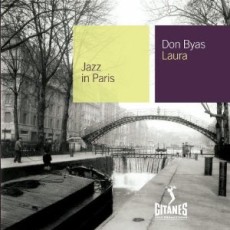
Don Byas was born Carlos Wesley Byas October 21, 1912 in Muskogee, Oklahoma into a musical family, his mother a pianist and father playing clarinet. He started training in classical music, first on the violin, then clarinet and finally the alto saxophone, which he played until the end of the 1920s. He started playing in local orchestras at the age of 17, with the likes of Bennie Moten, Terrence Holder and Walter Page’s Blue Devils.
In 1931 while at Langston College in Oklahoma he founded and led his own college band, “Don Carlos and His Collegiate Ramblers”. Switching to the tenor saxophone when he moved to West Coast, through the Thirties he played with various Los Angeles bands such as Bert Johnson’s Sharps and Flats, Lionel Hampton, Eddie Barefield, Buck Clayton, Lorenzo Flennoy and Charlie Echols bands.
By 1937 Byas moved to New York working with Eddie Mallory and his wife Ethel Waters, went on to work with Don Redman, recorded his first solo in 1939, played with the bands of lucky Millinder, Andy Kirk, Edgar Hayes and his childhood idol Benny Carter. He played and recorded with Billie Holiday, Pete Johnson, Hot Lips Page, Big Joe Turner, Charlie Christian, Thelonious Monk and Kenny Clarke in after hour sessions.
However Byas’ big break came in early 1941 when Count Basie selected him to fill the seat vacated by Lester Young. Through the forties he played the best New York nightspots, had some success with a few hits, collaborated with Dizzy Gillespie, Charlie Parker, George Wallington, Oscar Pettiford and Max Roach. Despite his bebop associations, Byas always remained deeply rooted in the sounds of swing. He started out by emulating Coleman Hawkins, but always cited Art Tatum as his greater influence: “I haven’t got any style, I just blow like Art”.
In 1946 Byas went to Europe and forgot to return to America. A bon vivant in the true sense he was seen on the Riviera, St. Tropez often sporting mask and flippers, sport fishing, shooting pool or dishing up Louisiana style menus for his female admirers all while recording and playing regularly throughout Europe.
Settling in Amsterdam he continued to tour and play with the likes of Art Blakey, Kenny Clarke, Bud Powell, Jazz At The Philharmonic and Ben Webster to name a few. He returned once to the U.S. to appear at the Newport Jazz Festival. Tenor saxophonist Don Byas died on August 24, 1972 from lung cancer in Amsterdam, Netherlands at the age 59.
More Posts: saxophone
Daily Dose Of Jazz…
Russell Gunn was born October 20, 1971 in Chicago, Illinois but grew up in East St. Louis when his family moved when he was nine. His interest in music led Russell to the trumpet and at Lincoln high school he joined the band where his cousin Anthony Wiggins, the band’s featured trumpeter, and the band director fueled his musical interest. Gunn spent two years at Jackson State University on a full music scholarship, moved back to East. St. Louis, freelancing and working odd jobs. While performing at Cicero’s in St. Louis in 1993 saxophonist Oliver Lake happened to hear the young trumpeter, and immediately invited him to perform at the Brooklyn Museum in New York.
This was followed by a fortuitous appearance at a 4am jam session at the Blue Note where Denis Jeter, an assistant to Wynton Marsalis at Lincoln Center, heard and recommended him for the third trumpet chair in Marsalis’ Blood on the Fields. Receiving rave notices for his work with the Lincoln Center Jazz Orchestra, Russell started earning recognition as one of the most dynamic and exciting musicians of his generation. Continuing to freelance with Lake and various other top jazz artists, Gunn began leading his own groups and in 1994 and issued his first recording for the legendary Muse record label, “Young Gunn”.
Always fascinated with hip-hop Russell suffered undue criticism from the neo-conservative jazz mainstream for his culture style of dress, however, Russell’s virtuoso abilities and command of all musical styles from funk to the avant-garde evidenced a serious new talent on the scene. His eclectic musical approach had him collaborating with Cee-Lo, Maxwell, D’Angelo, Ne-Yo, Branford Marsalis and Jazz at Lincoln Center.
With a singular style that incorporates the influences of masters like Miles Davis, Lee Morgan, and the underrated Booker Little, Gunn has continued to gain recognition for his own music through touring and well-received albums, including the Grammy-nominated Ethnomusicology, Vol. 1 and Ethnomusicology Vol. 2.
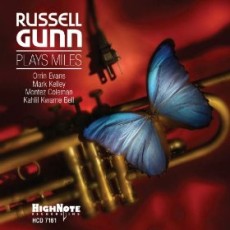
Understanding his range means listening as he interprets the standards on Mood Swings, putting on a twist as he Plays Miles Davis, challenging the parameters of freedom in jazz with his latest Ethnomusicology project “Return Of Gunn Fu” or his requiem with Love Stories. Trumpeter Russell Gunn continues to compose, record, perform, tour worldwide and push the jazz envelope with his groups “Bionic” and “Electrik Butterfly”.

More Posts: trumpet
From Broadway To 52nd Street
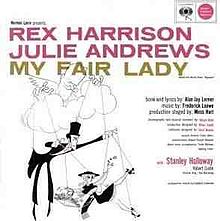
My Fair Lady opened the Mark Hellinger Theatre on March 15, 1956, running for a record 2,717 performances and making it the 7th musical to enter the roster of blockbuster musicals and to date the longest running on Broadway. The musical starred Rex Harrison, Julie Andrews and Robert Coote performing the compositions of Alan Jay Lerner & Frederick Leowe who gave the world I’ve Grown Accustomed To Her Face, Show Me, On The Street Where You Live, I Could Have Danced All Night and Wouldn’t It Be Loverly.
The Story: When Professor Henry Higgins, from perfect British class snobbishness hears the low born waif bray of flower girl Eliza Doolittle, he places a wager with his colleague Colonel Pickering that by giving her lessons in speech and class, he can pass her off to society. Unwittingly, through all their ups and downs in the learning process, the caterpillar evolves into a beautiful butterfly and Henry falls in love. Fighting his heart every step of the way and frustrating a now society lady Eliza, who has also fallen for him. Finally Henry succumbs to his heart and they find peace in their world.
Jazz History: Outside of the United States the beginnings of a distinct European style of jazz emerged in France with the Quintette du Hot Club de France, which began in 1934. Belgian guitar virtuoso Django Reinhardt popularized gypsy jazz, a mix of 1930s American swing, French dance hall “musette” and Eastern European folk with a languid, seductive feel. The main instruments are steel stringed guitar, violin and double bass. Solos pass from one player to another as the guitar and bass play the role of the rhythm section. Some music researchers hold that it was Philadelphia’s Eddie Lang and Joe Venuti who pioneered the guitar-violin partnership typical of the genre,which was brought to France after they had been heard live or on Okeh Records in the late 1920s.
Sponsored By

www.whatissuitetabu.com