

Daily Dose Of Jazz…
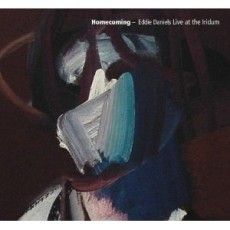
Eddie Daniels was born on October 19, 1941 in New York City and grew up in the Brighton Beach neighborhood of Brooklyn. He became interested in jazz as a teenager when impressed by listening to the recordings of the musicians accompanying singers, such as Frank Sinatra. Eddie’s first instrument was the alto saxophone, started on clarinet at 13 and later received his Masters in Clarinet from Julliard. By 15 he would add the Newport Jazz Festival Youth Competition to what would become a long list of credits. By the time he entered college, he was playing alto, clarinet and adding tenor saxophone to his arsenal.
Daniels has led a variety of bands from small combos to orchestras and has toured worldwide, recorded and appeared on television. Since the 1980s he has focused mainly on the clarinet and in 1989 he won one of many Grammy awards for playing on the Roger Kellaway arrangement of “Memos From Paradise”.
Over the course of his career he has captured Down Beat Magazine’s International Critics New Star on Clarinet Award, played and recorded with the Thad Jones/Mel Lewis Orchestra at the Village Vanguard, George Benson, Joe Farrell, Johnny Hammond, Richard Davis, Yusef Lateef, Airto Moreira and Don Patterson Gordon Goodwin’s Big Phat Band. Clarinetist Eddie Daniels, who also plays saxophone, flute and piccolo, performs commissioned classical compositions, has revolutionized the blend of classical and jazz and continues to tour and record.
Daily Dose Of Jazz…
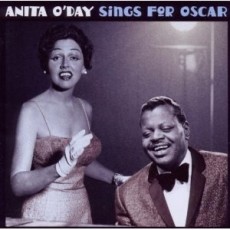
Anita O’Day was born Anita Belle Colton into a broken home in Chicago, Illinois on October 18, 1919. She took the first chance to leave home at age 14, she became a contestant in the popular Walk-a-thons as a dancer. She toured on the Walk-a-thons circuits for two years, occasionally being called upon to sing. In 1934, she began touring the Midwest as a marathon dance contestant and singing “The Lady In Red” for tips.
In 1936, she left the endurance contests, determined to become a professional singer. Anita started out as a chorus girl in such uptown Chicago venues as the Celebrity Club and the Vanity Fair, and then found work as a singer and waitress at the Ball of Fire, the Vialago, and the Planet Mars. It was at the Vialago that O’Day met and later married drummer Don Carter and later married, who introduced her to music theory. Her first big break came in 1938 when Down Beat editor Carl Cons hired her to work at his new club, the “Off-Beat” followed by a stint at The Three Deuces.
She went on to work with Gene Krupa in 1941, recorded her first big hit with him performing a novelty duet with Roy Eldridge titled “Let Me Off Uptown”, was named “New Star of the Year” by Down Beat, appeared in two short musical films, and over the next several years she performed as a solo act, fronted the bands of Woody Herman, Stan Kenton, rejoined Krupa and then became a solo artist again.
During the late forties she would record regularly, attempting to achieve popularity without sacrificing her jazz singer identity. Plagued with long-term problems with heroin addiction and alcoholism, coupled with erratic behavior surfacing earned her the nickname “The Jezebel of Jazz”. During this period she was in and out of jail for various possession charges. However, a date with Count Basie at the Royal Roost resulted in five air checks and her career was back on the upswing. But what secured O’Day’s place in the jazz pantheon are the 17 albums she recorded for Norman Granz’s Norgran and Verve labels between 1952 and 1962, recording her and the label’s inaugural LP “Anita O’Day Sings Jazz” in 1952.
Anita’s backbeat-based singing style was strongly influential on many other female singers of the late swing and bebop eras, including June Christy, Chris Connor and Doris Day. Admired for her sense of rhythm and dynamics, her early big band appearances shattered the traditional image of the “girl singer” by presenting herself as a “hip” jazz musician, wearing a band jacket and skirt. Anita O’Day passed away in her sleep of cardiac arrest on Thanksgiving Day, November 23, 2006, at age 87.
More Posts: vocal
Daily Dose Of Jazz…
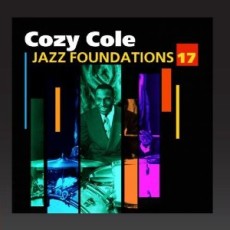
Cozy Cole was born William Randolph Cole on October 17, 1909 in East Orange, New Jersey. His first music job was with Wilbur Sweatman in 1928 and two years later he was playing with Jelly Roll Morton’s Red Hot Peppers. He had his first drum solo on the recording of “Load of Cole”. In 1931 Cozy went on to spend two years with Blanche Calloway, followed by a year with Benny Carter, then a year with Willie Bryant, two with Stuff Smith’s small combo.
For four years from1938-42 he played with Cab Calloway. In 1942, CBS Radio music director Raymond Scott hired Cozy as part of the network radio’s first mixed-race orchestra. After his stint with CBS, he played with Louis Armstrong’s All Stars.
Cole scored a #1 Cashbox magazine hit with the “Topsy Part 2” that also peaked at number three on Billboard’s Hot 100 in 1958and at number one on the R&B chart. It sold over one million copies garnering it a gold disc. The recording contained a lengthy drum solo and was one of the few drum solo recordings that ever made the Billboard Hot 100 chart.
Throughout the 1960s and 1970s Cole continued to perform in a variety of settings. Cole and Gene Krupa often played duets at the Metropole in New York City during the 1950s and 1960s. Cole appeared in music-related films, including a brief cameo in “Don’t Knock The Rock” and has been cited as an influence by many contemporary jazz and rock drummers including Cozy Powell, who took his nickname from Cole.
Cozy Cole passed away from cancer on January 31, 1981 in Columbus, Ohio.
More Posts: drums
Daily Dose Of Jazz…
Roy Anthony Hargrove was born October 16, 1969 in Waco, Texas to parents who discovered his musical abilities as a young child. He received trumpet lessons and was greatly influenced by David “Fathead” Newman when Ray Charles’ band played at his junior high school. By high school his jazz potential was discovered by Wynton Marsalis during a visit to Dallas’s Booker T. Washington High School for the Performing and Visual Arts. He went on to spend a year at Berklee College of Music in Boston but was regularly found at jam sessions in New York and finally transferred to the New School there.
He first recorded with saxophonist Bobby Watson followed by the group “Superblue” with Watson, Mulgrew Miller and Kenny Washington. He released his first solo album “Diamond In The Rough” on Novus/RCA and followed with four more releases. In 1993 he was commissioned by the Lincoln Center Jazz Orchestra and composed “The Love Suite: In Mahogany”. Hargrove went on to record “Family” in 1995, and then, experimenting with other musicians, as part of a trio, the album Parker’s Mood, in 1995 with bassist Christian McBride and pianist Stephen Scott.
Roy has played with a host of stellar musicians including Shirley Horn, Joe Henderson, Stanley Turrentine, Johnny Griffin, Branford Marsalis, Joshua Redman, Herbie Hancock and Wynton Marsalis. He has stretched his limits performing and collaborating with D’Angelo, Common, Erykah Badu, Worldwide Underground and played on the film album Like Water For Chocolate.
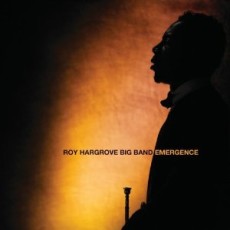
Hargrove won two Grammy Awards, one being in 1998 for the album Habana with the Afro-Cuban band he founded, “Crisol”. He is also the leader of the progressive group “RH Factor” which combines elements of jazz, funk, hip-hop, soul and gospel and has also ventured into big band with his latest album “Emergence”. Trumpeter Roy Hargrove continues to compose, arrange, perform and tour until he passed away on November 2, 2018 in Mount Sinai Hospital, New York City.
More Posts: flugelhorn,trumpet
Daily Dose Of Jazz…
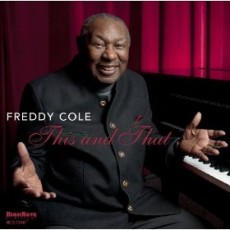
Freddy Cole was born Lionel Frederick Cole on October 15, 1931, to Edward and Paulina Nancy Cole and is the youngest sibling of musicians Eddie, Ike and Nat. Growing up in Chicago he began playing piano at age six, Cole hoped for a career with the NFL. But a hand injury ended his dream and the teenager began playing and singing in Chicago clubs. Although he was ready to hit the road at 18, his mother intervened and he continued his musical education at Chicago’s Roosevelt Institute before moving to New York City in 1951. While in New York, Cole studied at the Juilliard School of Music and went on to get a master’s degree at the New England Conservatory of Music.
The small Chicago-based label, Topper Records, released Freddy’s first single, “The Joke’s On Me” in 1952. A sophomore single, “Whispering Grass” on the OKeh label, was a moderate hit in 1953. He later spent several months on the road with Johnny Coles and Benny Golson in the Earl Bostic band before returning to hone his skills in the bistros of New York. He went on to work with Grover Washington, Jr. and to record jingles for various companies, including Turner Classic Movies.
During the 1970s, Cole recorded several albums for European and English based labels. He was the subject of the 2006 documentary “The Cole Nobody Knows” by filmmaker Clay Walker and is a member of the Steinway Artist roster. He has been inducted into the Georgia Music Hall of Fame in 2007.
Freddy cites his influences as John Lewis, Oscar Peterson, Teddy Wilson and Billy Eckstine, the latter being the subject of his release, “Freddy Cole Sings Mr. B”, that was nominated for a Grammy Award. When speaking of Eckstine, Cole recalled, “He was a fantastic entertainer. I learned so much from just watching and being around him.”
With over two-dozen albums as a leader and numerous collaborations, jazz pianist and vocalist Freddy Cole leads his quartet that holds down a rigorous schedule that continually tours the United States, Europe, South America and the Far East.