

Daily Dose Of Jazz…
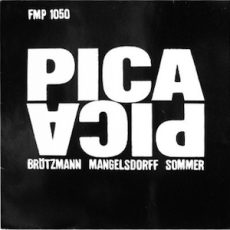
Peter Brötzmann was born on March 6, 1941 in Remscheid, North Rhine-Westphalia, Germany. He studied painting in Wuppertal and was involved with the Fluxus movement but grew dissatisfied with art galleries and exhibitions. He experienced his first jazz concert when he saw Sidney Bechet while still in school at Wuppertal, and it made a lasting impression.
He taught himself to play clarinets, then saxophones and finally the tárogató. Among his first musical partnerships was with double bassist Peter Kowald. His debut recording, For Adolphe Sax, released in 1967 featured Kowald and drummer Sven-Åke Johansson. In 1968 Machine Gun, an octet recording, was released and self-produced under his BRO record label which he sold at concerts. Atavistic reissued the album in 2007.
His 1969 album Nipples, wasn’t followed with another recording as a leader until 1976 which was followed by sixty-one more releases through 2020. Brötzmann was a member of Bennink’s Instant Composers Pool, a collective of musicians who released their own records and that grew into a 10-piece orchestra.
The logistics of touring with the ICP tentet or his octet resulted in Peter reducing the group to a trio with Han Bennink and Fred Van Hove. Bennink was a partner in Schwarzwaldfahrt, an album of duets recorded outside in the Black Forest in 1977 with Bennink drumming on trees and other objects found in the woods.
In 1981, Brötzmann made a radio broadcast with saxophonists Frank Wright and Willem Breuker, trumpeter Toshinori Kondo, trombonists Hannes Bauer and Alan Tomlinson, pianist Alexander von Schlippenbach, drums Louis Moholo, and bassist Harry Miller. This was released as the album Alarm.
During the Eighties, Brötzmann flirted with heavy metal and noise rock, recording with Last Exit and the band’s bass guitarist and producer Bill Laswell. His has released over fifty albums as a bandleader and has appeared on dozens more. His Die Like a Dog Quartet (with Toshinori Kondo, William Parker and drummer Hamid Drake) is loosely inspired by saxophonist Albert Ayler, a prime influence on his music. Since 1997, he has toured and recorded regularly with the Peter Brötzmann Chicago Tentet which he disbanded after an ensemble performance in November 2012 in Strasbourg, France.
He has recorded or performed with Cecil Taylor, Keiji Haino, Willem van Manen, Mats Gustafsson, Ken Vandermark, Conny Bauer, Joe McPhee, Paal Nilssen-Love and Brötzmann’s son, Caspar Brötzmann.
Saxophonist and clarinetist Peter Brötzmann, who has not abandoned his art training and has designed most of his album covers, continues to perform and record.

More Posts: bandleader,clarinet,history,instrumental,jazz,music,saxophone

Daily Dose Of Jazz…
LaDonna Smith was born on March 2, 1951 in Birmingham, Alabama. She learned to play violin and went on to perfect viola and piano. Since 1974 she has been performing free improvisational music with musicians Davey Williams, Leland Davis, Michael Evans, Gunther Christmann, Anne Lebaron, Derek Bailey, Eugene Chadbourne, Misha Feigin, Michael Evans, David Sait, Jack Wright, John Russell, Sergey Letov, Toshi Makihara, Andrew Dewar and many other world major improvisers.
As a performer, she has toured the United States, Canada, Europe, Russia, Siberia, Korea, India, China and Japan. She produced concerts and festivals in Alabama and the Southeast, including the Birmingham Improv Festival and The Improvisor Festival. She serves on the Board of Directors of the International Society of Improvised Music (I.S.I.M.).
In 1976, Smith co-founded TransMuseq Records with Davey Williams. She is editor-in-chief and publisher of The Improvisor magazine which began in 1980 as an extension of The Improvisor’s Network, a grass-roots organization in New York City that attempted to connect improvising musicians across America. She is a member of the Fresh-Dirt collective (Alabama Surrealism).
Avant garde violinist, violist, and pianist LaDonna Smith, who has recorded 37 albums, continues to perform and record.
More Posts: bandleader,history,instrumental,jazz,music,piano,viola,violin
Daily Dose Of Jazz…
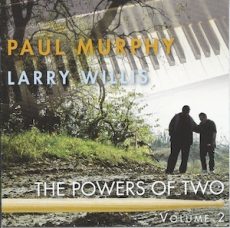
Paul F. Murphy was born on January 25, 1949 in Worcester, Massachusetts and began playing drums at a very early age and made the acquaintance of Gene Krupa at age six. He went on to study with Krupa, Louis Bellson, and Joseph Levitt, the principal percussionist of the National Symphony Orchestra and director of the Peabody Conservatory.
At age sixteen, Murphy began playing in the Washington, D.C. area with Duke Ellington’s bassist Billy Taylor, who exposed him to the music of pianist Cecil Taylor. At Taylor’s advice he moved to San Francisco, California where he established himself as a bandleader. While there, he met and befriended Cecil Taylor and Jimmy Lyons. At the suggestion of Lyons, he then moved to New York, where he managed Ali’s Alley, a club run by drummer Rashied Ali, and began playing and recording with Lyons’ groups as well as his own quintet. While in New York, Murphy immersed himself in both the experimental jazz and punk rock scenes.
Following Lyons’ untimely death in 1986, Murphy spent time playing drums in Las Vegas, Nevada before returning to San Francisco, where he formed Trio Hurricane with saxophonist Glenn Spearman and bassist William Parker. A move back to the Washington, D.C. area in 1990, and has since collaborated with pianists Joel Futterman and Larry Willis, poet Jere Carroll, and others.
Percussionist, bandleader and composer Paul Murphy, best known for leading a variety of small jazz ensembles, continues to perform and record.

More Posts: bandleader,drums,history,instrumental,jazz,music,percussion
Daily Dose Of Jazz…
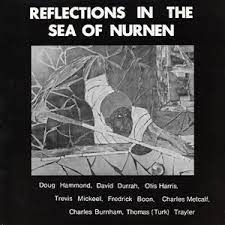
Doug Hammond was born December 26, 1942 in Tampa, Florida. His first major release was Reflections in the Sea of Nurnen on Tribe Records in 1975.
He has worked with musicians including Earl Hooker, Sonny Rollins, Charles Mingus, Sammy Price, Donald Byrd, Wolfgang Dauner, Ornette Coleman, Steve Coleman, Nina Simone, Betty Carter, Marion Williams, Paquito D’Rivera, Arnett Cobb, James Blood Ulmer and Arthur Blythe.
In 2010 Hammond wrote and conducted Acknowledgement Suite with Dwight Adams, Jean Toussaint, Roman Filiú, Howard Curtis, Wendell Harrison, Dick Griffin, Stéphane Payen, Kirk Lightsey and Arron James.
As an educator Doug was a professor at the Anton Bruckner Private University in Linz, Austria. His work has been filmed in a documentary Sparkle of Inspiration by the Austrian director Dieter Strauch.
Drummer, composer, poet, producer, and professor Doug Hammond, who plays in the free funk/avant-garde jazz genres, lives and continues to work in Linz.

More Posts: composer,drums,educator,history,instrumental,jazz,music

Daily Dose Of Jazz…
Denis Alphonso Charles was born December 4, 1933 in St. Croix, Virgin Islands and first played bongos at age seven with local ensembles. 1945 saw him moving to New York City, and gigging frequently around town. Nine years later he was working with Cecil Taylor and the pair collaborated until 1958. Following this he played with Steve Lacy, Gil Evans, and Jimmy Giuffre. Befriending Ed Blackwell, the two influenced each other.
He went on to record with Sonny Rollins on a calypso-tinged set, and then returned to Lacy, with whom he played until 1964. He worked with Archie Shepp and Don Cherry in 1967, but heroin addiction saw him leave the record industry until 1971. In the 1970s and 1980s, he played regularly on the New York jazz scene with Frank Lowe, David Murray, Charles Tyler, Billy Bang, and others. He also played funk, rock, and traditional Caribbean music. He released three discs as a leader between 1989 and 1992. , and died of pneumonia in his sleep in New York in 1998.
Drummer Denis Charles, who released three albums as a leader, thirty-four as a sideman and several with the BMC Trio, transitioned four days after a five week European tour on March 26, 1998 from pneumonia.
More Posts: bandleader,drums,history,instrumental,jazz,music