

Daily Dose Of Jazz…
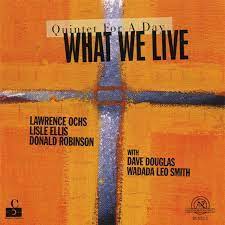
Lisle Ellis was born Lyle Steve Lansall on November 17, 1951 in Campbell River, British Columbia. and began playing electric bass in his teens and worked professionally from an early age in numerous environments including studios, radio & TV shows, and strip clubs. He studied at the Vancouver Academy of Music with Walter Robertson and attended Douglas College in Vancouver, Canada. He later studied at the Creative Music Studio in New York City from 1975-1979.
He moved to Toronto, Ontario, Canada where he resided from 1982 until 1983 and then went to Montreal, Quebec, Canada for nearly a decade until 1992. Lisle became the inaugural recipient of Canada’s Fred Stone Award in 1986, given annually to a musician for integrity and innovation. The Eighties saw him as a conspicuous activator of musician alliance organizations, performance venues, and concert series presentations in Vancouver and Montreal. One collective in particular, Vancouver’s New Orchestra Workshop, is still active nearly thirty years later.
After moving to the United States in 1992, he settled in San Francisco, California where he worked with Glenn Spearman for nine years. In 1994, he was a member of the Cecil Taylor band for a brief tour of California. He lived in San Diego, California from 2001–2005 and then crossed the country to New York City where he presently lives.
Since the late 1990s, he primarily focused on developing an electro-acoustic interface he calls “bass & circuitry”. By 2008 he turned his attention back to acoustic music projects with an emphasis on jazz based improvisation and to finding a balance between his electronic and acoustic music interests. Bassist and composer Lisle Ellis, who professionally has used both L. S. Ellis and L. S. Lansall-Ellis, and is known for his improvisational style and use of electronics, continues to explore the realm of jazz.

More Posts: bandleader,bass,history,instrumental,jazz,music
Daily Dose Of Jazz…
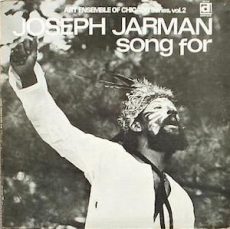
Joseph Jarman was born on September 14, 1937 in Pine Bluff, Arkansas, and grew up in Chicago, Illinois. At DuSable High School, he studied drums with Walter Dyett, switching to saxophone and clarinet when he joined the United States Army after graduation. During his time there, he was part of the 11th Airborne Division Band for a year.
After his discharge in 1958, Jarman attended Wilson Junior College, where he met bassist Malachi Favors Maghostut and saxophonists Roscoe Mitchell, Henry Threadgill, and Anthony Braxton. These men would often perform long jam sessions at the suggestion of their professor, Richard Wang. Mitchell introduced Jarman to pianist Muhal Richard Abrams, and Jarman, Mitchell, and Maghostut joined Abrams’ Experimental Band, a private, non-performing ensemble, when that group was founded in 1961. The same group of musicians along with Fred Anderson and Phil Cohran went on to found the Association for the Advancement of Creative Musicians (AACM) in 1965,.
His solo recording career began at this time, putting together a sextet, however, Jarman disbanded the group in 1969 after the passing of two members. He had joined Mitchell, Maghostut and Lester Bowie in the Roscoe Mitchell Art Ensemble which would eventually become known as the Art Ensemble of Chicago. The group was known for being costumed on stage for different reasons.
The group moved to Paris in 1969, and lived there for many years in a commune that included Steve McCall, the drummer who went on to form the jazz trio Air. Moving back to Chicago in the 1970s, Joseph lived in a musicians’ building in Hyde Park, with Malachi Favors as his roommate. In 1983, he moved to Brooklyn, New York.
Jarman left the Ensemble until 1993 to focus on his spiritual practice, and didn’t return to music until 1996, releasing two albums and then joining a trio with Myra Melford in Chicago, which would eventually be called Equal Interest.
Along with the saxophone and clarinet, Jarman also played (and recorded on) nearly every member of the woodwind family, as well as a wide variety of percussion instruments. Aside from his work with relatively traditional jazz line-ups, he also composed for larger orchestras and created multimedia pieces for musicians and dancers.
Saxophonist, composer, and poet Joseph Jarman transitioned from respiratory failure at the Lillian Booth Actors Home in Englewood, New Jersey on January 9, 2019. He was 81.

More Posts: bandleader,composer,history,instrumental,jazz,music,poet,saxophone
Daily Dose Of Jazz…
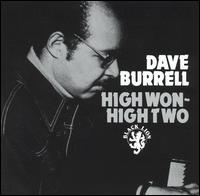
Herman Davis Burrell was born September 10, 1940 in Middletown, Ohio and grew fond of jazz at a young age after meeting Herb Jeffries. He studied piano and music at the University of Hawaii from 1958 to 1960, then starting in 1961 he attended the Berklee College of Music in Boston, Massachusetts. 1965 saw him walking across the stage to receive degrees in composition/arranging and performance. While in Boston, he played with Tony Williams and Sam Rivers.
After graduation Dave moved to New York City, where he worked and recorded with Grachan Moncur III, Marion Brown, and Pharoah Sanders. He also started the Untraditional Jazz Improvisational Team with saxophonist Byard Lancaster, bassist Sirone, and drummer Bobby Kapp. Three years later he co-founded The 360 Degree Music Experience with Moncur and Beaver Harris, recording two albums with the group. The following year, Burrell began an association with Archie Shepp, with whom he would play the 1969 Pan-African Festival in Algiers, Algeria. They would go on to record nearly twenty albums.
Burrell’s debut as a leader was an album titled High Won-High Two that was released in 1968. This was followed by Echo and La Vie de Bohème recorded in Paris in 1969, and Round Midnight for Nippon Columbia.
In 1978, with Swedish poet and lyricist Monika Larsson he composed a jazz opera entitled Windward Passages, with an album of the same name, based on the opera, released in 1979. Their touring and recording collaborations resulted in four more albums. He would later appear on seven David Murray albus recorded between 1988 and 1993.
Burrell tours and performs as a soloist and as a leader of a duo, trio, and larger ensembles. His recordings have received high praise from Down Beat, Village Voice, Jazz Times and others. Into the new millennium he has continued to perform, record and release several albums including a live recording in Italy. In 2022, pianist Dave Burrell donated his archive to the Center for American Music in the University of Pittsburgh Library System. He continues to be active in jazz.
More Posts: bandleader,composer,history,instrumental,jazz,music,piano
Daily Dose Of Jazz…
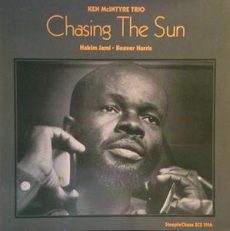
Makanda Ken McIntyre was born Kenneth Arthur McIntyreon on September 7, 1931 in Boston, Massachusetts to a father whoplayed mandolin. He started his musical life on the bugle when he was eight years old, followed by piano. In his teens he discovered the music of Charlie Parker and began playing saxophone at nineteen, then clarinet and flute two years later. Serving in the Army in 1953, for two years he played saxophone and piano in Japan.
Following his discharge Ken attended the Boston Conservatory where he studied with Gigi Gryce, Charlie Mariano, and Andy McGhee. In 1958 he received a degree in flute and composition with a master’s degree the next year in composition. He also received a doctorate (Ed.D.) in curriculum design from the University of Massachusetts Amherst in 1975.
1960 saw McIntyre recording as a leader with Eric Dolphy. The following year and for the next six he taught music in public schools. He took oboe lessons in New York before playing with Bill Dixon, Jaki Byard, and the Jazz Composer’s Orchestra. He went on to spend three years with pianist Cecil Taylor. During the 1970s he recorded with Nat Adderley and Beaver Harris and in the 1980s with Craig Harris and Charlie Haden.
In 1971, he founded the first African American Music program in the United States at the State University of New York College at Old Westbury, teaching for 24 years. He also taught at Wesleyan University, Smith College, Central State University, Fordham University, and The New School for Jazz and Contemporary Music.
In the early 1990s, while performing in Zimbabwe, a stranger handed him a piece of paper with the word “Makanda” written on it, which translates to many skins in the Ndebele language and many heads in Shona. He changed his name to Makanda Ken McIntyre. At the age of 69 on June 13, 2001 he transitioned from a heart attack in New York City.
More Posts: bass clarinet,bassoon,double bass,drums,flute,history,instrumental,jazz,music,oboe,piano,saxophone
Daily Dose Of Jazz…
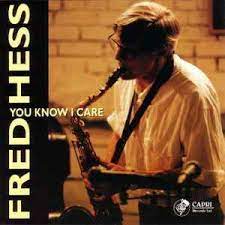
Fred Hess was born in Abington, Pennsylvania on September 3, 1944 but was raised in New Jersey. He studied at Trenton State College with his early studies with saxophonist Phil Woods, a stint with bandleader Fred Waring, and composing music for the world premiere of a Sam Shepard play.
As a composer, his influences encompass avant-garde classical sources, as well as Anthony Braxton and the members of the AACM. Moving to Boulder, Colorado in 1981, he founded the Boulder Creative Music Ensemble. Fred then completed further studies at the University of Colorado, Boulder, taking his doctorate in composition in 1991.
He recorded his debut album Sweet Thunder in 1991 and by 2012 had sixteen albums as a leader in his catalog. He was the Director of Music Composition at Metro State College in Denver, Colorado.
In addition to his own projects as a leader, BCME, The Fred Hess Group and the Fred Hess Big Band, he was the founding director of Denver’s Creative Music Works Orchestra and was a member of drummer Ginger Baker’s Denver Jazz Quintet, as well as ensembles led by trumpeter Ron Miles.
His playing was influenced by Lester Young, John Coltrane, the Association for the Advancement of Creative Musicians, and Eric Dolphy. Tenor saxophonist Fredd Hess transitioned on October 27, 2018.
Bestow upon an inquiring mind a dose of a Abington saxophonist to motivate the perusal of the genius of jazz musicians worldwide whose gifts contribute to the canon…
More Posts: bandleader,history,instrumental,jazz,music,saxophone