

Daily Dose Of Jazz…
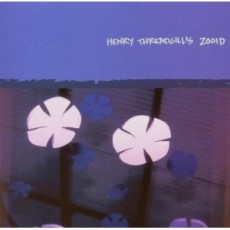
Henry Threadgill was born February 15, 1944, in Chicago, Illinois and first performed as a percussionist in his high school marching band before taking up the baritone saxophone and later a large portion of the woodwind instruments. He soon settled upon the alto saxophone and flute as his main instruments.
He was one of the original members of the legendary AACM – Association for the Advancement of Creative Musicians in Chicago, working under the guidance of Muhal Richard Abrams before leaving to tour with a gospel band. In 1967, he enlisted in the Army, playing with a rock band in Vietnam through 1968. Discharged in 1969 he returned to Chicago, formed a trio that eventually became “Air”, one of the most celebrated and critically acclaimed avant-garde jazz groups of the 1970s and 1980s.
Threadgill had moved to New York City and began pursuing his own musical visions, exploring musical genres in innovative ways with his first nonet X-75. In the early Eighties, Threadgill created the Henry Threadgill Sextet, his first critically acclaimed ensemble as a leader, with two drummers as a single unit. He has recorded three albums under X-75 for About Time Records, reformed his sextet and released three albums on the Novus label.
Since the 90s Threadgill has continued to compose, create, perform and record music with various group configurations such as “Very Very Circus” and “Zooid” utilizing electric guitars, French horn, Latin percussion, accordion, cello and tuba.
Daily Dose Of Jazz…
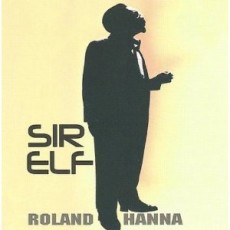
Roland Hanna was born on February 10, 1932 in Detroit, Michigan and began private classical piano lessons at an early age but had a strong interest in jazz. After graduation from Cass Technical High School and a two-year stint in the US Army, he continued his musical studies at the Eastman and Juilliard Schools of Music.
He worked with several big names, such as Benny Goodman and Charles Mingus in the 1950s, from 1967 to 1974 was a regular member of the Thad Jones-Mel Lewis Orchestra and was also a member of the New York Jazz Quartet during this decade. He also performed solo, contributed to orchestras, bands, and small groups; provided sensitive, sympathetic accompaniment to such artists Sarah Vaughn (also her musical director), Carmen McRae and Al Hibbler.
Hanna went into semi-retirement for most of the 1980s, though he played piano and wrote the song “Seasons” for Sarah’s 1982 album Crazy and Mixed Up, however, he returned to music later in the decade. Over the course of his career he recorded some 50 albums, formed a record label, became a tenured professor of music at Aaron Copeland School of Music, Queens College and City College of New York, and was knighted by Liberian President William Tubman for his humanitarian services to that country.
Sir Roland Hanna passed away on November 13, 2003 in Hackensack, New Jersey.
More Posts: piano
Daily Dose Of Jazz…
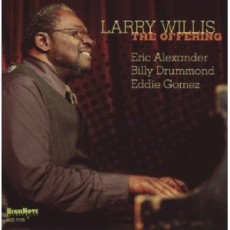
Lawrence Elliott Willis was born December 20, 1942 in Harlem, New York. He first got into music as a voice major at New York’s High School of Music and Art for gifted students and in his senior year he recorded an opera with the Music and Arts Chorale Ensemble under the direction of Leonard Bernstein.
Due to the barriers presented to Blacks in finding work in the classical arena, Willis changed directions, replacing voice with piano and concentrating on jazz. He taught himself to play piano and by the end of the winter was playing in a jazz trio with two of his classmates, Al Foster and Eddie Gomez.
He then entered and studied music theory at the Manhattan School of Music, was heard by Hugh Masekela and sent to John Mehegan for his first piano lessons ever, and by 19 began gigging regularly with altoist Jackie McLean and after graduating made his jazz recording debut on McLean’s “Right Now!” for Blue Note that featured two of Larry’s compositions.
Throughout his illustrious career pianist Larry Willis has performed and recorded as a leader and sideman on more than 300 recordings of bebop, avant-garde, jazz-fusion and rock with a wide range of musicians, Dizzy Gillespie, Lee Morgan, Carmen McRae, Clifford Jordan, Art Taylor, Shirley Horn, Stan Getz, Cannonball Adderley, Art Blakey, Woody Shaw and a stint of seven years beginning in 1972 as the keyboardist for Blood, Sweat & Tears.
He has composed and arranged for orchestras, big bands and symphonies for the Brooklyn Symphony with the Grammy-nominated Fort Apache Band, Roy Hargrove’s Grammy-winning Crisol Band, Vanessa Rubin and Joe Ford among others. He received the Don Redman award in 2011, and the Benny Golson Jazz Master Award at Howard University in 2012. He is currently still recording and touring around the world.
Daily Dose Of Jazz…
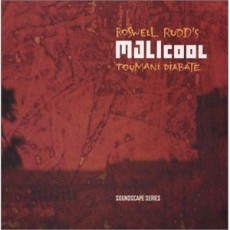
Roswell Rudd, born Roswell Hopkins Rudd, Jr. on November 17, 1935, grew up in Sharon, Connecticut. Graduating from Yale University where he had played and recorded two albums of boisterous trad-jazz with Eli’s Chosen Six, a Dixieland band of Yale students that Rudd joined in the mid-’50s. But his landmark collaborations with Cecil Taylor, Archie Shepp, John Tchicai and Steve Lacy grew out of the lessons learned while playing rags and stomps in college.
In the 1960s, Rudd participated in key free jazz recordings with his ultra avant-garde New York Art Quartet, the soundtrack of the 1964 film New York Eye and Ear Control, Michael Mantler & Carla Bley’s 1968 Jazz Composer’s Orchestra-Communications with Cecil Taylor; and has collaborations with Don Cherry, Pharoah Sanders, Larry Coryell and Gato Barbieri. A major factor in his career has been his lifelong friendships with saxophonists Archie Shepp and Steve Lacy, recording and performing the music of Thelonious Monk numerous times with the later.
Roswell is skilled in a variety of jazz genres but is best known for his avant-garde contributions. Rudd has taught ethnomusicology at Bard College and the University of Maine. Over a period of three decades he has assisted with world music song style – Cantometrics and Global Jukebox projects. He has collaborated and recorded with Malian, Mongolian and with Hispanic New Yorkers.
The Grammy Award-nominated jazz trombonist and composer Roswell Rudd conducts master classes and workshops around the world and since 1962 Rudd has worked extensively with saxophonist Archie Shepp.

Inspire A Young Mind
Daily Dose Of Jazz…
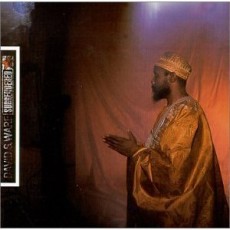
David S. Ware was born on November 7, 1949 in Plainfield, New Jersey and began playing at age ten due to his father’s admiration for the saxophone and his large record collection. While in high school he played in the bands and ventured into New York as a teenager to listen to jazz. He had informal practice sessions with Sonny Rollins as a youth in the ’60s; then as part of the fertile NYC Loft Jazz era of the ’70s.
During this decade, he joined the Cecil Taylor Unit and Andrew Cyrille’s Maono. He also worked together with drummers Beaver Harris and Milford Graves. In the early ’80s he toured Europe with both Andrew Cyrille and his own trio. In mid-decade, Ware purposefully engaged himself in a period of extensive woodshedding – in order to further develop both his personal sound and his visionary group concept.
The ’90s saw the full-on actualization of this group, and the recognition of David S. Ware as a true saxophone colossus. A series of groundbreaking albums by the David S. Ware Quartet were released on the Silkheart, DIW, Homestead, AUM Fidelity, and Columbia Jazz labels. Perhaps the most highly acclaimed group of the last decade, David’s efforts were rewarded by being one of the very few jazz musicians whose work was appreciated by an audience outside the narrow confines of the jazz world. In an unprecedented coup, the ‘Cryptology’ album garnered the lead review slot in Rolling Stone Magazine.
Over the course of his career, tenor saxophonist David Ware has recorded for Columbia, Black Saint, DIW, Silkheart, Homestead, AUM Fidelity and Thirsty Ear record labels. He has performed with a host of musicians and was responsible for bringing the young pianist Matthew Shipp to the attention of the jazz environment. David S. Ware, who has played the most prestigious clubs and festivals around the globe passed away on October 18, 2012 ar age 62 in New Brunswick, New Jersey.
More Posts: bandleader,composer,saxophone