

Daily Dose Of Jazz…
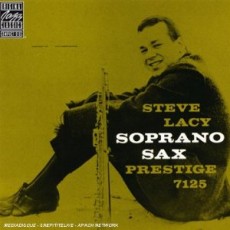
Steve Lacy was born Steven Norman Lackritz on July 23, 1934 in New York City. He didn’t begin his career until age sixteen, coming to prominence in the 1950s as a progressive Dixieland musician playing with the likes of Henry “Red” Allen, Pee Wee Russell, George ”Pops Foster and Zutty Singleton, as well as Kansas City jazz musicians like Buck Clayton, Dicky Wells and Jimmy Rushing.
Working extensively in experimental jazz and dabbling in free improvisation, Lacy’s music was typically melodic and tightly structured over a long and prolific career. He became involved with the avant-garde, performed on “Jazz Advance” in 1956, the debut album of Cecil Taylor, and appeared with his groundbreaking quartet at the 1957 Newport Jazz Festival.
Steve made a notable appearance on an early Gil Evans album, however, his most enduring relationship, however, was with the music of Thelonious Monk, his first recorded album in 1958 as a leader “Reflections” featured only Monk compositions. He briefly played in Monk’s band in 1960 and later on Monk’s Columbia session “Big Band/Quartet” in 1963.
Monk tunes became a permanent part of his repertoire, making an appearance in virtually every concert appearance and on his albums. He often collaborated with trombonist Roswell Rudd in presenting interpretations of Monk, Mingus, Ellington and Herbie Nichols’ compositions, rarely playing standard popular or show tunes. In the 1960s he continued to work with other players involved in the American free-jazz avant-garde, and in the Seventies immersed in the European free improvisation scene that would remain an important element in his work thereafter.
Steve became a highly distinctive composer with his signature simplicity of style. He became a widely respected figure on the European jazz scene for several decades, was the recipient of a MacArthur Fellowship, began teaching at the New England Conservatory of Music in Boston and performed one of his last public performances in front of 25,000 people at the close of a peace rally on Boston Common in 2003.
Steve Lacy, soprano saxophonist, was diagnosed with cancer continued playing and teaching until weeks before his death on June 4, 2004 at the age of 69.
More Posts: saxophone
Daily Dose Of Jazz…
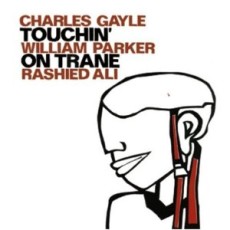
Rashied Ali, born Robert Patterson on July 1, 1933, grew up learning to play drums in Philadelphia, Pennsylvania influenced by his mother who sang with Jimmie Lunceford, and his brother Muhammad, a drummer with Albert Ayler.
Moving to New York in 1963, Ali worked in groups with Bill Dixon and Paul Bley. He would go on to record or perform with Pharoah Sanders, Alice Coltrane, Arthur Rhames, James Blood Ulmer and many others. Scheduled to be second drummer alongside Elvin Jones on John Coltrane’s landmark free jazz album Ascension, he dropped out just before the recording was to take place. Though Coltrane did not replace him, he became best known for playing and recording with Trane from Meditations in 1965 onwards.
Rashied became a driving force in the free and avant-garde drumming world, stimulating the most avant-garde kinds of jazz activities. During the early 1970s, he ran an influential loft club in New York, called Ali’s Alley, briefly formed a non-jazz project called Purple Trap with Japanese experimental guitarist Keiji Haino and jazz-fusion bassist Bill Laswell. In the 1980s, he was member of Phalanx with guitarist James Blood Ulmer, tenorist George Adams and bassist Sirone.
Though most known for his work in the jazz idiom, Rashied Ali also made his contributions to other experimental art forms including multi-media performances and fully improvised large-scale performance pieces. During the last years of his life he played with Sonny Fortune, led his own quintet, served as mentor to young drummers, and was the featured drummer on Azar Lawrence’s 2009 album Mystic Journey.
Over the course of his stellar career drummer Rashied Ali amassed a discography of eighteen albums as a leader with another thirty as a sideman. He continued to record, perform and tour worldwide until his death at age 74 in New York City after suffering a heart attack on August 12, 2009.
More Posts: drums
Daily Dose Of Jazz…
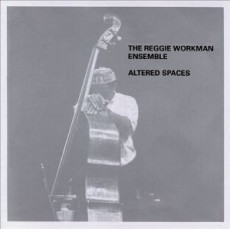
Reggie Workman was born Reginald Workman on June 26, 1937 in Philadelphia, Pennsylvania has been lauded for his work with both John Coltrane and Art Blakey. The double bassist, known for his avant-garde jazz and hard bop playing was a member of jazz groups led by Gigi Gryce, Roy Haynes, Wayne Shorter and Red Garland.
It was in 1961 that Workman joined Coltrane’s quartet, replacing Steve Davis and became a part of Trane’s “Live At The Village Vanguard” sessions, which has since become a legendary album. He also worked along with second bassist Art Davis on “Ole Coltrane”.
After a European tour Workman left the quartet and went on to play with James Moody, Yusef Lateef, Pharoah Sanders, Herbie Mann, Thelonious Monk, and became a Jazz Messenger. He has recorded several albums as a leader and with Archie Shepp, Lee Morgan and David Murray.
Reggie Workman has recorded seven albums as a leader and nearly four-dozen as a sideman working with Booker Little, Oliver Lake, Duke Jordan, Bobby Hutcherson and Grant Green among many others. He is currently a professor at The New School for Jazz and Contemporary Music in New York City.
More Posts: bass
Daily Dose Of Jazz…
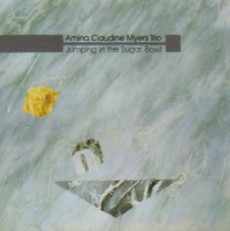
Amina Claudine Myers was born March 21, 1942 in Blackwell, Arkansas. The pianist, organist, vocalist, composer and musical arranger began singing and playing the piano and organ as a child in church choirs in the Dallas/Ft. Worth area where she grew up. She directed choirs at an early age and graduated in concert music and music education from Philander Smith College.
In the early sixties Amina moved to Chicago, teaching and attending classes at Roosevelt University. It was in Chicago that she began working with Sonny Stitt and Gene Ammons, joined the AAMC, focused on vocal compositions and recorded her debut album with Kalaparusha Maurice McIntyre in 1969. .
In 1976 Myers relocated to New York City, where she intensified her compositional work and expanded it into the realm of Off-Broadway productions. She also continued performing and recording as a pianist and organist with Lester Bowie and Muhal Richard Abrams into the early eighties. In 1985 she joined Charlie Haden’s Liberation Music Orchestra and had notable collaborations on recordings with artists like Marian McPartland, the Art Ensemble of Chicago, Archie Shepp, David Murray, Arthur Blytheand Ray Anderson to name a few.
Amina Claudine Myers, a virtuoso pianist and organist whose work is presented internationally and appears on scores of recordings, draws upon her backgrounds in classical music and the music of the black church of her native rural South to create a recombinant sensibility within improvisation-imbued extended compositions. Her work is insistently post-genre at a moment when re-inscriptive collage pretends to postmodern transgression.

Daily Dose Of Jazz…
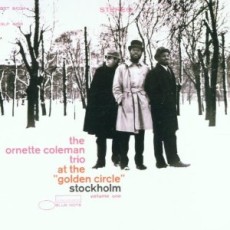
Ornette Coleman was born March 9, 1930 hailing from Fort Worth, Texas where he began performing R&B and bebop on the tenor. He found his way out of Texas taking a job with traveling shows, first Silas Green and then rhythm and blues. After his tenor was destroyed in an attack, Ornette switched to alto that has remained his primary instrument.
From the beginning Coleman was ear was unorthodox, his approach to harmony and chord progression was less rigid than that of bebop musicians who considered him out-of-tune. However there were some who heard the same sound and by the 50s he was making music with Paul Bley, Don Cherry, Billy Higgins, Don Payne, Walter Norris, Shelly Manne and Charlie Haden.
Regarded by some as iconoclastic, others like conductor Leonard Bernstein and composer Virgil Thomson saw his genius and innovation. Ornette became one of the major influences in the free jazz movement and a major player in the genesis of avant-garde jazz. Throughout the sixties and seventies he played with Freddie Hubbard, Eric Dolphy, Scott LaFaro and Ed Blackwell and introduced brief thematic dissonant fanfares, regular but complex pulse and solos where band mates were able to chime in as they wish.
His friendship with Albert Ayler influenced his development of the trumpet and violin. His evolution continued and subsequent quartets included his son Denardo, Sunny Murray, Jimmy Garrison, Elvin Jones, and Dewey Redman. It also forwarded his sojourn into electrified instruments, adopting a jazz-fusion mode fashionable at the time and bringing in such artists as Jerry Garcia of the Grateful Dead. He has brought to his recordings Pat Metheny, Geri Allen, and Joachim Kuhn but seldom appeared as a sideman.
Ornette Coleman is a saxophonist, violinist, trumpeter, and composer whose timbre is easily recognized with his keen, crying sound drawing upon the blues. In 2007 he won a Pulitzer for his album Sound Grammar and honored with a Grammy for lifetime achievement He continued to push the envelope with younger musicians from radically different cultures until his passing on June 11, 2015 in Manhattan, New York.
