

Daily Dose Of Jazz…
Hank Shaw was born Henry Shalofsky was born June 23, 1926 in London, England. At the age of 15 he played with Teddy Foster’s band during World War II. In the latter half of the decade he played around his hometown with Oscar Rabin, Frank Weir, and Tommy Sampson, then switched permanently from swing to playing bebop music in 1946 after hearing Dizzy Gillespie.
Visiting the United States in 1947 he came with close friend and fellow pioneer bebopper altoist Freddy Syer. However, unable to secure work permits they moved to Canada where they played with Oscar Peterson and Maynard Ferguson. Returning to England in 1948, Hank was one of the early Club Eleven players, along with Ronnie Scott, John Dankworth, Lennie Bush, and others. He also played with many of these musicians on the recordings of Alan Dean’s Beboppers.
After Club Eleven shuttered, Shaw played with Vic Lewis and toured Europe with Cab Kaye, then joined Jack Parnell’s ensemble in 1953 and Ronnie Scott’s nonet in 1954. He joined Jamaican alto saxophonist Joe Harriott in his celebrated quintet in 1958 but left with pianist Harry South when Harriott sought to introduce his “free-form” concept. Shaw played regularly both live and as a session musician for many British jazz musicians over the course of the next twenty or so years, working with Joe Harriott, Tony Crombie, Don Rendell, Tony Kinsey, Stan Tracey, Bill Le Sage, and others.
He led a quartet at the 100 Club in the Sixties, and played in the Bebop Preservation Society and the John Burch Quartet for over two decades each. He retired due to ill health in the late 1990s. Bebop trumpeter Hank Shaw transitioned four months past his 80th birthday on October 26, 2006 in Kent, England.

More Posts: bandleader,history,instrumental,jazz,music,trumpet
Daily Dose Of Jazz…
Lemuel A. Davis was born in Tampa, Florida on June 22, 1914. He started playing alto saxophone in high school and worked in semi-pro bands before moving to New York City in the early Forties. There his career started with pianist Nat Jaffe. He went on to play with the Coleman Hawkins Septet in 1943 and with Eddie Heywood’s group.
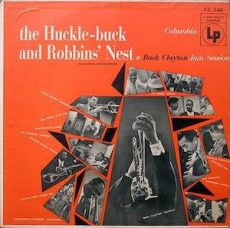
Throughout the 1940s, he played in a variety of jazz groups. Lem composed the bebop tune Lem Me Go in 1946 and recorded it with Eddie Safranski’s All Stars along with Vido Musso, Sanford Gold and Denzil Best. Then in 1953 he appeared on Buck Clayton’s The Hucklebuck recording. He continued playing in New York City throughout the 1950s, recording four albums with Buck Clayton between 1954 and 1956. He recorded little thereafter.
Alto saxophonist Lem Davis, mostly associated with swing music, transitioned on January 16, 1970 in New York City.
More Posts: history,instrumental,jazz,music,saxophone

Daily Dose Of Jazz…
Fatty George was born Franz Georg Pressler on April 24, 1927 in Vienna, Austria. He originally modeled himself after Benny Goodman but subsequently became a bebop player under the banner of Charlie Parker. He started out playing in clubs near the end of World War II for an audience of both American and Russian soldiers. his setlist adhering to the enormously popular swing recipes of the era.
He became involved in personally running nightclubs in both Germany and Austria, opening Fatty’s Jazz Casino in Insbruck, Austria in the early ’50s and Fatty’s Saloon in Vienna in 1958. His Fatty George Jazzband performed throughout the European continent at both clubs and festivals and released a series of albums under his own name, including Two Sides of Fatty George and Fatty’s Saloon. His playing partners often included the brothers Bill Grah and Heinz Grah on piano and trombone, respectively.
His recorded legacy includes about 50 recordings made over four decades beginning in the Forties, covering aspects of European history as well as ongoing developments in jazz itself.
Clarinettist Fatty George, who may have acquired the stage name of Fatty George with the help of double servings of apple strudel and goulash, transitioned on March 29, 1982.
More Posts: bandleader,clarinet,history,instrumental,jazz,music
Daily Dose Of Jazz…
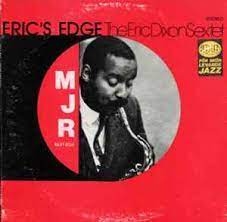
Eric “Big Daddy” Dixon was born on March 28, 1930 in New York City, New York. Although he played bugle as a child,he switched to the tenor saxophone at the age of 12. Following a stint as a musician in the US Army from 1951 to 1953 he played in groups that sometimes included Mal Waldron, with whom he would later record.
In 1954, he played with Cootie Williams and the following year with Johnny Hodges. In 1956, he performed and recorded with Bennie Green and also took up the flute.
The late Fifties had him spending four years in the house band led by Reuben Phillips at the Apollo Theatre in New York. At the end of the decade he toured Europe and recorded with the Cooper Brothers.
He also worked with Paul Gonsalves, Ahmed Abdul-Malik, Oliver Nelson, Quincy Jones, Jack McDuff, Joe Williams, Frank Foster, and Eddie “Lockjaw” Davis, but is probably best known for his tenure in Count Basie’s band, which lasted almost two decades. Dixon continued to play in the ghost band after Basie’s death.
Tenor saxophonist, flautist, composer, and arranger Eric Dixon, who has been credited on as many as 200 recordings, transitioned on October 19, 1989 in New York City.

More Posts: arranger,composer,flute,history,instrumental,jazz,music,saxophone
Daily Dose Of Jazz…
David Owen Mackay was born on March 24, 1932 in Syracuse, New York. He attended Trinity College in Hartford, Connecticut from 1950 to 1954, where he was the first blind student to graduate. He then attended Boston University from 1956 to 1958, where he studied with Margaret Charloff. He also studied with Lennie Tristano in New York City, then at the Lenox School of Jazz where he studied with Bill Evans, and lastly at The Hartford School of Music where he studied with Asher Zlotnik.
By the mid-1960s, Mackay joined the Hindustani Jazz Sextet with Don Ellis, Harihar Rao, Emil Richards, Steve Bohannon, Chuck Domanico and Ray Neapolitan. During this period he played with the Don Ellis Orchestra. The late Sixties saw him and Vicky Hamilton formed a duo and produced two recordings together with instrumentation including flute and saxes from Ira Schulman and guitar from Joe Pass.
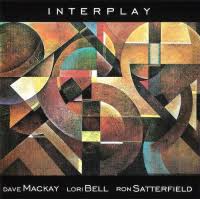
In the mid-1970s, Dave along with Bill Henderson, and Joyce Collins formed a unique trio which toured the northwest, recorded two Grammy nominated albums for Discovery, and by 1981 they were performing on the television show Ad Lib. By the end of the decade with Lori Bell, and Ron Satterfield he formed the group Interplay, which garnered them four Grammy npominations. In the 1990s, he teamed up with Stephanie Haynes.
By the turn of the century he teamed with John Giannelli on bass and Joe Correro on drums performing Bill Evans tunes in a celebration of the Life and Music of bassist Scott LaFaro. He then hooked up with bassist Kenny Wild and singer Tierney Sutton. He would go on to perform with Serge Chaloff, Sonny Stitt, Bob Wilber, Bobby Hackett, Jim Hall, Don Ellis, Emil Richards, Shelly Manne, Chet Baker, Joe Pass, Warne Marsh, Kai Winding, Stephanie Haynes, and Tierney Sutton.
As a composer a couple of Mackay’s original compositions were later recorded by Cal Tjader, and by the Baja Marimba Band. He wrote a majority of the music with lyricist Barbara Schill for a hit stage musical comedy titled Is It Just Me, Or Is It Hot In Here?
Pianist, vocalist and composer Dave Mackay, with roots in the works of Art Tatum, Bud Powell, and Bill Evans, who favored the standards of the 1940s and 1950s and the bossa novas of Luíz Eça, Antonio Carlos Jobim, and João Gilberto, transitioned on July 29, 2020.
More Posts: composer,history,instrumental,jazz,music,piano,vocal