

Daily Dose Of Jazz…
Frank Isola was born on February 20, 1925 in Detroit, Michigan and was heavily influenced by Gene Krupa. He played in the U.S. military during World War II and then studied and performed in California with Bobby Sherwood and Earle Spencer.
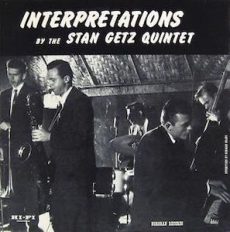
Moving to New York City he played with Johnny Bothwell and Elliot Lawrence in 1947. Following this, in the Fifties Frank played with Stan Getz and Gerry Mulligan, as well as with Mose Allison, Eddie Bert, Bob Brookmeyer, Jimmy Raney, Johnny Williams and Tony Fruscella.
By the late 1950s Isola returned to Detroit and kept working periodically with local bands or in jam sessions but well out of the spotlight. He was active in the Cass Corridor area of Detroit in the 1970s playing jazz standards with pianist Bobby McDonald and others at Cobb’s Corner Bar.
He worked as a drummer briefly at Captain Hornblower’s in Key West, Florida in the late 1980s with pianist Johnny Williams. By the early Nineties, he moved back north and was playing weekly at Tom’s Steamer’s Bar in Grosse Pointe, Michigan. In 1994 and 1995 Isola played at The Windsor Jazz Festival in Ontario, Canada backing Franz Jackson and Marcus Belgrave. The 1994 concert was released on Parkwood Records as Live at Windsor Jazz Festival III with Jackson and Belgrave as co-leaders.
He recorded fourteen albums between 1954 and 1981 with Getz, Mulligan, Mose Allison, Bob Brookmeyer, Dick Garcia, Franz Jackson, Charlie Parker and Bob Szajner. Drummer Frank Isola, who never led a recording session, transitioned on December 12, 2004.

More Posts: drums,history,instrumental,jazz,music
Daily Dose Of Jazz…
Alvin “Buddy” Banks was born on January 15, 1927 in St. Thomas, Ontario, Canada and grew up in the United States. He became interested in music during high school, starting out on piano before switching to saxophone. During World War II he joined the United States Army Band as a bass player.
Making his first appearance on record was in Vienna, Austria with Thurmond Young, this group also played live at the Colored Club. He played in Paris, France with Gerry Wiggins in 1950, and then with Bill Coleman in Bern, Switzerland, Le Havre, France and Belgium. After problems with his passport in Switzerland, he left for Paris in 1953, where he recorded often with expatriate American jazz musicians as well as local performers.
These include Hazel Scott, Buck Clayton, Lionel Hampton, Mezz Mezzrow, Don Byas, Albert Nicholas, and André Persiany. He toured with Michel Attenoux and with Sidney Bechet through Western and Central Europe in 1954.
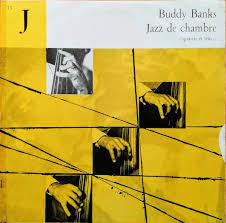
Double bassist Buddy Banks transitioned on August 7, 2005 in Las Vegas, Nevada.

More Posts: bass,history,instrumental,jazz,music
Daily Dose Of Jazz…
Nathan Peck was born on January 13, 1925 in New York City and began playing the trombone as a teenager. After leaving high school he was drafted into the army and became part of Glenn Miller’s band. He remained with the band until after World War II ended.
He played with Don Redman in 1947 and studied classical music at the Paris Conservatory from 1949 to 1951, while playing and recording with leading jazz musicians such as Coleman Hawkins, James Moody, and Roy Eldridge. During the 1950s Peck played on television in New York, and in 1953 he recorded with Dizzy Gillespie. He shuttled between Paris and New York until 1957, when he married dancer Vera Tietz, then settled in France.
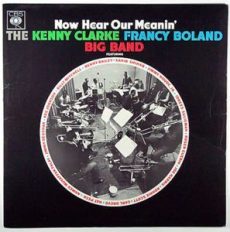
In France, he played with Michel Legrand, André Hodeir and Duke Ellington. Spending some time in England and Germany, Nathan worked as a staff musician at Sender Freies Berlin and played with Quincy Jones and the Clarke-Boland Big Band from 1963 to 1969. Relocating to London, England in 1965, he became active in the studios, film, and television. He played with Benny Goodman in the early Seventies and with Peter Herbolzheimer by the end of the decade.
Later he worked mainly as a contractor with his company, London Studio Orchestras. While this led to him ending his playing career, he shifted his talents to putting together the best blend of session musicians that he could find. ‘The Italian Job’, ‘Yentl’, ‘The 3 Muskateers’, and many more great films, especially with French composers Michel Legrand and Philippe Sarde.
Trombonist Nathan Peck transitioned on October 24, 2015.
More Posts: history,instrumental,jazz,music,trombone

Daily Dose Of Jazz…
Waymon Reed was born on January 10, 1940 in Fayetteville, North Carolina and attended the Eastman School of Music. He went on to play with trumpeter/saxophonist Ira Sullivan. Joining James Brown’s band from 1965 to 1969, he played on It’s a Man’s Man’s Man’s World.
Reed worked with the big bands of Frank Foster and Thad Jones-Mel Lewis. He became a member of the Count Basie Orchestra in 1969, staying until 1973. He returned to play with Basie again in 1977–78.
He married Sarah Vaughan and worked with her from 1978–80, but shortly afterwards they divorced. He played on B.B. King’s album There Must Be A Better World Somewhere in 1981. In 1977, Reed recorded his one album as leader, 46th and 8th, featuring tenor saxophonist Jimmy Forrest, pianist Tommy Flanagan, bassist Keter Betts and drummer Bobby Durham.
Trumpeter Waymon Reed, who was principally a bebop soloist, transitioned from cancer on November 25, 1983 in Nashville, Tennessee.
More Posts: bandleader,history,instrumental,jazz,music,trumpet
Daily Dose Of Jazz…
George Matthews was born on September 23, 1912 in Dominica, British West Indies and received classical training in New York City and played with local dance and jazz bands. In the early 1930s he joined Tiny Bradshaw’s group, being adept on tuba, trumpet, and trombone.
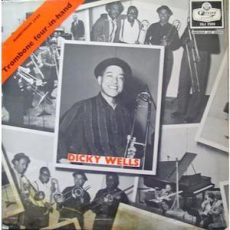
Later in the decade he worked with Willie Bryant, Louis Armstrong, Chick Webb, and in the Forties he recorded with Ella Fitzgerald, Lucky Millinder, and Sister Rosetta Tharpe. After World War II, Matthews worked extensively with Count Basie, then joined Erskine Hawkins’s group in the early 1950s, while recording with Dizzy Gillespie, and Dicky Wells. In the 1960s he played with Lucille Dixon, Clark Terry, and recorded with Cannonball Adderley and Ray Charles in the Sixties.
Trombonist George Matthews, who never led a recording session, transitioned on June 28, 1982.

More Posts: bandleader,history,instrumental,jazz,music,trombone