

Daily Dose Of Jazz…
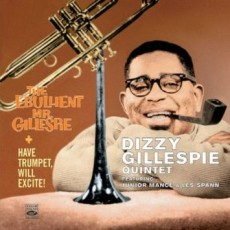
Dizzy Gillespie was born John Birks Gillespie on October 21, 1917 in Cheraw, South Carolina, the youngest of nine children of James and Lottie Gillespie. His father, a local bandleader, made instruments available to the children. He started playing the piano at the age of four and taught himself how to play the trombone as well as the trumpet by the age of twelve. From the night he heard his idol, Roy Eldridge, play on the radio, he dreamed of becoming a jazz musician. Receiving a music scholarship to the Laurinburg Institute in North Carolina, he attended for two years before accompanying his family when they moved to Philadelphia.
Gillespie’s first professional job was with the Frank Fairfax Orchestra in 1935, after which he joined the respective orchestras of Edgar Hayes and Teddy Hill, essentially replacing Roy Eldridge as first trumpet in 1937 and making his first recording as part of the band on King Porter Stomp. He would move on to play with Cab Calloway, alongside Cozy Cole, Milt Hinton and Jonah Jones until an altercation with Calloway got him fired. During his period he started writing big band music for bandleaders like Woody Herman and Jimmy Dorsey while freelancing with a few bands – most notably Ella Fitzgerald’s orchestra, comprised of members of the late Chick Webb’s band, in 1942. Avoiding service in World War II, he joined the Earl Hines band followed by a stint with Billy Eckstine’s big band, got reunited with Charlie Parker and finally left to play with a small combo of quintet size.
A forerunner of the evolution of bebop along with Parker, Monk, Bud Powell, Kenny Clarke, and Oscar Pettiford, Dizzy helped shape a new vocabulary of musical phrases. They jammed at Minton’s Playhouse and Monroe’s Uptown House with compositions like Groovin’ High, Woody ‘n’ You, Salt Peanuts and A Night In Tunisia that also introduced Afro-Cuban rhythms.
As an educator Gillespie taught or influenced many of the young musicians on 52nd Street including Miles Davis, Max Roach, Fats Navarro, Clifford Brown, Lee Morgan, Chuck Mangione and even balladeer Johnny Hartman about the new style of jazz, but after ambivalent or hostile reception in Billy Berg’s Los Angeles club, he decided to lead his own big band, though unsuccessful at his first attempt in 1945. He went on to work with Milt Jackson, John Coltrane, Lalo Schifrin, Ray Brown, Kenny Clarke, James Moody, J.J. Johnson and Yusef Lateef, whole appearing as a soloist for Norman Granz’s Jazz at the Philharmonic.
In 1948 Dizzy lost his ability to hit the B-flat above high C due to an automobile hitting the bicycle he was riding. He won the case, but the jury awarded him only $1000, in view of his high earnings up to that point. Not to be sidelined, he went on tour for the State Department earning himself the title Ambassador of Jazz. His new big band would tour the U.S. and record a live album at the 1957 Newport Jazz Festival and featured pianist Mary Lou Williams.
Dizzy immersed himself in the Afro-Cuban movement and hired Chano Pozo and Mario Bauza to play in his bands on 52nd Street, the Palladium and the Apollo Theater. He co-wrote with Pozo the songs Manteca and Tin Tin Deo, commissioned George Russell’s Cubano Be, Cubano Bop, and discovered Arturo Sandoval while on a music researching trip to Cuba.
As his tone gradually faded in the last years in life his performances often focused more on his protégés, such as, Arturo Sandoval and Jon Faddis, all the while keeping his good-humored comedic routines a part of his live act. Dizzy would go on to give 300 performances in 27 countries, appeared in 100 U.S. cities in 31 states and the District of Columbia, headline three television specials, performed with two symphonies, and recorded four albums.
Gillespie put himself on the ballot as a write-in candidate of the 1964 Presidential election, published his autobiography, To Be or Not To Bop, was a vocal fixture in many of the John & Faith Hubley’s animated films, such as The Hole, The Hat and Voyage to Next. He led the United Nation Orchestra, toured with Flora Purim and David Sanchez in his band, received Grammy nominations, guested on The Muppet Show, Sesame Street and The Cosby Show and had a cameo on Stevie Wonder’s hit Do I Do and Quincy Jones’ Back On The Block.
Inducted into the Down Beat Magazine’s Jazz Hall of Fame, Dizzy was also honored by being crowned a traditional chief in Nigeria, received the Ordre des Arts et des Lettres from France, and was named Regent Professor by the university of California, received fourteen honorary doctorates, received a Grammy Lifetime Achievement Award, the Polar Music Prize, a Hollywood Walk of Fame Star, the Kennedy Center Honors Award, and the Ameican Society of Composers, Authors and Publishers Duke Ellington Award for 50 years of achievement. Composer, performer, bandleader and trumpeter Dizzy Gillespie passed away of pancreatic cancer on January 6, 1993 in Englewood, New Jersey at the age of 75. In 2014, Gillespie was inducted into the New Jersey Hall of Fame.

Inspire A Young Mind
More Posts: trumpet
Daily Dose Of Jazz…
J. C. Moses was born in Pittsburgh, Pennsylvania on October 18, 1936 and was related to pianist Jimmy Golden and trumpeter Clifford Thornton. Somewhat of a mystery figure in jazz history, he was a very versatile and for a time greatly in-demand drummer who played in settings ranging from mainstream to free jazz.
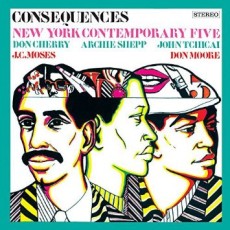
Moses first gained the attention of the jazz world in the early 1960s, when he recorded with Clifford Jordan, Kenny Dorham and Eric Dolphy. As a member of the New York Contemporary Five with Archie Shepp, John Tchicai and Don Cherry, he toured Scandinavia in 1963 and recorded in Denmark. Returning to New York the following year, J. C. recorded with Bud Powell on the album The Return of Bud Powell, was with the New York Art Quartet, then was with an early version of Charles Lloyd’s Quartet and spent two years with Rahsaan Roland Kirk.
During this period drummer J. C. Moses also worked with Archie Shepp, Andrew Hill and Sam Rivers. By 1969 he played regularly in Copenhagen as the house drummer at the Montmartre Club. However, erratic health forced him to cut back on his activities in the early 1970s and he returned to Pittsburgh. Unfortunately he never led his own record date but he would occasionally played with Nathan Davis and Eric Kloss before his untimely death in 1977.
Give The Gift Of Knowledge
More Posts: drums
Daily Dose Of Jazz…
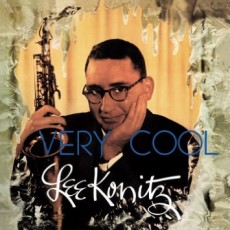
Lee Konitz was born October 13, 1927 in Chicago, Illinois. At age 11, he received his first instrument, a clarinet, but later dropped the instrument in favor of the tenor saxophone. He eventually moved from tenor to alto. His greatest influences at the time were the swing big bands, in particular Benny Goodman, who prompted him to take up clarinet. However, on the saxophone he was improvising before ever learning to play any standards.[1]
Konitz began his professional career in 1945 with the Teddy Powell band replacing Charlie Ventura. A month later the band parted ways and between 1945 and 1947 he performed off and on with Jerry Wald. In 1946 he first met pianist Lennie Tristano, working in a small cocktail bar with him. He went on to work through the Forties with Claude Thornhill, Gil Evans and Gerry Mulligan.
He played with Miles Davis on a couple of gigs in 1949 and recorded with him on the album The Birth of the Cool. Though his presence in the group angered some unemployed black musicians Davis rebuffed their criticisms. The same year his debut as leader also came in a session that would be titled Subconscious-Lee, release some six years later.
By the early 1950s, Lee recorded and toured with Stan Kenton, but through the decade he recorded as a leader. In 1961, he teamed up with Elvin Jones and Sonny Dallas to record a series of standards on Motion, followed by duets project utilizing sax and trombone, two saxophones, saxophone and violinist Ray Nance or guitarist Jim Hall..
In 1971 Konitz contributed to the film score for Desperate Characters, performed at the Woodstock Jazz Festival, has performed or recorded with Dave Brubeck, Ornette Coleman, Charles Mingus, Gerry Mulligan, Elvin Jones, Brad Mehldau, Charlie Haden, Grace Kelly, Gary Peacock, Bill Frisell, Joey Baron and Paul Motian, among numerous others.
In addition to his bebop and cool jazz releases alto saxophonist Lee Konitz has become more experimental as he has grown older, has released a number of free and avant-garde jazz albums , all of which have amassed over some one hundred and twenty to date as a leader. He has recorded some fifty albums as a sideman and continues to perform and tour, often playing alongside many far younger musicians.
Alto saxophonist Lee Konitz died during the COVID-19 pandemic from complications brought on by the disease on April 15, 2020.
Dose A Day – Blues Away
More Posts: saxophone
Daily Dose Of Jazz…
Edward Joseph Blackwell was born on October 10, 1929 in New Orleans, Louisiana. His drumming style was greatly influenced by the second line parade music. His early career began in his hometown in the 1950s playing in a bebop quintet that included pianist Ellis Marsalis and clarinetist Alvin Battiste. For a brief stint he toured with Ray Charles.
Blackwell first came to national attention as the drummer with Ornette Coleman’s quartet around 1960, when he took over for Billy Higgins in the quartet’s legendary stand at the Five Spot in New York City. Known as one of the great innovators of free jazz of the 1960s, fusing New Orleans and African rhythms with bebop.
In the 1970s and 1980s Blackwell toured and recorded extensively with fellow Ornette’s Quartet veterans Don Cherry, Charlie Haden and Dewey Redman in the Old and New Dreams Quartet. By the late 1970s he became an Artist-in-Residence at Wesleyan University in Middletown, Connecticut and was a beloved figure on the Wesleyan Campus until he died.
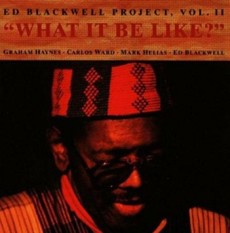
In 1981 he performed at the Woodstock Jazz Festival, held in celebration of the tenth anniversary of the Creative Music Studio. The Ed Blackwell Project was comprised of members Mark Helias on bass, alto saxophonist and flautist Carlos Ward and Graham Haynes on cornet. He played with Ray Anderson, Karl Berger, Jane Ira Bloom, David Bond, Charles Brackeen, Anthony Braxton, Marlon Brown, Steve Coleman, Anthony Davis, Jane Cortez, Stanley Cowell, Eric Dolphy, Albert Heath, Clifford Jordan, Joe Lovano, Yoko Ono, David Murray, Hilton Ruiz and numerous others.
After years of kidney problems, drummer Ed Blackwell passed away on October 7, 1992. The following year he was inducted into the Down Beat Jazz Hall of Fame.
Put A Dose In Your Pocket
More Posts: drums
Daily Dose Of Jazz…
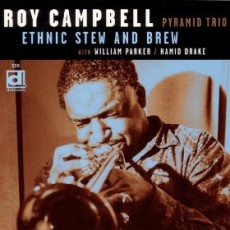
Roy Sinclair Campbell, Jr. was born on September 29, 1952 in Los Angeles, California and raised in New York. At the age of fifteen he began learning to play trumpet and soon studied at the Jazz Mobile program along with Kenny Dorham, Lee Morgan and Joe Newman. Throughout the 1960s, still unacquainted with the avant-garde movement, he performed in the big bands of the Manhattan Community College.
From the 1970s onwards he performed primarily within the context of free jazz, spending some of this period studying with Yusef Lateef. In the early 1990s Roy moved to the Netherlands and began performing regularly with Klaas Hekman and Don Cherry. He led his own groups but took a sideman seat to perform with Yo La Tengo, William Parker, Peter Brotzmann, Matthew Shipp and other improvisers.
Campbell returned stateside to lead his group Other Dimensions In Music while also forming the Pyramid Trio, without a piano, with William Parker. He performed regularly as part of the Festival of New Trumpet Music held annually in New York City. He recorded seven albums as a leader, twelve as a co-leader and nearly five dozen as a sideman working with the likes of Jemeel Moondoc, Saheb Sarbib, Billy Bang, Ehran Elisha, Rob Brown, Alan Silva, Yuko Fujiyama, Steve Lehman, the Maneri Ensemble, Khan Jamal, Kevin Norton, Garrison Fewell and Marc Ribot among numerous others.
Trumpeter Roy Campbell, who primarily performed in the bebop and free settings but also played funk and rhythm and blues, passed away on January 9, 2014 of hypertensive atherosclerotic Cardiovascular disease at the age of 61.
Dose A Day – Blues Away
More Posts: trumpet