

Daily Dose Of Jazz…
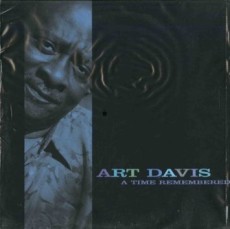
Art Davis was born in Harrisburg, Pennsylvania on December 5, 1934 where he began studying the piano at the age of five, switched to tuba, and finally settled on the bass while attending high school. He studied at Juilliard and the Manhattan School of Music, but graduated from Hunter College.
Davis earned a Ph.D in clinical psychology from New York University in 1982 and four years later he moved to Southern California, where he balanced his teaching as a professor at Orange Coast College and practicing of psychology with jazz performances.
Art recorded three albums as a leader with Herbie Hancock, Hilton Ruiz, Greg Bandy, John Hicks, Idris Muhammad, Pharoah Sanders, Ravi Coltrane, and Marvin Smith.
As a sideman he performed and recorded with Joe Albany, Gene Ammons, Count Basie, Art Blakey, John Coltrane, Curtis Fuller, Dizzy Gillespie, Eddie Harris, Freddie Hubbard, Elvin Jones, Etta Jones, Clifford Jordan, Roland Kirk, Abbey Lincoln, Booker Little, Lee Morgan, Tisziji Munoz, Dizzy Reece, Max Roach, Lalo Schifrin, Shirley Scott, Clark Terry, McCoy Tyner and Leo Wright.
He also launched a legal case that led to the current system of blind auditions for orchestras. Double bassist Art Davis passed away from a heart attack on July 29, 2007.

Inspire A Young Mind
More Posts: bass
Daily Dose Of Jazz…
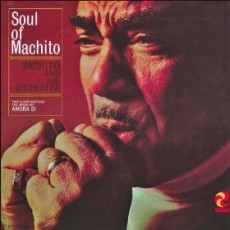
Machito was born Francisco Raúl Gutiérrez Grillo on December 3, 1909 in Havana, Cuba. He began playing music as a child and started playing professionally in his teens before emigrating to America in 1937 as a vocalist with La Estrella Habanera.
In the late 30s he worked with several Latin artists and orchestras, recording with bandleader Xavier Cugat. An attempt to launch a band with his brother-in-law Mario Bauzá failed, but in 1940 Machito founded the Afro-Cubans and was the front man, singer, conductor and maraca player. The following year he hired Bauzá as his music director, a working relationship that lasted for 35 years.
Under Bauzá’s influence, Machito began hiring jazz-oriented arrangers and his bands of the 40s were among the first to fuse Afro-Cuban rhythms with jazz improvisation that greatly inspired jazz giants Dizzy Gillespie and Stan Kenton. Throughout his career he played and recorded with Charlie Parker, Dizzy Gillespie, Buddy Rich, Cannonball Adderley, Herbie Mann, and Johnny Griffin, held a spot at the Palladium and recorded Decca, Mercury and Clef labels.
In 1983 he won the Grammy Award for Best Latin Recording for Machito & His Salsa Big Band ’82. In 2005, his 1957 album, “Kenya”, was added to the list of “1001 Albums You Must Hear Before You Die”. He played a huge role in the history of Latin jazz and passed away after suffering a fatal stroke on April 15, 1984 while playing on stage at Ronnie Scott’s in London. He was 74. A documentary of the great Cuban musician, Machito: A Latin Jazz Legacy was released in 1987.
Take A Dose On The Road
Daily Dose Of Jazz…
Roy McCurdy was born November 28, 1936 in Rochester, New York. He attended the Eastman School of Music from sixteen to eighteen, during which time he also played professionally with Roy Eldridge, Eddie Vinson at seventeen. Among the influences he cites Louie Bellson, Shelly Manne, Sam Woodyard, Buddy Rich, Pap Joe Jones, and the bands of Duke Ellington, Jimmie Lunceford and Lionel Hampton.
He started out playing with the Jazz Brothers – Chuck and Gap Mangione, In 1960 he joined the Art Farmer-Benny Golson Jazztet, remaining for two years, as well as Bobby Timmons, Betty Carter and Sonny Simmons from 1963-64. He played on the classic album Sonny Meets Hawk!.
In 1965 he joined Cannonball Adderley Quintet in 1965 and stayed with the band, recording 18 albums until Adderley’s death. He recorded a half-dozen with Nat Adderley, and has also played and/or recorded with Count Basie, Nancy Wilson, Gene Ammons, Wes Montgomery, Ella Fitzgerald, Sarah Vaughan, Carmen McRae, Joe Williams, Herbie Hancock, Oscar Peterson,, Bud Powell, Art Pepper, Joe Zawinul, Betty Bennett and the jazz rock group Blood, Sweat and Tears.
He appears on the classic 1983 recording Jackson, Johnson, Brown & Company featuring Milt Jackson on vibes, trombonist J.J. Johnson, bassist Ray Brown, Tom Ranier on piano and John Collins on guitar.
As of 2010, in between performing and recording drummer Roy McCurdy is an Adjunct Professor in the Jazz Studies Department of the Thornton School of Music at the University of Southern California in Los Angeles, California.
Inspire A Young Mind
More Posts: drums
Daily Dose Of Jazz…
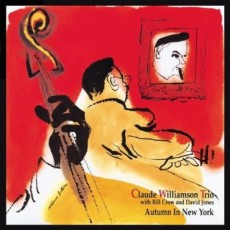
Claude Berkeley Williamson was born November 18, 1926 Brattleboro, Vermont. He studied piano at the New England Conservatory of Music before moving to jazz, influenced mainly by Teddy Wilson, then by Al Haig and Bud Powell.
Moving to California in 1947 he first worked with Teddy Edwards, then with Red Norvo in San Francisco followed by Charlie Barnet in 1949 and June Christy two years later. He would go on to work with Max Roach, Art Pepper, Chet Baker, Maynard Ferguson, Barney Kessel, Dizzy Reece, Ted Curson and others.
Williamson was a longtime member of the Lighthouse All-Stars, often substituting for Russ Freeman, and performing with Bud Shank, Stan Levey, Bob Cooper, Conte Candoli and Howard Rumsey. By 1956 he was the piano player in the Bud Shank Quartet and a little over a decade later he was the pianist for NBC on The Andy Williams Show and then for Sonny and Cher.
In 1978 he went back to the jazz world and released many albums, mainly for Japanese labels, often accompanied by Sam Jones and Roy Haynes. In 1995 he made a trio recording for Fresh Sound Records at the Jazz Bakery and at the age of 88, pianist Claude Williamson currently plays clubs in Los Angeles.
Take A Dose On The Road
More Posts: piano
Daily Dose Of Jazz…
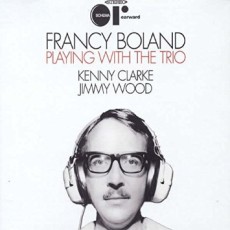
François Boland was born on November 6, 1929 in Namur, Belgium. He was classically trained on piano and first gained notice in 1949 working with Belgian jazz greats like Bobby Jaspar and in 1955 he joined Chet Baker’s quintet.
A move to the United States saw Boland arranging for Count Basie, Benny Goodman, Woody Herman and Dizzy Gillespie. He formed an octet with drummer Kenny Clarke before returning to Europe and becoming Kurt Edelhagen’s chief arranger. In 1961, building from a rhythm section featuring Clarke, Jimmy Woods and himself, he founded the Kenny Clarke Francy Boland Big Band, which rapidly became one of the most noted big bands assembled outside the United States.
Some of band’s collaborators and members over the years included Johnny griffin, Art Farmer, Phil Woods, Ake Persson, Dusko Goykovich, Eddie “Lockjaw” Davis, Muvaffak “Maffy” Falay, Idrees Sulieman, Herb Geller, Benny Bailey and Jimmy Wooden, among others.
After the band broke up in 1972 he concentrated on composing. From 1976 on Francy lived in Europe, primarily Switzerland, arranging music for Sarah Vaughan and others. He was a part of One World, One Peace, an effort that involved Pope John Paul II.
Belgian jazz composer and pianist Francy Boland passed away in Geneva, Switzerland on August 12, 2005.
Inspire A Young Mind
More Posts: piano