

Daily Dose Of Jazz…
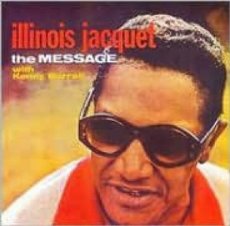
Jean-Baptiste Illinois Jacquet was born October 30, 1922 in Broussard, Louisiana to a Sioux mother and Creole father and bandleader. They moved to Houston, Texas when he was just an infant and grew up performing in his father’s band primarily on the alto saxophone.
At 15, Jacquet began playing with the Milton Larkin Orchestra, a Houston-area dance band. In 1939, he moved to Los Angeles, California where he met Nat King Cole and would sit in with the trio on occasion. In 1940, Cole introduced Jacquet to Lionel Hampton who hired him and asked him to switch to tenor.
In 1942, at age 19, Illinois soloed on the Hampton Orchestra’s recording of “Flying Home”, one of the very first times a honking tenor sax was heard on record. The song and solo became such a hit that every sax player who followed, notably Arnett Cobb, Dexter Gordon, Jimmy Forrest, Eddie “Lockjaw” Davis and Sonny Rollins, memorized them.
Quitting the Hampton band in 1943 and joined Cab Calloway’s Orchestra appearing with the band in Lena Horne’s movie Stormy Weather. Returning to California in 1944 he started a small band with his brother Russell and a young Charles Mingus.
It was at this time that Jacquet appeared in the Academy Award-nominated short film Jammin’ the Blues with Lester Young. He also appeared at the first Jazz at the Philharmonic concert and in 1946 he moved to New York City and joined Count Basie, replacing Young.
Through the 1960s and ‘70s he continued to perform mostly in Europe in small groups through the 1960s and 1970s, then led the Illinois Jacquet Big Band from 1981 until his death. He was the first jazz musician to be an artist-in-residence at Harvard University in 1983, played “C-Jam Blues” with President Clinton on the White House lawn during Clinton’s inaugural ball in 1993.
Illinois Jacquet, a skilled and melodic improviser, and a pioneer of the honking tenor saxophone that became the hallmark of early rock and roll, passed away of a heart attack in his home in Queens, New York on Thursday, July 22, 2004. He was 81 years of age.

Jazz Is Global – Share
Daily Dose Of Jazz…
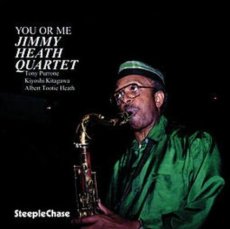
Jimmy Heath was born James Edward Heath on October 25, 1926 and he originally played alto saxophone until influenced by Charlie Parker’s work with Howard McGhee and Dizzy Gillespie, he switched to tenor.
He shared a short tenure with Miles Davis’s group in 1959, replacing John Coltrane, then also worked with Kenny Dorham and Gil Evans, and composed most of the 1956 Chet Baker/Art Pepper album Playboys. During the 1960s, he frequently worked with Milt Jackson and Art Farmer.
Jimmy recorded a string of impressive albums for Riverside and worked as a freelance sideman and arranger. He has recorded as a leader for Cobblestone, Muse, Xanadu, Landmark, and Verve. By 1975, he and his brothers formed The Heath Brothers with pianist Stanley Cowell.
As an educator, in the 1980s, he joined the faculty of the Aaron Copland School of Music at Queens College in the City University of New York. With the rank of Professor, he led the creation of the Jazz Program at Queens College along with teaching at Jazzmobile. He served on the Board of the Louis Armstrong Archives, and the restoration and management of the Louis and Lucille Armstrong Residence in Corona, Queens.
Tenor saxophonist, composer and arranger Jimmy Heath, nicknamed “Little Bird” is the brother of Percy and Albert and the father of James Mtume and is a 2003 recipient of the NEA Jazz Masters Award and honorary Doctorate in Human Letters.
Jazz Is Global – Share
More Posts: saxophone
Daily Dose Of Jazz…
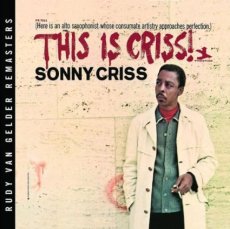
William “Sonny” Criss was born on October 23, 1927 in Memphis, Tennessee and at the age of 15 moved to Los Angeles. Developing a concise, bluesy tone he easily fit into the bands he drifted between such as Howard McGhee’s playing alongside Charlie Parker, Johnny Otis and Billy Eckstine.
As his ability continued to increase his first major break came in 1947 with Norman Granz, playing on a number of jam sessions. In 1956 he was signed to Imperial Records, recorded a number of underground classics like “Jazz U.S.A.”, “Go Man” and “Sonny Criss Play Cole Porter” that featured Sonny Clark on piano.
He would go on to record for Muse, Impulse and Prestige record labels, worked with Wynton Kelly, rooted himself in the hard bop tradition recording charts by Horace Tapscott and also several well-acclaimed albums like Sonny’s Dream.
Alto saxophonist Sonny Criss settled in Los Angeles and continued to perform and record but by 1977 had contracted stomach caner. Unable to bear the pain, he committed suicide by gunshot on November 19, 1977. after contracting stomach cancer earlier that year and unable to bear the painful condition he was experiencing.
Give The Gift Of Knowledge
Daily Dose Of Jazz…
J. C. Heard was born James Charles Heard on October 8, 1917 in Dayton, Ohio. A very supportive drummer, versatile enough to fit comfortably into swing, bop and blues settings, he landed his first important professional job with Teddy Wilson in 1939. This kicked off a long and fruitful career.
By 1946 he was recording with top bop musicians such as Charlie Parker, Dizzy Gillespie and Dexter Gordon. Heard would go on to lead his own groups and in the Fifties spent a few years in Japan. Late in the decade he returned to New York and freelanced, even reuniting with Teddy Wilson in ’61.
Throughout his career J. C. would play, record and tour with Lena Horne, Coleman Hawkins, Cab Calloway, Benny Carter, Erroll Garner, Jazz At The Philharmonic, Pete Johnson, Sir Charles Thompson and Roy Eldridge among others.
In 1966 J.C. Heard moved to Detroit, worked as a bandleader and a mentor to younger musicians into the mid-’80s and passed away on September 27, 1988 in Royal Oak, Michigan.
Take A Dose On The Road
More Posts: drums
Daily Dose Of Jazz…
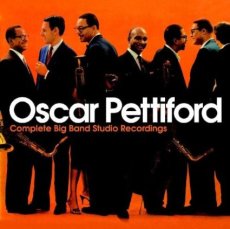
Oscar Pettiford was born September 30, 1922 in Okmulgee, Oklahoma to a Choctaw mother and Cherokee/African American father. Growing up playing in the family band in which he sang and danced, he switched to piano at the age of 12 then to double bass when he was at the age of 14. Despite being admired by the likes of Milt Hinton, he stopped playing in 1941, feeling he couldn’t make a living. Five months later, he once again met Milt, who persuaded him to return to music.
In 1942 he joined the Charlie Barnet band and 1943 saw him gaining wider public attention after recording with Coleman Hawkins on his “The Man I Love.” He also recorded with Earl Hines, Ben Webster, led a group with Dizzy Gillespie and went to California with Hawkins to play in the film The Crimson Canary and on the soundtrack.
Following this he joined Duke Ellington, then Woody Herman but by the 50s mainly became a leader. It was in this role he inadvertently discovered Cannonball Adderley after one of his musicians tricked him into letting Adderley, an unknown music teacher, onto the stand, he had Adderley solo on a demanding piece, on which Adderley performed impressively.
Pettiford is considered the pioneer of the cello as a solo instrument in jazz music, first played the cello as a practical joke on Woody Herman. However, in 1949, after breaking his arm and finding it impossible to play his bass, he started playing the cello allowing him to perform during his rehabilitation. He made his first recordings with the instrument in 1950. The cello thus became his secondary instrument, and he continued to perform and record with it throughout the remainder of his career.
He recorded extensively during the 1950s for the Debut, Bethlehem and ABC Paramount labels among others, and for European companies after his move to Copenhagen, Denmark in 1958. Oscar Pettiford passed away from a virus associated with polio on September 8, 1960 in Copenhagen and along with his contemporary, Charles Mingus, he stands out as one of the most-recorded bassist and bandleader/composers in jazz
Dose A Day – Blues Away