

Daily Dose Of Jazz…
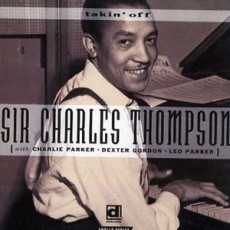
Charles Phillip Thompson was born in Springfield, Ohio on March 21, 1918 and became a professional pianist from the age of 10. By age twelve Thompson was playing private parties with Bennie Moten and his band in Colorado Springs. During this time Count Basie played off and on with Moten’s band and at one of these shows Basie called the young Charles up to play.
Throughout his career has chiefly worked with small groups, although he belonged to the Coleman Hawkins/Howard McGhee band in 1944-1945. Throughout the 40s he recorded with Charlie Parker, Dexter Gordon and J.C. Heard among others.
Thompson composed the jazz standard “Robbins’ Nest” and was dubbed Sir Charles Thompson by Lester Young. The swing and bop pianist, organist and arranger at age 98, passed away of colon cancer on June 16, 2016 in Tokyo, Japan.
More Posts: piano
Daily Dose Of Jazz…
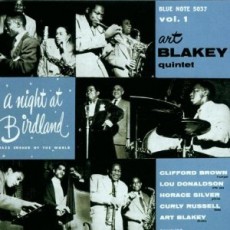
Curley Russell was born Dillon Russell on March 19, 1917 in Trinidad. Learning to play bass in his youth, the double-bassist by 1941 had joined the Don Redman big band and two years later was playing with Benny Carter. During the early bop period of jazz he became extremely busy performing and recording with Dizzy Gillespie and Charlie Parker.
From 1947 – 1949 he was a member of the Tadd Dameron Sextet and became more in demand for his ability to play at rapid tempos typical of the period. During his short career as a sideman he performed and recorded with an impressive list of musicians: Buddy De Franco, Bud Powell, Horace Silver, Thelonious Monk, the Art Blakey Quintet, Clifford Brown, Fats Navarro, Miles Davis, J. J. Johnson, Johnny Griffin, Stan Getz, George Wallington, Milt Jackson, Al Cohn and Zoot Sims.
Seemingly uninterested in the melodic mobility that was expected of bassists, he was never featured as a soloist and by the late Fifties dropped out of the jazz scene and left the music business altogether. Bassist Curley Russell passed away on July 3, 1986.
More Posts: bass
Daily Dose Of Jazz…
Charles Gayle was born February 28, 1939 in Buffalo, New York and his childhood was influenced by religion, and his musical roots trace to black gospel music. He began his musical education on piano then added tenor and alto saxophone. Much of his history is murky, he spent an apparent homeless period of about twenty years playing saxophone on street corners and subway platforms around New York City.
A multi-instrumentalist playing pianist, bass clarinetist and percussion, his music is spiritual, heavily inspired by the Old and New Testaments, explicitly dedicated several albums to God. Gayle credits among his influences Louis Armstrong, John Coltrane, Albert Ayler, Thelonious Monk and Art Tatum.In 1988, he gained fame through a trio of albums recorded on the Swedish label Silkheart Records. Since then he has become a major figure in free jazz, recording for Black Saint, Knitting Factory, FMP and Clean Feed record labels.
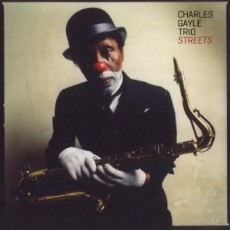
Charles has performed and recorded with Cecil Taylor, William Parker and Rashied Ali with his most celebrated work to date being Touchin’ on Trane with Parker and Ali. He would include lengthy spoken-word addresses in his performances and for a period performed as a mime, “Streets the Clown”. As an educator he taught music at Bennington College.
In 2001, Gayle recorded an album titled Jazz Solo Piano of consisted mostly of straightforward jazz standards in response to critics who charge that free jazz musicians cannot play bebop. In 2006, Gayle followed up with a second album of solo piano originals, and his most recent release in 2012 is titled Streets. His final recording as a leader was The Alto Sessions in 2019.
Suffering from complications of Alzheimer’s disease, saxophonist Charles Gayle, who also played piani, bass clarinet, bass and percussion, died in Brooklyn, New York on September 7, 2023 at the age of 84.
Daily Dose Of Jazz…
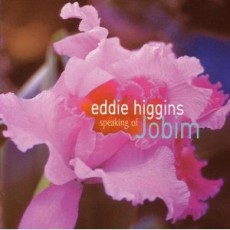
Eddie Higgins was born Edward Haydn Higgins on February 21, 1932 in Cambridge, Massachusetts and began study of piano with his mother. His professional career began in Chicago while attending Northwestern University. He played the most prestigious clubs in Chicago for more than two decades in the 50s and 60s with his longest tenure at the London House, playing opposite Cannonball Adderley, Bill Evans, Errol Garner, Stan Getz, Dizzy Gillespie, Oscar Peterson, and George Shearing among others.
As a leader he amassed a number of recordings during the Chicago years but as a sideman he added many more albums working with Wayne Shorter, Coleman Hawkins, Bobby Lewis, Freddie Hubbard, Jack Teagarden and Al Grey to name just a few.
Equally adept in every jazz circle Eddie was able to work in Dixieland, modal, bebop and swing as well as being a persuasive, elegant and sophisticated pianist whether he was soloing or accompanying a singer.
Higgins eventually moved to Fort Lauderdale, Florida, played in local clubs, performed the jazz festival circuit, toured Europe and Japan, and continued to record up until his death on August 31, 2009 at 77.
More Posts: piano
Daily Dose Of Jazz…
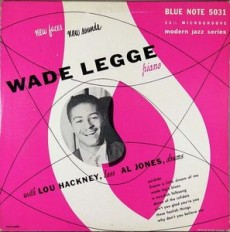
Wade Legge was born on February 4, 1934 in Huntington, West Virginia. He played more bass than piano in his early years, and it was with the bass that Milt Jackson first noticed him, recommending Wade to Dizzy Gillespie. After hiring him, Gillespie moved him to piano and he remained a member of Gillespie’s ensemble until 1954. During his Dizzy years, Legge recorded a date in France as a trio session leader.
Following his tenure with Gillespie, Wade moved to New York City and freelanced there, playing in Johnny Richards’s orchestra, and sessions with Charles Mingus, Sonny Rollins, Milt Jackson, Joe Roland, Bill Hardman, Pepper Adams, Jimmy Knepper and Jimmy Cleveland.
Legge was one of three pianists recording as a member of the variously staffed Gryce/Byrd Jazz Lab Quintets in 1957 and appeared on more than 50 recordings before retiring to Buffalo in 1959. Jazz bassist and pianist Wade Legge died on August 15, 1963 in Buffalo, New York at the age of 29.