


Daily Dose Of Jazz…
Herbert Anthony Charles Spanier was born in Cupar, Canada on December 25, 1928. He played guitar and harmonica at five, bugle in Regina, Canada cadet bands, and trumpet in high school. One of the first beboppers in Canada, and a figure of some legend on the Canadian jazz scene,
He played with Paul Perry and with his own band ‘Boptet’ in Regina before working in Chicago, Illinois from 1949-1950 and from 1950-1954 in Toronto, Canada. He was a sideman to Paul Bley in New York 1954-1955 and Los Angeles, California 1958-1959, and toured out of New York with the Claude Thornhill and Hal McIntyre orchestras in 1955.
He was an influential jazz musician in Montreal, Canada from 1956-1958 and between 1960-1971. Spanier taught briefly at Sir George Williams University, performed in various dance, hotel, and CBC orchestras, contributed music to NFB films. Herbie was the leader on the CBC’s ‘Jazz en Liberté’ and in various clubs. Returning to Toronto in 1971, he was a featured soloist for nine years with Nimmons ‘N’ Nine Plus Six.
For the next two and a half decades he led his own groups, won the Juno Awards, received a Special Recognition Award and recorded sessions in 1993-1994 in which he produced new works which combined with earlier recordings on compact discs.
Trumpeter, flugelhornist, pianist, and composer Herbie Spanier died in Toronto, Canada on December 13, 2001.

More Posts: bandleader,composer,flugelhorn,history,instrumental,jazz,music,piano,trumpet
Daily Dose Of Jazz…
Jerome Darr was born on December 21, 1910 in Baltimore, Maryland. His first major professional affiliation was a jug band, the Washboard Serenaders. As a member of this group from 1933 through 1936, the guitarist enjoyed a well-received European tour.
During the 1940s he focused on work as a studio musician showing up on sessions from blues to bebop. His incredibly versatile and prolific career had him playing behind Frankie Lymon & The Teenagers.
Between 1935 and 1973 Jerome participated in roughly twenty jazz recording sessions. in total for this artist. Such a thin statistic indicates that the hefty, complete list of recordings Darr appears on include many other styles besides jazz.
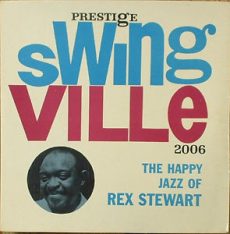
He recorded and/or performed with the Marlowe Morris Trio, Paul Quinichette All-Stars and his Quartet, Rex Stewartand the Charlie Parker Quintet. In his final years, Darr was mostly swinging in the busy band of trumpeter Jonah Jones, in a sense coming full circle with the type of playing he had started out with.
Guitarist Jerome Darr died October 29, 1986 in Brooklyn, New York.
More Posts: guitar,history,instrumental,jazz,music
Daily Dose Of Jazz…
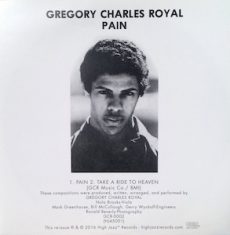
Gregory Charles Royal was born on October 10, 1961 IN Washington, D.C. As a student at Howard University he received the 1982 DownBeat Magazine Student Music Award for Jazz Vocal Group and Graduate College Outstanding Performance in the Jazz Instrumental Soloist Category. He graduated from Howard University with a Master of Music in Jazz Studies.
Royal went on to play with the Duke Ellington Orchestra for a decade beginning in 1989, then with Art Blakey and The Jazz Messengers, Slide Hampton and his World of Trombones, and Howard University Jazz Ensemble. He has appeared onstage as a trombonist with the Broadway shows Five Guys Named Moe and Jelly’s Last Jam.
He has written and appeared in a play God Doesn’t Mean You Get To Live Forever, which was presented at the Baruch Performing Arts Center. and at Theatre Row on 42nd Street in New York. Royal also wrote and appeared in the short film World’s Not for Me. The film won the Harlem Spotlight Best Narrative Short Award at the Harlem International Film Festival in 2016.
Trombonist, composer, writer Chuck Royal, who is the co-founder of The BeBop Channel Corporation, the former parent owner of JazzTimes, continues to pursue his career in music.

More Posts: bandleader,composer,history,instrumental,jazz,music,trombone,writer
Daily Dose Of Jazz…
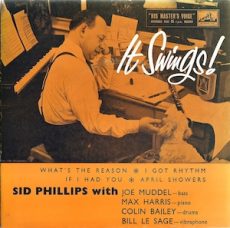
Joseph C Mudele was born on September 30, 1920 and grew up in Downham, South East London. He left school at the age of 14 and began singing and playing in local bands. He began playing double bass at the age of 17 after buying an upright bass in a junk shop. After having served in the war in the Royal Air Force, he studied for a while with principal double bassist James Merritt with the Philharmonia Orchestra.
His professional playing career took off in 1947 with clarinetist Carl Barriteau, accordionist Tito Burns and the Jimmy Macaffer Band. He toured with Hoagy Carmichael during the autumn of 1948, and played with Charlie Parker and drummer Max Roach at the 1949 International Jazz Festival in Paris.
In 1948 Mudele became a founder member of Club Eleven, a Soho nightclub open between 1948 and 1950 which played a significant role in the emergence of the bebop jazz movement in Britain. After the club was closed he became a founder member of the John Dankworth Seven, while also continuing to play with others during the Fifties. During this period Mudele also played for Sophie Tucker, Judy Garland and Billy Eckstine.
Joe supplemented his club performances with extensive radio, television and recording studio work outside of jazz from the 1960s onwards. In later life Mudele lived in Bromley, played weekly at the Bexley Jazz Club in Kent, and took over management duties after owner Les Simons died in 2004. In 2010 he recorded For All We Know with pianist Robin Aspland and drummer Geoff Gascoyne.
Double bassist Joe Mudele, who was sometimes known as Joe Muddel or Muddell and was one of the Club Eleven Collective, died at age 93 on March 7, 2014.
More Posts: bandleader,bass,history,instrumental,jazz,music
Daily Dose Of Jazz…
Daniel Asbury Mixon was born August 19, 1949 in Harlem, New York City. He started off as a tap dancer, attending the Ruth Williams Dance Studio. Later, he attended the High School of Performing Arts with Dance as his major but soon switched to playing the piano after being inspired by visits with his grandfather to see jazz artists playing at the Apollo Theater.
In 1966, at the age of 17, Danny was invited to play with the trumpet player Sam Brown’s band backing Patti LaBelle & the Blue Bells in Atlantic City at Reggie’s Cocktail Lounge. After working with Joe Lee Wilsonfor three years beginning in 1967 then started to play regularly with Betty Carter during the years 1971–72.
Formed his own jazz trio, he recorded with the Piano Choir and worked with a variety of important jazz musicians including Kenny Dorham, Cecil Payne, Art Blakey’s Jazz Messengers, Frank Foster, Grant Green, Pharoah Sanders, and singers Joe Williams, Eddie Jefferson and Dee Dee Bridgewater.
1976 saw Mixon playing in Charles Mingus’ band. He then played with Dannie Richmond in the late 1970s, toured the U.S. with Yusef Lateef and played a few years with the Lionel Hampton Big Band. Since his twenties Mixon has worked continuously with Frank Foster as a pianist for the Big Band; Frank Foster’s Loud Minority, and his quartet the Non-Electric Company.
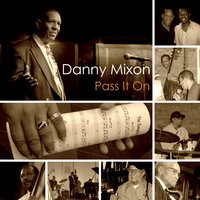
He plays piano on many recordings. He appears with Hank Crawford on Tight and After Dark and has also recorded with The Danny Mixon Trio and has recorded On My Way. In 2004 he was awarded as a legendary pianist by the National Jazz Museum in Harlem during their series Harlem Speaks honoring Harlem Heroes. He was also the musical director of the Lenox Lounge in Harlem, where he also regularly played with his trio, until it closed in 2012.
Pianist Danny Mixon, at 76, continues to perform and record.
More Posts: bandleader,history,instrumental,jazz,music,piano