

Daily Dose Of Jazz…
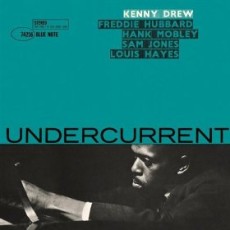
Kenneth Sidney Drew was born on August 28, 1928 in New York City. He first recorded with Howard McGhee in 1949, and over the next two years recorded with Buddy DeFranco, Coleman Hawkins, Milt Jackson, Charlie Parker, and Dinah Washington. He then led many recording sessions throughout the 1950s, and appeared on John Coltrane’s “Blue Train”.
Along with several other American jazz musicians who went to Europe, in 1961 Kenny moved to Copenhagen, Denmark. While he sacrificed much of the interest of the American jazz audience, he gained a wide following across Europe. He became a well-known figure on the Copenhagen jazz scene, recording many sessions with the Danish bassist Niels-Henning Orsted Pederson.
Drew along with Dexter Gordon appeared on screen in Ole Ege’s theatrically released hardcore pornographic film Pornografi – en musical in 1971), for which they composed and performed the score. He recorded for Blue Note, Xanadu, Steeplechase, Riverside, Verve, Soul and Storyville record labels leaving a catalogue of forty albums as a leader and another 34 as a sideman performing with the likes of Toots Thielmans, Sonny Rollins, Ben Webster, Chet Baker, Grant Green, Dizzy Gillespie and Dexter Gordon among others.
His touch has been described as “precise” and his playing a combination of bebop-influenced melodic improvisation and block chords, including “refreshingly subtle harmonizations”. Pianist Kenny Drew He passed away on August 4, 1993 in Copenhagen, leaving his son Kenny Jr. to carry on the family’s jazz piano legacy.
More Posts: piano
Daily Dose of Jazz…
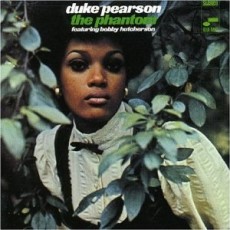
Duke Pearson was born Columbus Calvin Pearson, Jr. in Atlanta, Georgia on August 17, 1932. He first studied brass instruments at the early age of five, but dental issues forced him to pursue another instrument, the piano. His budding talent moved his uncle to give him the nickname Duke, a reference to Ellington. He attended Clark College while also playing trumpet in Atlanta area groups. In the early 50s he enlisted in the Army and continued to perform with different ensembles in Georgia and Florida prior to moving to New York in 1959.
In New York, Pearson gained the attention of trumpeter Donald Byrd, who saw him performing with the Art Farmer/Benny Golson Sextet. Shortly afterwards, Byrd asked him to join his newly formed band, the Donald Byrd-Pepper Adams Quintet. Pearson was also the accompanist for Nancy Wilson’s 1961 tour. During that same year, Pearson became ill before a Byrd-Adams show, and newcomer Herbie Hancock took the piano bench, eventually leading to Hancock’s permanent residency.
After the death of Ike Quebec in 1963, Pearson took over his position as A&R man for Blue Note. From that year until 1970, Pearson was a frequent session musician and producer for numerous Blue Note albums while also leading his own recording dates. This was odd, since Pearson also recorded with his co-led big band with Byrd for Atlantic Records; a stipulation he made sure was in his Atlantic contract. However, he was a big part in shaping the Blue Note label’s hard bop direction in the 1960s
Duke eventually retired from Blue Note, opting to teach at Clark College, tour with Carmen McRae and Joe Williams, and reforming his big band throughout the Seventies. Pianist and producer Duke Pearson passed away from complications due to multiple sclerosis on August 4, 1980 in his hometown of Atlanta.
More Posts: piano
Daily Dose Of Jazz…
Joseph Armand Castro was born on August 15, 1927 in Miami, Arizona and went to school in Pittsburg, north of Oakland, California in the Bay area where he began playing professionally at the age of 15. After graduation he enrolled at San Jose State University but his matriculation was interrupted not once but twice by Army service and then with the forming of a working trio.
Moving to New York City in 1956 Castro hit the ground working at Basin Street, The Embers, Hickory House and Birdland. During this period in his career, Leonard Feather and Dave Brubeck critically lauded his talent.
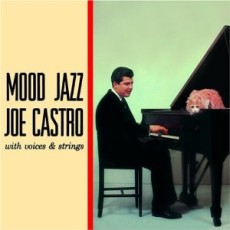
Two years later Joe moved back to the West Coast landing in L.A. playing with Teddy Edwards, Billy Higgins and Leroy Vinnegar. The bebop pianist recorded and performed extensively with The Teddy Edwards Quartet while also making two of his own recordings as a leader for Atlantic Records. His debut album in 1956 “Mood Jazz” utilized three different ensembles: a large orchestra with strings and voices, another string orchestra without voices and a regular jazz combo of piano, trumpet, alto saxophone, bass, and drums. His sophomore album titled “Groove Funk Soul” was recorded on July 18, 1958 and included tenor saxophonist Teddy Edwards, bassist Leroy Vinnegar and Billy Higgins on drums.
In the early 1960’s, tobacco heiress/jazz enthusiast Doris Duke and then long-term boyfriend Castro, along with silent partner and friend Duke Ellington, formed record company Clover Records and music publishing company Jo-Do. Castro’s third album as a leader titled “Lush Life” was the only album released on Clover Records. But by 1966, Jo-Do, Clover, and the Castro-Duke relationship had failed, and all three were shortly dissolved.
From 1959 to 1960, Castro backed vocalists Anita O’Day and June Christy; was music director for Tony Martin from 1961 to 1963. He performed with sidemen Chico Hamilton, Red Mitchell, Ed Shonk and Howard Roberts in his trios and quartets. Castro moved to Las Vegas in the 70s and continued to accompany vocalists and play in Las Vegas pit bands until he became the musical director for the Tropicana’s Folies Bergere. Pianist Joe Castro passed away on December 13, 2009.
More Posts: piano
Daily Dose Of Jazz…
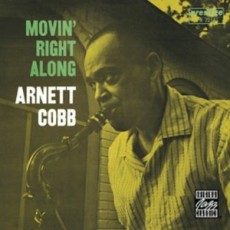
Arnett Cobb was born on August 10, 1918 in Houston, Texas. Taught to play piano by his grandmother, he went on to study violin before taking up the saxophone in high school. At fifteen he joined Louisiana bandleader Frank Davis, performing around Houston and throughout Louisiana during the summers. He continued his career in the mid-Thirties with the local bands of Chester Boone and Milt Larkin; the latter home to Illinois Jacquet, Wild Bill Davis and Eddie “Cleanhead” Vinson.
Arnett went on to replace Illinois in Lionel Hampton’s band in 1942 and is credited with the words and the music to “Smooth Sailing” which became a jazz standard in 1951, and sung by Ella Fitzgerald on her Lullabies of Birdland. After departing from Hampton’s band, Cobb formed his own seven-piece band, but suffering a serious illness in 1950, which necessitated spinal surgery, the group was disbanded.
Reforming the band upon recovery, in 1956 its success was again interrupted, this time by a car crash. This accident had long-term effects on his health, involving long hospital stays and making him permanently reliant on crutches. Nevertheless, Cobb worked as a soloist through the 1970s and 1980s in the U.S. and abroad, working with Jimmy Heath and Joe Henderson in Europe during the late Eighties.
Arnett Cobb, tenor saxophonist, passed away in his hometown in March 24, 1989 at the age of 70.
More Posts: saxophone
Daily Dose Of Jazz…
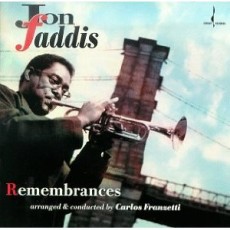
Jon Faddis was born July 24, 1953 in Oakland, California and studied music and trumpet as a child. At 18, he joined Lionel Hampton’s big band followed with tenure in the Thad Jones/Mel Lewis Orchestra as lead trumpet. After playing with Charles Mingus, he became a noted studio musician in New York, appearing on many pop recordings in the late 1970s and early 1980s.
The mid-Eighties saw Jon leaving the studios to pursue his solo career, which resulted in albums like Legacy, Into The Faddisphere and Hornucopia. Becoming the director and main trumpet soloist of the Dizzy Gillespie 70th Birthday Big Band and Dizzy’s United Nation Orchestra, in 1992 he began leading the Carnegie Hall Jazz Band at Carnegie Hall, conducting over 40 concerts in ten years.
Faddis has led the Dizzy Gillespie Alumni All-Stars and the Dizzy Gillespie Alumni All-Stars Big Band, was appointed artistic director of the Chicago Jazz Ensemble, heads the Jon Faddis Jazz Orchestra of New York. As an educator he teaches at The Conservatory of Music at Purchase College-SUNY and is a guest lecturer at Columbia College Chicago.
A jazz trumpeter, conductor, composer, and educator renowned for both his highly virtuosic command of the instrument and for his expertise in the field of music education, trumpeter Jon Faddis also leads master classes, clinics and workshops around the world often bringing promising students along to his gigs to sit in, and has produced a number of CDs for up-and-coming musicians.
More Posts: trumpet