

Daily Dose Of Jazz…
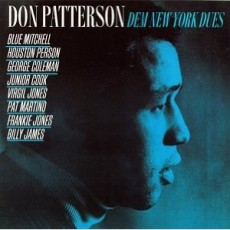
Don Patterson was born July 22, 1936 in Columbus, Ohio. He started studying piano as a child, heavily influenced by Erroll Garner but by 1956 switched to organ after hearing Jimmy Smith play. Making his debut on organ in 1959 he played with various groups into the early Sixties that saw him start performing regularly with Sonny Stitt, where he made a name for himself. This led to numerous recording sessions as a leader with Prestige and later Muse Records beginning in 1964 with sidemen guitarist Pat Martino and drummer Billy James.
During the Sixties, Don recorded as a sideman with Eddie “Lockjaw” Davis, and Eric Kloss but his most commercially successful album was his 1964 “Holiday Soul” reaching #85 on the Billboard 200 three years later. However, with his troubles with drug addiction hobbling his career in the 70s, while residing in Gary, Indiana he would occasionally record for Muse Records.
By the 1980s organist Don Patterson had moved to Philadelphia, Pennsylvania and made a small comeback, but his health continued to deteriorate over the course of the decade, forcing him to frequent dialysis until he passed away on February 10, 1988. He left a catalogue of twenty-one albums as a leader and thirteen as a sideman.
More Posts: organ
Daily Dose Of Jazz…
Lynn Seaton was born on July 18, 1957 in Tulsa, Oklahoma and began studying classical guitar vey young but by age nine switched to the bass. By the late 70s he was performing around the state and in 19080 he moved to Ohio with the Steve Schmidt Trio and later became the house bassist at the Blue Wisp Jazz Club in Cincinnati. This gig gave him the opportunity to accompany a host of big name jazz guest soloists every week.
Seaton joined Woody Herman in 1984 followed by the Count Basie Orchestra in ’85 and after two years began touring extensively with Tony Bennett and George Shearing. He went on to spend time touring with Monty Alexander and with the Jeff Hamilton Trio. Since the early ‘90s the bebop and swing bassist has free-lanced with the likes of Toshiko Akiyoshi, Ernestine Anderson, Buck Clayton, Al Cohn, Kenny Drew Jr., Scott Hamilton, Ken Peplowski, Wynard Harper, Frank Foster, Harry “Sweets” Edison, Mark Murphy, Joe Williams, Nancy Wilson, Mel Torme, Frank Wess and Blossom Dearie, just to name a few.
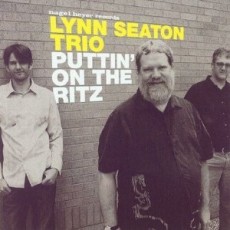
Rarely a leader, Lynn has recorded under his name as in 1991with “Bassman’s Basement” followed by “Solo Flights” and “Puttin’ On The Ritz” and as a sideman on over 100 recordings including Grammy-winning “Dianne Schuur and the Count Basie Orchestra”. He lived in New York from 1986 to 1998 and has performed at festivals worldwide such as Newport, North Sea, Kyoto and others. He currently teaches at the University of North Texas, home to one of the world’s largest jazz program.
More Posts: bass
Daily Dose Of Jazz…
Joseph Rudolph Jones was born on July 15, 1923 in Philadelphia Pennsylvania. The name “Philly Joe” was used to avoid confusion with Jo Jones, the drummer from the Count Basie Orchestra, who became known as “Papa Jo Jones”. In 1947 he became the house drummer at New York’s Café Society, playing with the leading bebop players of the day. His most important influence among them was Tadd Dameron.
Jones toured and recorded with Miles Davis Quintet from 1955 to 1958 — a band that became known as “The Quintet”. Miles also acknowledged that Jones was his favorite drummer (in fact, in his autobiography, Davis admitted to asking other drummers to play that “Philly Joe lick”, with mixed results). He organized the Davis Quintet in 1955 so that he and Davis would not have difficulties finding competent local musicians to play with them.
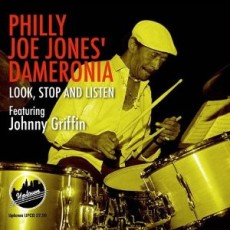
From 1958 onwards he worked as a leader, but continued to work as a sideman with other musicians, including Bill Evans and Hank Mobley. Evans also openly admitted that Philly Joe was his all-time favorite drummer. For two years (1967-69) he taught at a specially organized school in Hampstead, London but was prevented from otherwise working in the UK by the Musicians’ Union. From 1981 he helped to found the group Dameronia, dedicated to the music of the composer Tadd Dameron, and led it until his death on August 30, 1985.
More Posts: drums
Daily Dose Of Jazz…
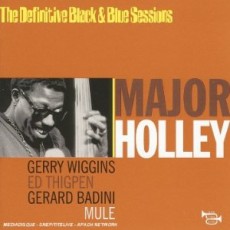
Major Holley was born on July 10, 1924 in Detroit, Michigan and started his music lessons playing violin and tuba at a young age. He started playing bass while serving in the Navy. In the latter half of the 1940s he played with Dexter Gordon, Charlie Parker, and Ella Fitzgerald. In 1950 he and Oscar Peterson recorded duets, and he also played with Peterson and Charlie Smith in a trio setting.
In the mid-1950s Major moved to England, working at the BBC. Upon returning to America he toured with Woody Herman in 1958 and with Al Cohn/Zoot Sims in 1959-60. A prolific studio musician, he played with Duke Ellington in 1964 and with the Kenny Burrell Trio, Coleman Hawkins, Lee Konitz, Roy Eldridge, Michel Legrand, Milt Buckner, Jay McShane and Quincy Jones during the Sixties and Seventies.
He was also noted for singing along with his arco (bowed) bass solos, a technique Slam Stewart also used. Holley and Stewart recorded together on two albums during the 1970s.
Never one far from the educational process, informal or formal, Holley was a professor and taught at the Berklee College of Music from 1967 to 1970. Upright jazz bassist Major Holley passed away on October 25, 1990 in Maplewood, New Jersey.
More Posts: bass
Daily Dose Of Jazz…
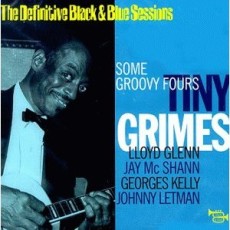
Lloyd “Tiny” Grimes was born on July 7, 1916 in Newport News, Virginia and began his career playing drums and one-fingered piano. In 1938 he took up the electric 4-string tenor guitar and two years later joined the Cats and a Fiddle as guitarist and singer. 1943 saw him as part of the Art Tatum Trio making a number of recordings and this early configuration recorded some of the more interesting early examples of Tiny Grimes’ guitar work.
After leaving Tatum, Grimes recorded with his own groups in New York and he recorded with a long list of leading musicians, including Billie Holiday. He made four recordings with Charlie Parker that are considered excellent examples of early bebop jazz: “Tiny’s Tempo”, “Red Cross”, “Romance Without Finance” and “I’ll Always Love You”. He was to become one of the 52nd Street regulars during this period.
Towards the end of the decade Tiny scored a hit on a jazzed up version of “Loch Lomond”. His band was billed as Tiny “Mac” Grimes and the Rocking Highlanders, appearing in kilts and included top tenor sax man Red Prysock and big-voiced baritone singer Screaming Jay Hawkins. Grimes continued to lead his own groups into the later 1970’s recording for Prestige in a series of strong blues-based performances with Coleman Hawkins, Illinois Jacquet, Pepper Adams, Roy Eldridge, Earl Hines and others of note.
With Paul Williams he co-headlined the first “Moondog Coronation Ball”, promoted by Alan Freed in Cleveland, Ohio on March 21, 1952, often claimed as the first rock and roll concert. It is also generally considered he played on the first rock and roll record with a group called The Crows one-hit wonder “Gee”.
Tiny Grimes, a jazz and R&B guitarist most noted for playing a four-string electric tenor guitar, passed away on March 4, 1989.
More Posts: guitar