

Daily Dose Of Jazz…
Rick Henderson was born on April 25, 1928 in Washington, D.C. and studied composition as a high schooler and played locally in the late 1940s. He served in the Army from 1951 to 1953, then joined Duke Ellington’s Orchestra after being recommended by Clark Terry.
He played with Ellington during his years on Capitol Records, doing arrangements in addition to his duties as a player. He also composed tunes such as Carney for the Ellington band. After leaving Ellington’s employ in 1956, Rick returned to D.C. where he led the Howard Theatre’s house band until 1964.
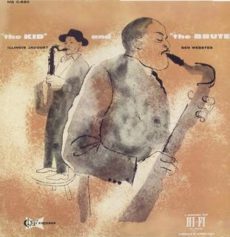
Following this he worked as an arranger and composer for jazz orchestras, military bands and school ensembles. Among those who used his charts, in addition to Ellington, were Count Basie, Illinois Jacquet, and Billy Taylor. Henderson continued to lead bands into the 1990s, including the University of Maryland Jazz Ensemble from 1977 to 1978.
Saxophonist and arranger Rick Henderson passed away from arteriosclerotic cardiovascular disease on May 21, 2004.
More Posts: arranger,bandleader,history,instrumental,jazz,music,saxophone
Daily Dose Of Jazz…
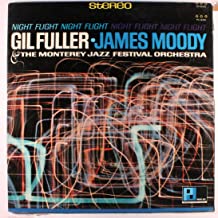
Gil Fuller was born Walter Gilbert on April 14, 1920 in Los Angeles, California. In the 1930s and 1940s, Fuller did extensive work writing and arranging for bandleaders such as Les Hite, Floyd Ray, Jimmie Lunceford, Billy Eckstine, and Tiny Bradshaw. He also worked with Benny Carter, Benny Goodman, Woody Herman, Count Basie, Machito, and Tito Puente.
Post World War II, he found himself increasingly in demand as a bebop arranger along with fellow modern arrangers Tadd Dameron, Gil Evans, and George Russell. Fuller’s work with Dizzy Gillespie was of particular note, yielding the tunes Manteca, Swedish Suite, Tin Tin Deo, and One Bass Hit. He is the composer of the jazz standard ballad I Waited For You, co-credited with Dizzy Gillespie.
Starting his own publishing company in 1957, he continued to work with some jazz musicians including Stan Kenton in 1955 and again during the 1960s. Gil also branched out into film music and pop with Ray Charles, among others. Arranger Gil Fuller passed away on May 26, 1994 in San Diego, California.
More Posts: arranger,history,instrumental,jazz,music
Daily Dose Of Jazz…
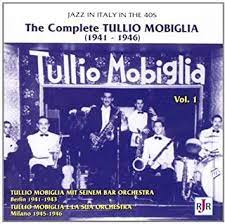
Tullio Mobiglia was born in Carezzano, Italy on April 12, 1911. Passionate about music, he graduated in violin at the Niccolò Paganini Conservatory in Genoa, Italy. In 1934 he began playing in orchestras on ships, often traveling to the United States where he was able to approach jazz, becoming friends with some musicians such as Coleman Hawkins.
He quickly emerged as the best Italian saxophonist of the period, and was called to play in the Mirador Orchestra. By 1940 Tullio was to Berlin, Germany achieving great success, to the point of being hired for a certain period in Heinz. Wehner Orchestra. 1941 saw him forming his first band of Italian musicians, with whom he published the first 78 rpm recordings.
During his career he had the opportunity to play with Django Reinhardt in another Berlin club, the Femina Bar. Due to the ban on playing American music he was only allowed to play European music, however, many pieces are written by Mobiglia himself.
Mobiglia returned to Italy in 1943 and two years later reformed his orchestra with other musicians, obtaining a contract with Columbia Records, where he recorded several 78s. In the following years he recorded with Telefunken, Cetra and Durium, resuming the playing of his first instrument, the violin. By 1967 he was teaching violin at the Jan Sibelius Conservatory of Helsinki, Finland to teach the violin, a position he held until the 1980s, while continuing to perform in the Finnish capital where he spent the last few years of his life. Saxophonist and bandleader Tullio Mobiglia passed away on July 24, 1991 at the age of 80 in Helsinki, Finland.
More Posts: bandleader,history,instrumental,jazz,music,saxophone
Daily Dose Of Jazz…
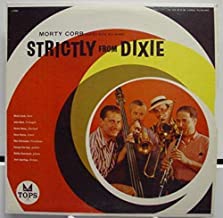
Morty Corb was born Mortimer Gerald Corb on April 10, 1917 in San Antonio, Texas. He played four years with Bob Crosby’s television program, Morty also worked extensifly as a studio session musician in studios, appearing on some 300 recordings. He worked in Disneyland bands after moving to California in 1947.
Particularly interested in scary, haunted house stuff, in 1973 Morty developed the “Hallowed Haunting Grounds”, a trick or treating evening with a special flair for theatrical effects that made his homemade shenanigan impressive even to the Tinsel Town crowd.
His name has been mentioned alongside Wrecking Crew studio bassist Carol Kaye, he curbed his session availability as the rock and roll era progressed or perhaps regressed. The bassist instead went to work at Disneyland, playing in the attraction’s bands but also mingling with special effects folk.
Corb’s long career began in 1946 and lasted until his death. He performed and recorded with Pete Fountain, Ella Fitzgerald, Nat King Cole, Pearl Bailey, Louis Armstrong, Claude Thornhill, Kid Ory, Jack Teagarden, Benny Goodman, Pete Kelly, Barney Kessel, Claire Austin, George Van Eps, Eartha Kitt, Mel Lewis, Earl Grant, Red Nichols, Wild Bill Davison, Muggsy Spanier, Plas Johnson, Gene Krupa, Louie Bellson, Jonah Jones, and Billy May among numerous others.
Double bassist Morty Corb, whose only album as a leader recorded in Los Angeles, California was his 1957 Strictly From Dixie featuring His Dixie All Stars, passed away on January 13, 1996 Las Vegas, Nevada..
More Posts: bandleader,bass,guitar,history,instrumental,jazz,music
Daily Dose Of Jazz…
Oliver Edward Mitchell was born April 8, 1927 in Los Angeles, California. He was the son of Harold Mitchell, lead trumpeter for MGM Studios, who taught him to play the trumpet.
Mitchell would go on to play in big bands for Harry James, Buddy Rich and Pérez Prado, among others, as well as the NBC Symphony Orchestra. In the 1960s, he joined The Wrecking Crew, a group of studio and session musicians who played anonymously on many records for popular singers of the time, as well as theme songs for television, film scores, and advertising jingles.
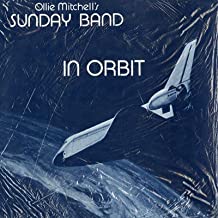
Mitchell was an original member of Herb Alpert’s Tijuana Brass. He would go on to have his own bands, Ollie Mitchell’s Sunday Band, and the Olliephonic Horns
Moving to Puako, Hawaii in 1995 he founded the Horns. In 2010, he published his memoir, Lost, But Making Good Time: A View from the Back Row of the Band. He stopped playing the trumpet toward the end of his life, due to macular degeneration and hand problems from an automobile accident.
Trumpeter Ollie Mitchell, who recorded with Chet Baker, Harry James, Stan Kenton, Irene Kral, Shorty Rogers, Pete Rugolo, Dan terry and Gerry Wilson among others, suffered from cancer and passed away on May 11, 2013.
More Posts: bandleader,history,instrumental,jazz,music,trumpet