

Daily Dose Of Jazz…
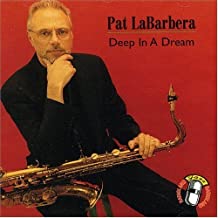
Pat La Barbera, born Pascel Emmanuel LaBarbera on April 7, 1944 in Mt. Morris, New York. He moved to Toronto, Ontario, Canada in 1974, and is a member of the faculty at Humber College.
La Barbera began working with Elvin Jones in 1975, touring Europe with him in 1979. While working with Buddy Rich, he also worked in groups led by Woody Herman and Louie Bellson.
Playing with Carlos Santana, Pat has played a major role in the development of a generation of Canadian saxophonists. In 2000, he won a Juno Award for Best Traditional Instrumental Jazz Album for Deep in a Dream.
Tenor, alto and soprano saxophonist, clarinetist, and flautist Pat LaBarbera, most notable for his work as a soloist in Buddy Rich bands from 1967 to 1973, continues to perform and educate.
More Posts: bandleader,clarinet,educator,fute,history,instrumental,jazz,music,saxophone
Daily Dose Of Jazz…
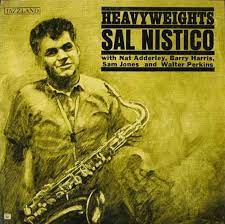
Salvatore Nistico was born on April 2, 1940 in Syracuse, New York. He started playing alto saxophone, switching to tenor in 1956, and briefly played baritone saxophone. From 1959 to 1961, he played with the Jazz Brothers band, with Chuck Mangione and Gap Mangione.
Nistico played in the 1962–65 Woody Herman group, considered one of his best bands, with Bill Chase, Jake Hanna, Nat Pierce, and Phil Wilson. In 1965, he joined Count Basie but returned on many occasions to play with Herman. Around that time he was also a member of Dusko Goykovich’s sextet with other musicians associated with the Herd, such as Carl Fontana, Nat Pierce, and Michael Moore.
He also played with Nat Adderley, Don Ellis, Buddy Rich, and Stan Tracey. Moving to Europe in his latter years he worked with mostly European musicians as Joe Haider, Isla Eckinger, Billy Brooks, Fritz Pauer. He went on to record with the Larry Porter/ Allan Praskin Band and Three Generations Of Tenor Saxophone with Johnny Griffin, Roman Schwaller, Paul Grabowsky, Roberto DiGioia, Thomas Stabenow, Joris Dudli and Mario Gonzi. The first live performance from 1985 was released under the band’s name on JHM Records Switzerland.
Nistico’s solo work is a contrast to his big band work, with his solo work more oriented towards bebop, as heard on the Heavyweights recording on Riverside Records. Tenor saxophonist Sal Nistico, who was associated for many years with Woody Herman’s Herd, passed away on March 3, 1991, in Berne, Switzerland.
More Posts: bandleader,history,instrumental,jazz,music,saxophone

Daily Dose Of Jazz…
Ola Onabulé was born in Islington, London, England on March 30, 1964 and at the age of seven he was sent to Lagos, Nigeria, where he spent the next ten years in school. When he was seventeen he returned to the UK to study at Millfield School, then attended law school, almost completing a three-year degree before deciding to enroll at Middlesex Polytechnic for an arts degree. While studying, he began to perform in London clubs and venues, writing and performing his own material.
Onabulé’s career spans nearly two decades, releasing his music on his own label, Rugged Ram Records, after recording for Elektra and Warner Bros. His debut album, More Soul Than Sense, was released in 1995.
He has performed internationally, performed with Germany’s WDR Big Band and the SWR Big Band and appeared with the German Film Orchestra Babelsberg in Potsdam for a concert. Ola has played the main stages of the Montreal Jazz Festival and Vancouver Jazz Festival. A return to Canada in 2010 he performed at Victoria Jazz Festival, Vancouver Jazz Festival, and the Edmonton Jazz Festival. His list of credits reads like a who’s who of bog bands and small combos and continues to grow.

More Posts: history,instrumental,jazz,music,producer,vocal bandleader
Daily Dose Of Jazz…
Kamil Běhounek was born March 29, 1916 in the Southern Bohemian section of Blatná, Czech Republic. An autodidact on accordion, having learned to play by imitating recordings and BBC broadcasts, he studied law in Prague, Czech Republic and began performing in clubs. His first recordings on solo accordion date from 1936 and in the late 1930s he worked with the Blue Music Orchestra, Rudolf Antonin Dvorsky, Jiří Traxler, and Karel Vlach.
In 1943, he was forcibly compelled by the Nazis to go to Berlin, Germany where he created arrangements for the bands of Lutz Templin and Ernst van’t Hoff. Upon returning to Czechoslovakia in 1945, he used some of these arrangements for his own band. Kamil returned to Germany the following year and continued arranging for bandleaders Adalbert Luczkowski, Willy Berking, Heinz Schönberger, and Werner Müller.
He played with his own ensemble in Bonn, Germany and, after 1948, in West Germany for American soldiers’ clubs. Between 1968 and 1977, Běhounek recorded several albums of folk music, but continued to play swing with his own groups. He wrote an autobiography, Má láska je jazz (Jazz Is My Love), which was published posthumously in 1986.
Accordionist, bandleader, arranger, composer, and film scorer Kamil Běhounek, who also occasionally played tenor saxophone, passed away on November 22, 1983 in Bonn.
More Posts: accordion,arrangr,composer,film scorer,history,instrumental,jazz,music,saxophone
Daily Dose Of Jazz…
Maurice James Simon was born March 26, 1929 in Houston, Texas. Studying the saxophone in high school he was a classmate of Eric Dolphy during the 1945-46 school year. He appeared on an early 1945 Los Angeles, California recording led by Russell Jacquet along with Teddy Edwards, Charles Mingus, Bill Davis and Chico Hamilton.
1948 saw him again with Jacquet as leader, in an all-star band recording in Detroit, Michigan along with Sonny Stitt, Leo Parker, Sir Charles Thompson, Al Lucas and Shadow Wilson.
He went on to join the Gerald Wilson Orchestra that also had Snooky Young, Red Kelly and Melba Liston as members. In 1950 he recorded for Savoy Records backing Helen Humes in a big band with Dexter Gordon, Ernie Freeman, Red Callender and J.C. Heard.
He also played with Fats Domino, Papa John Creach, Big Maybelle, Faye Adams, Bumble Bee Slim, Percy Mayfield and B. B. King. In the 1970s he worked with the Duke Ellington orchestra. Baritone and tenor saxophonist Maurice Simon passed away on August 6, 2019.
More Posts: hisotry,instrumental,jazz,music,saxophone