

Daily Dose Of Jazz…
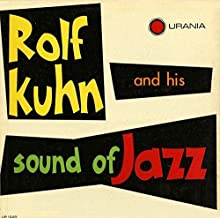
Rolf Kühn was born on September 29, 1929 in Köln, Germany, the older brother of the pianist Joachim Kühn. He started out playing in dance bands in the late ’40s, then worked with radio orchestras starting in 1952 before moving west across the Atlantic to America.
Living in the United States for three years from 1956 to 1959, subbing for Benny Goodman on a few occasions, played in the Tommy Dorsey ghost band, and worked in a big band led by Urbie Green. Rolf drew favorable reviews, and over the course of his career, he recorded more than two-dozen albums as a leader, ten with his younger brother, and as a sideman, eighteen.
He has recorded with Eddie Costa, Buddy DeFranco,Klaus Doldinger, Tommy Dorsey, European Jazz Ensemble, Urbie Green, Friedrich Gulda, Greetje Kauffeld, Eartha Kitt, Albert Mangelsdorff, Oscar Pettiford, and George Wallington.
In 2008 he founded a band with Christian Lillinger, Ronny Graupe, and Johannes Fink. In 2019, the New York Times Magazine listed him among the hundreds of artists whose material was reportedly destroyed in the 2008 Universal fire. Clarinetist and saxophonist Rolf Kühn at 90 continued to perform and compose for the next two years until his passing on August 18, 2022 in Berlin, Germany.

More Posts: bandleader,clarinet,composer,history,instrumental,jazz,music,saxophone
Daily Dose Of Jazz…
Skip Hall was born Archie Hall on September 27, 1909 in Portsmouth, Virginia and studied piano under his father. He lived in New York from age eight and in the late twenties, he relocated to Cleveland, Ohio where he led his own band for most of the 1930s.
He worked as an arranger on contract, arranging for Jay McShann from 1940 to 1944. During World War II he played with Don Redman and in 1943 he entered military service and played in a band while stationed in England.
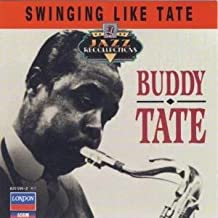
He would eventually work with Hot Lips Page around the year 1945 and then joined the Sy Oliver band, who was his brother-in-law. Following this he worked with Wynonie Harris, Thelma Houston, and Jimmy Rushing before joining Buddy Tate’s group in 1948. He worked with Tate for twenty years both as a performer and arranger.
In the 1950s and 1960s, he performed with Dicky Wells, Emmett Berry, and George James, as well as working solo and with his own small groups. Arranger, pianist, and organist Skip Hall passed away in November 1980, Ottawa, Ontario, Canada.
More Posts: arranger,bandleader,history,instrumental,jazz,music,organist,pianist
Daily Dose Of Jazz…
Charlie Allen was born on September 25, 1908 in Jackson, Mississippi and grew up in Chicago, Illinois and in the early 1920s just out of high school began playing. In 1925 he was a member of the band led by Hugh Swift, then went on to play with Dave Peyton and Doc Cook in 1927, and Clifford King in 1928 and Johnny Long by the end of the decade.
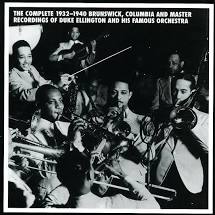
Allen joined Earl Hines from 1931 to 1934, then did a short stint in Duke Ellington’s orchestra in 1935, though he never recorded any solos with the orchestra. He would play with Fletcher Butler in 1936 and then returned to play with Hines again in 1937.
Charlie played in various groups in Chicago in the 1940s and 1950s and later in his life became a music educator, working in the Chicago Musicians’ Union. He also designed custom trumpet mouthpieces, used by Cat Anderson, among others. Trumpeter Charlie Allen passed away on November 19, 1972 in Chicago, Illinois.
More Posts: history,instrumental,jazz,music,trumpet
Daily Dose Of Jazz…
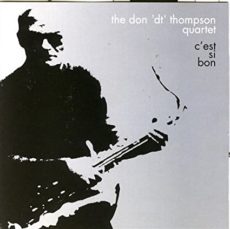
Don D.T. Thompson was born in Drumheller, Alberta on September 19, 1932. He played saxophone and clarinet at twelve and began promoting his own jazz concerts, Jammin’ the Blues, in Edmonton at 17. Moving to Toronto, Canada in 1952, he toured Canada and the United States from 1954 to 1958 with Anne Marie Moss.
Save for a period in 1965 and 1966 with the Lionel Hampton Orchestra in the United States, Thompson was a mainstay of the Toronto jazz scene through the 1960s. During the early 1960s, he led singer Tommy Ambrose in a big band ensemble. He appeared regularly at the First Floor Club with small groups and a big band from 1959 until 1965, and was seen in the NFB’s Toronto Jazz with a quintet.
He performed on many CBC TV pop music shows, Club Six and Music Hop and played in several Toronto studio orchestras. In 1961 he recorded as a member of the Pat Riccio Big Band in Ottawa and 1963 saw him with pianist Wray Downes and trombonist Rob McConnell. He also released a record as part of a quintet that included trumpeter Fred Stone.
After touring for ten years beginning in 1971 and recording with pop singer Anne Murray, he returned to jazz. In 1981 moving away from his early bebop-based style he landed on a simpler, full-toned, melodic approach in the manner of a Stanley Turrentine. D.T. wrote and recorded several jazz themes; his pop-song arrangements appear on albums by Murray, John Allan Cameron and Gordon Lightfoot.
Saxophonist, composer, and arranger Don D.T. Thompson passed away in Vancouver, Canada on March 21, 2004.
More Posts: arranger,composer,history,instrumental,jazz,music,saxophone
Daily Dose Of Jazz…
Bobby Nichols was born on September 15, 1924 in Boston, Massachusetts. He began playing trumpet when he was nine and later attended the New England Conservatory. His biggest job before joining the military was as a trumpeter with Vaughn Monroe’s Orchestra from 1940 to 1943, impressive for a 15-year old. Joining the Army in 1943 he became a member of the Glenn Miller Army Air Force Band and during its two years of existence, his advanced swing solos gave the huge group much of its jazz credibility.
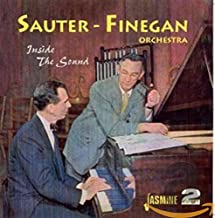
After his discharge, staying busy for the next 15 years, Bobby never became known to the general public. He worked with Tex Beneke between 1946-47, led his own group, and worked with Ray McKinley in 1948. After playing with Tommy Dorsey in 1951, he became a longtime member of the Sauter-Finegan Orchestra from 1952-61 and a studio musician. When the Sauter-Finegan big band eventually broke up, having never led his own record date, he slipped completely into obscurity.
Trumpeter Bobby Nichols, who at nineteen exhibited fire in his playing but never made it big despite his many solos, at 95 years old is sought by collectors of the Glenn Miller Army Air Force Band recordings, died in 1975 in Aruba.
More Posts: history,instrumental,jazz,music,trumpet