

Daily Dose Of Jazz…
Elmer Chester Snowden was born on October 9, 1900 in Baltimore, Maryland and by 1917, a month before his 17th birthday, his listed occupation was a musician. While still living at home with his mother in 1920, the census had him employed as a musician in a dance hall.
The original leader of the Washingtonians, he brought the group to New York City in 1923. However, unable to get a booking, he sent for Duke Ellington, who was with the group when it recorded three test sides for Victor and who eventually took over leadership, and that band became his famous orchestra.
Making numerous appearances as a session musician, sideman, or accompanist on almost every New York City label from 1923 on, Elmer was often in trios with Bob Fuller on clarinet and Lou Hooper on piano. They rarely received credit for their work during those days but did show up on two Bessie Smith sides and six sides for the Sepia Serenaders.
Snowden was also a renowned bandleader who employed at one time or another Count Basie, Jimmie Lunceford, Bubber Miley, “Tricky Sam” Nanton, Frankie Newton, Benny Carter, Rex Stewart, Roy Eldridge, and Chick Webb in his various bands.
So active in the 1920s he was an agent and musician, and at one time had five bands playing under his name in New York, one of which was led by pianist Cliff Jackson. Most of his bands were not recorded, but a Snowden band that included Eldridge, Al Sears, Dicky Wells, and Sid Catlett appeared in a 1932 film, Smash Your Baggage.
By the mid-1930s his career was one of relative obscurity in New York, however, he continued to play throughout the 30s, 40s and 50s far from the limelight. A dispute with the New York Musicians Union, he moved to Philadelphia, Pennsylvania where he taught music. Counted among his pupils were pianist Ray Bryant, his brother, bassist Tommy Bryant, and saxophonist Sahib Shihab.
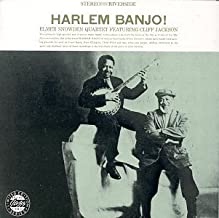
Working as a parking lot attendant in 1959 disc jockey Chris Albertson, ran across him and the following year brought Snowden and singer-guitarist Lonnie Johnson together for two Prestige albums. He assembled a quartet that included Cliff Jackson for a Riverside session, Harlem Banjo, and, in 1961 he put together a sextet session with Roy Eldridge, Bud Freeman, Jo Jones, and Ray and Tommy Bryant that was released on the Fontana and Black Lion labels.
Appearing at the 1963 Newport Jazz Festival gave his career a boost, then he moved to California to teach at the University of California, Berkeley, and played with Turk Murphy as well as taking private students for lessons in guitar and banjo. He toured Europe in 1967 with the Newport Guitar Workshop. In 1969, banjoist Elmer Snowden, who also played guitar and all the reed instruments, and is responsible for launching the careers of many top musicians, moved back to Philadelphia, where he passed away on May 14, 1973.

More Posts: bandleader,banjo,history,instrumental,jazz,music
Daily Dose Of Jazz…
Owen Joseph “Sonny” Igoe was born on October 8, 1923 in Jersey City, New Jersey and grew up in Ridgewood, New Jersey. He attended Ridgewood High School when he got his start after winning a Gene Krupa drumming contest. His playing was initially influenced by Krupa, but he soon drew upon elements of Max Roach and others, which eventually developed into an exuberant and individual style.
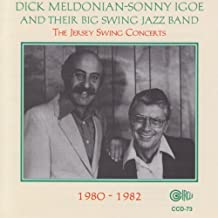
From the mid-1940s to 1988, Sonny performed on over 79 recordings with bands and artists, including The Buddy Stewart Quintet, Benny Goodman and His Orchestra, Woody Herman and His Orchestra, Frances Wayne with Neal Hefti and His Orchestra, Rita Moss with the George Williams Orchestra, Charlie Ventura, Tony Bennett, Billy Maxted and His Manhattan Jazz Band, The Chuck Wayne Quintet, The Don Elliott Quintet, Joe Wilder, Phil Napoleon and His Original Memphis Five, Sammy Spear, Pee Wee Erwin, Joe Williams, Marlene Ver Planck, Savina Hartwell, Dick Meldonian, and Doctor Billy Dodd.
In the 1960s, Igoe was a member of the NBC Television Orchestra and then the CBS Television Orchestra, where his credits included The Ed Sullivan Show and The Jackie Gleason Show.
Drummer Sonny Igoe, who toured with the orchestras of Tommy Reed, Les Elgart, Ina Ray Hutton, Benny Goodman, and Woody Herman, passed away on March 28, 2012 in Emerson, New Jersey where he was a longtime resident.
More Posts: bandleader,drums,history,instrumental,jazz,music
Daily Dose Of Jazz…
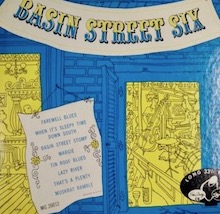
George Girard was born on October 7, 1930 in Jefferson Parish, Louisiana. In high school, he studied music under Johnny Wiggs and became a professional musician immediately after graduating in 1946. He played and toured with the bands of Johnny Archer and Phil Zito before co-founding the band The Basin Street Six, made up mostly of friends he had grown up with, including clarinetist Pete Fountain. The band got a regular gig at L’Enfant’s Restaurant in New Orleans, as well as regular television broadcasts over WWL. The band started receiving favorable national attention, but Girard was dissatisfied with it and broke up the band in 1954.
He found his own band, George Girard & the New Orleans Five which included trombonist Bob Havens, drummer Paul Edwards, and bassist Bob Coquille. He landed a residency at the Famous Door in the French Quarter, recorded for several labels, and got a weekly broadcast on CBS. His ambitions to make a national name for himself and the musical ability to do so fell short of time as he became ill and in 1956 had to give up playing.
Trumpeter George Girard, a member of the Basin Street Six whose technical ability combined Dixieland and big band style trumpet, passed away from colon cancer in New Orleans, Louisiana on January 18, 1957.
More Posts: bandleader,history,instrumental,jazz,music,trumpet
Daily Dose Of Jazz…
Masahiko Satoh was born on October 6, 1941 in Tokyo, Japan and the family home contained a piano. He started playing at the age of five, and twelve years later he began playing professionally accompanying singers, magicians, and strippers at a cabaret in the Ginza district.
By 1959 Satoh began playing in Georgie Kawaguchi’s band, together with alto saxophonist Sadao Watanabe and tenor saxophonist Akira Miyazawa. After graduating from Keio University, at the age of 26 he moved to the United States to study at the Berklee College of Music. During those two years of study, he read about composing and arranging, earned money working in a food shop, and played the piano in a hotel.
1968 had Masahiko writing and conducting the music for a series of pieces that were combined with dance and performed around New York City. After returning to Japan, he recorded Palladium, his first album as a leader, and appeared on a Helen Merrill album.
In the late 1960s and early 1970s, his career led him to perform in a free, percussive style. Masahiko played at the 1971 Berlin Jazz Festival as part of a trio, using at the time an unusual ring modulator to alter the sound. During that period he recorded with Attila Zoller, Karl Berger, and Albert Mangelsdorff. He wrote the psychedelic music for the 1973 anime film Belladonna of Sadness.
He went on to write arrangements for recordings led by, among others, Helen Merrill, Kimiko Itoh, and Nancy Wilson. He arranged for strings and quartet on Art Farmer’s 1983 album Maiden Voyage, formed a large group, named Rantooga, that combined various forms of folk music from around the world, and composed for film, television, and advertisements. By the early 1990s pianist, composer, and arranger Masahiko Satoh composed music for a choir of 1,000 Buddhist monks and now spends 70% of his time arranging and composing, the rest on playing and recording.
More Posts: arranger,bandleader,composer,history,instrumental,jazz,music,piano

Daily Dose Of Jazz…Trumpet
Jon Eardley was born on September 30, 1928 in Altoona, Pennsylvania and first started on trumpet at the age of 11. His father played in the Paul Whiteman Orchestra. From the age of eighteen, he played1946 to 1949 he played in the Air Force Band in Washington, D.C., then led with his own quartet in D.C. from 1950 to 1953.
A move to New York City in 1953 got him introduced to the jazz scene. The following year he played with Phil Woods, then left for Gerry Mulligan for three years, and during that time played with Hal McIntyre. Returning to his hometown, Jon played there until 1963, when he moved to Europe and settled for a time in Belgium.
1969 saw his next residency in Cologne, Germany where he played with Harald Banter and Chet Baker and working through the 1980s. The last years before death he played in the WDR Big Band Cologne, Germany. Trumpeter Jon Eardley passed away on April 1, 1991 in Lambermont, near Verviers, Belgium.

More Posts: bandleader,history,instrumental,jazz,music,trumpet