

Daily Dose Of Jazz…
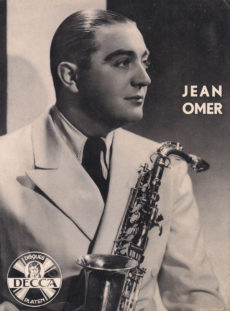
Jean Omer was born in Nivelles, Belgium on September 9, 1912. He played violin before switching to clarinet and saxophone, playing with local groups in Strassburg and Brussels. He worked in France in the band of Billy Smith, then played with the Golden Stars and in René Compère’s band.
Omer participated in a recording session with Gus Deloof in 1931. Following a tour with Fud Candrix’s Carolina Stomp Chasers, he founded his own group, which included at times, Lauderic Caton and Jean Robert. He and Robert De Kers accompanied Josephine Baker in the mid-1930s and played in a group with Ernst van’t Hoff late in the decade.
In 1941, he recorded with Rudy Bruder. He settled in Brussels and led a band into the 1960s which played at the club Le Boeuf sur le Toit. Clarinetist, saxophonist, and bandleader Jean Omer passed away on May 30, 1994 in Brussels, Belgium.

More Posts: bandleader,clarinet,history,instrumental,jazz,music,saxophone
Daily Dose Of Jazz…
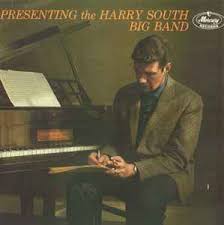
Harry Percy South was born on September 7, 1929 in Fulham, London, England. Coming into prominence in the 1950s, he subsequently performed with Joe Harriott, Dizzy Reece, Tony Crombie, and Tubby Hayes. In 1954, he was in the Tony Crombie Orchestra, together with Dizzy Reece, Les Condon, Joe Temperley, Sammy Walker, Lennie Dawes, and Ashley Kozak.
After returning from a nine-month stint in Calcutta, India, with the Ashley Kozak Quartet, he spent four years with the Dick Morrissey Quartet, where he both wrote and arranged material for their subsequent four albums.
Forming his own jazz big band in 1966, featuring UK musicians Hayes, Dick Morrissey, Phil Seamen, Keith Christie, Ronnie Scott, and Ian Carr, and recorded an album for Mercury Records. In the mid-1960s, he began working with British rhythm & blues singer and organist Georgie Fame, with whom he recorded the album Sound Venture. At that time he was also composing and arranging for Humphrey Lyttelton, Buddy Rich, Sarah Vaughan, and Jimmy Witherspoon.
Working for a time as the musical director to Annie Ross, Harry later branched out into session work, writing themes for television and music libraries, and having written the scores for the Pete Walker films, he is also credited with the arrangements for Emerson, Lake & Palmer, again arranged for Annie Ross and Georgie Fame in collaboration on what was to be Hoagy Carmichael’s last recording, In Hoagland.
Pianist, composer, and arranger Harry South, who was honored with the CD Portraits ~ The Music of Harry South released by the National Youth Jazz Orchestra, passed away on March 12, 1990 in Lambeth, London at age 60.
More Posts: arranger,bandleader,composer,history,instrumental,jazz,music,piano
Daily Dose Of Jazz…
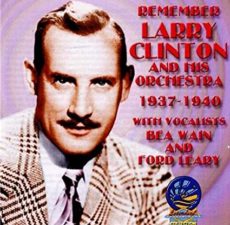
Ford Leary was born on September 5, 1908 in Lockport, New York. He married early, had a son, and left both wife and child for a music career. During the thirties he performed as part of the Frank Trumbaur band and with the Bunny Berigan band, the latter being one of his better positions while scuffling to make ends meet freelancing in New York City.
Ford would go on to work with Larry Clinton in the late Thirties and in the early 1940s with Charlie Barnet, Mike Riley, and Muggsy Spanier. As he was readying to begin a new career path as a replacement performer in the Broadway show Follow The Girls, he suffered a back injury from which he never fully recovered.
His short career ended in the late ‘40s when trombonist and vocalist Ford Leary, the only trombonist of note to die institutionalized at Bellevue Hospital, passed away on June 4, 1949 at age 40.

Daily Dose Of Jazz…
Jan Savitt was born Jacob Savetnick on September 4, 1907 in Shumsk, U.S.S.R. (now Ukraine) and reared in Philadelphia, Pennsylvania. He exhibited musical ability at an early age and began winning conservatory scholarships in the study of the violin. He was offered the position of concertmaster in Leopold Stokowski’s Philadelphia Symphony Orchestra, but turned it down, preferring to continue his studies at Curtis Institute. A year later, believing himself ready, he joined Stokowski and the association continued for seven years, during which time Savitt gained further laurels as a concert soloist and leader of a string quartet.
In 1938, Jan Savitt & His Top Hatters broadcast from 5–5:30 pm every Tuesday, thru Friday as the KYW staff orchestra at KYW/NBC in Philadelphia. Saturday’s weekly broadcast was one hour, coast-to-coast. The group also played at the Earl Theatre and performed with The Andrews Sisters and The Three Stooges.
He got his start in popular music sometime later as music director of KYW, Philadelphia, where he evolved the unique “shuffle rhythm” which remained his trademark. Numerous sustaining programs created such a demand for the “shuffle rhythm” that Savitt left KYW to form his own dance crew.
His band was notable for including George “Bon Bon” Tunnell,[3] one of the first Black singers to perform with a white band. Tunnell’s recording with Jan included Vol Vistu Gaily Star, co-composed by Slim Gaillard, and Rose of the Rio Grande. Helen Englert Blaum, known at the time as Helen Warren, also sang with him during the war years.
In the 1940s Savitt recorded short pieces used a filler before network shows for the National Broadcasting System’s Thesaurus series. Some of the pieces he created were I’m Afraid the Masquerade Is Over; If I Didn’t Care; Ring Dem Bells; and Romance Runs in the Family.
Violinist, bandleader and arranger Jan Savitt, known as “The Stokowski of Swing” from having played violin in Leopold Stokowski’s orchestra, passed away on October 4, 1948.
More Posts: arranger,bandleader,history,instrumental,jazz,music,violin
Daily Dose Of Jazz…
Frank Galbreath was born on September 2, 1913 in Robeson County, North Carolina. He got his start with local groups such as the Domino Five of Washington and Kelly’s Jazz Hounds of Fayetteville. He then found work with groups in other regions such as the Florida Blossoms minstrel show and the Kingston Nighthawks, a territory band. He was with Smiling Billy Steward’s Floridians when they played the 1933 World’s Fair in Chicago, Illinois.
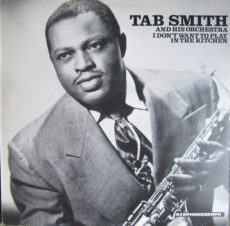
The mid~1930s saw Galbreath moving to Chicago, and playing with Fletcher Henderson, Jelly Roll Morton, Edgar Hayes, and Willie Bryant. Around 1937 he joined Lonnie Slappey’s Swingers in Philadelphia, Pennsylvania but was called back to New York by Lucky Millinder, with whom he played for some time. Following this he joined the Louis Armstrong Orchestra until its dissolution in 1943, then he went on to play with Charlie Barnet for a few weeks before serving in the Army. After his discharge, he worked in the second half of the decade with Luis Russell, Tab Smith, Billy Eckstine, and Sy Oliver, then returned to play with Millinder from 1948 to 1952.
From 1952 he played in USO tours, first with Snub Mosley and then with various other ensembles over the course of the next decade. Frank led his own band during the decade, then played in the bands of Arthur Prysock and Benny Goodman. During the Sixties, he played with Ray Charles, Fats Domino, and Sammy Davis, Jr.
In 1963 he moved to Atlantic City, New Jersey and played locally until his failing health forced his retirement in 1969. Trumpeter Frank Galbreath passed away in November 1971.
More Posts: history,instrumental,jazz,music,trumpet