

Daily Dose Of Jazz…
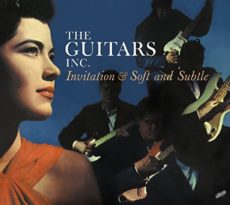
Alton Reynolds Hendrickson was born May 10, 1920 and grew up in Eastland, Texas before moving to the West Coast. In 1940 he worked for Artie Shaw and performed in Fred Astaire ‘s second chorus. By the mid-1940s he was in the coast guard but in the post-war period he played guitar in the bands of Freddie Slack, Ray Linn and Benny Goodman, whose sextet he also belonged to.
As a baritone Hendrickson was recorded on Goodman’s On a Slow Boat to China , which became a big hit in the USA in 1947. The 1950s saw him as a busy studio session player for both film and television soundtracks, The Danny Kaye Show, as well as for pop productions from Columbia Records since 1959. He worked in the productions of The Weavers and The Monkees, with country singer Sheb Wooley and jazz pianist Dodo Marmarosa.
In the field of jazz and popular music his was involved from 1940 to 1986 to 493 recording sessions with Rosemary Clooney, Bing Crosby, Doris Day, Lee Hazlewood, Eartha Kitt, Frankie Laine, Henry Mancini, Ann-Margret, Dean Martin, Ella Mae Morse, Harry Nilsson, Louis Prima, Elvis Presley Shorty Rogers, Bud Shank and Frank Capp’s Juggernaut big band.
Retiring to Oregon in the late Eighties he authored the Encyclopedia of Bass Chords, Arpeggios and Scales and Al Hendrickson Jazz Guitar Solos: Complete Book. Guitarist Al Hendrickson, who also played banjo, mandolin and was a vocalist, passed away on July 19, 2007 in North Bend Oregon.
Sponsored By


#preserving genius
More Posts: guitar
Daily Dose Of Jazz…
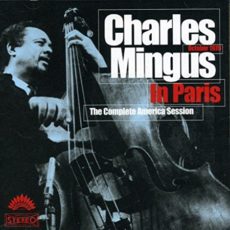
Eddie Preston was born in Dallas, Texas on May 9, 1925 and didn’t begin playing in the big bands until after World War II. From 1955 to 1972 he did stints with Lionel Hampton, Ray Charles, Louis Jordan, Duke Ellington, and Count Basie.
He played with Charles Mingus between 1963 and 1965 and again in 1969–72. During this period in between his working with Mingus, Eddie spent time freelancing with musicians such as Sonny Stitt and Frank Foster. He returned once more to work with Ellington in 1971 and then led a few groups, as well as working with Roland Kirk in 1977 and Archie Shepp in 1979.
Trumpeter Eddie Preston, who never released an album as a leader, passed away on June 22, 2009 in Palm Coast, Florida.

#preserving genius
More Posts: trumpet
Daily Dose Of Jazz…
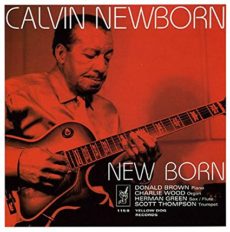
Edwin Calvin Newborn (was born on born April 27, 1933 in Whiteville, Tennessee and is the brother of pianist Phineas Newborn Jr. with whom he recorded between 1953 and 1958. They formed an R&B band, with their father Phineas Newborn Sr. on drums and Tuff Green on bass, trumpeter Willie Mitchell and tenor saxophonist Ben Branch. The group was the house band at the Plantation Inn Club in West Memphis, Arkansas, from 1947 until 1951 and recorded as B. B. King’s band on his first recordings in 1949, and also the Sun Records sessions in 1950.
Calvin gave guitars lessons to Howlin’ Wolf and was friends with Elvis Presley, who frequented his gig at the Plantation Inn Club two nights a week. Presley also used to eat at the Newborns’ house and browse their music store for gospel records. The group left West Memphis in 1951 to tour with Jackie Brenston as the Delta Cats in support of the record Rocket 88. It was considered by many to be the first rock and roll record ever recorded, and was the first Billboard number one record for Chess Records.
Following his R&B period he transitioned into jazz and played with Earl Hines starting in 1959. The early Sixties saw him touring with Lionel Hampton, Jimmy Forrest, Wild Bill Davis, Al Grey, Freddie Roach, Booker Little, George Coleman. Frank Strozier, and Louis Smith. Newborn also worked with Ray Charles, Count Basie, Hank Crawford, Sun Ra, Lou Donaldson, Bobby Hutcherson and David “Fathead” Newman among others. His 1980 album Centerpiece hit No. 35 on the U.S. Billboard jazz albums chart, but much of his earlier material was not reissued on CD until 2005.
Since the 1970s he remained mostly in Memphis, Tennessee, where he played regularly in local clubs well into the 1990s. Guitarist Calvin Newborn currently resides in Jacksonville, FL and continued to perform throughout Northeast Florida until his transition on December 1, 2018, aged 85.
Sponsored By
#preserving genius
More Posts: guitar
Daily Dose Of Jazz…
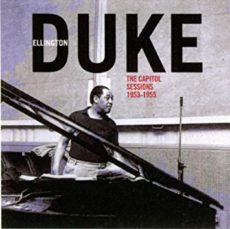
Rick Henderson was born in Washington, D.C. on April 25, 1928 and studied composition while in high school and in the late 1940s played the saxophone locally. After serving in the Army from 1951 to 1953, he joined Duke Ellington’s Orchestra upon recommendation by Clark Terry.
During Ellington’s years on Capitol Records, Rick sat in the saxophone section, created arrangements, and in addition composed tunes such as Carney for the Ellington band. Leaving Ellington’s employ in 1956, he returned to Washington, where he led the Howard Theatre’s house band until 1964.
Following this he worked as an arranger and composer for jazz orchestras as well as military bands and school ensembles. Among those who used Henderson’s charts, in addition to Ellington, were Count Basie, Illinois Jacquet, and Billy Taylor. He continued to lead bands into the 1990s, including the University of Maryland Jazz Ensemble from 1977 to 1978.
Saxophonist and arranger Rick Henderson passed away of arteriosclerotic cardiovascular disease on May 21, 2004 in the District of Columbia.

#preserving genius
Daily Dose Of Jazz…
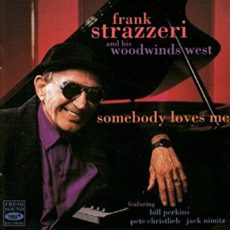
Frank Strazzeri was born April 24, 1930 in Rochester, New York and began his musical journey on tenor saxophone and clarinet at age 12, switching to piano soon after. He attended the Eastman School of Music, then, in 1952, took a job as a house pianist in a Rochester nightclub. While there he accompanied visiting musicians such as Roy Eldridge and Billie Holiday.
Relocating to New Orleans, Louisiana in 1954, he performed with Sharkey Bonano and Al Hirt in a Dixieland jazz setting, though his main focus since has been bebop. He played with Charlie Ventura in 1957-58 and Woody Herman in 1959 before moving to Los Angeles, California in 1960. There he worked extensively as a studio musician on the West Coast jazz scene, and toured with Joe Williams, Maynard Ferguson, Les Brown and Elvis Presle, playing with the latter for the 1973 Aloha from Hawaii concert.
Pianist Frank Strazzeri copiously recorded as a leader and played with Terry Gibbs, Herb Ellis, the Lighthouse All-Stars, Art Pepper, Bud Shank, Cal Tjader, Louie Bellson, Curtis Amy, Red Mitchell, Bill Perkins, Harold Land and Chet Baker. in addition to recording copiously as a leader. He passed away at the age of 84 on May 9, 2014.
Sponsored By

Voices From The Community
#preserving genius
More Posts: piano