

Daily Dose Of Jazz…
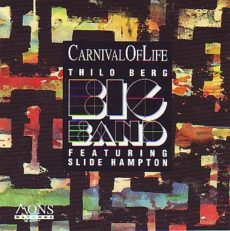
Thilo Berg was born April 23, 1959 in Dortmund, Germany and attracted attention in the 1980s, as a modern jazz drummer and big band leader. He has produced and organized more than 700 jazz, classical, R&B and soul events. Besides his own productions, he worked on large industry concerts as well as kick-off meetings and social events.
Berg completed studies as a classical percussionist with Herrmann Gschwendtner and held the position of solo timpanist and percussionist in the Southwest German Radio Symphony Orchestra and the German between 1981 and 2008. Having worked in various bands, in 1986 he formed his big band, performing with guest soloists such as Barbara Dennerlein, Ack van Rooyen, Jiggs Whigham, Barbara Morrison, Silvia Droste, Jim Snidero, Slide Hampton, Bob Mintzer, Art Farmer and Bill Ramsey.
Over seven year together they recorded three albums and the band saw coming through its ranks Till Brönner, Paul Heller, Peter Weniger, Ludwig Nuss, Mark Nightingale, Gerald Presencer, Martin Shaw, Hubert Nuss and Thilo Wagner.He also worked in smaller groups with Jack van Poll, Bobby Shew, Heiner Franz, John Gordon, Elaine Delmare and Curtis Fuller.
Drummer Thilo Berg founded the jazz and classical music label Mons Records in 1991, has worked as a music producer for Sony Music, BMG, Columbia and Universal, and continues to perform, record and produce.
Sponsored By

www.whatissuitetabu.com

#preserving genius
More Posts: drums
Daily Dose Of Jazz…
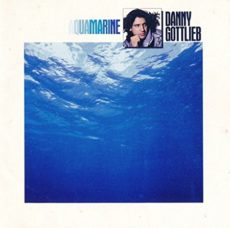
Daniel Richard Gottlieb was born in New York City on April 18, 1953. Taking lessons from Mel Lewis and Joe Morello, he graduated from the University of Miami in 1975. He became a member of the Gary Burton Quartet in 1976 with Pat Metheny, and then was one of the original members of The Pat Metheny Group from 1977–1983. Bassist Mark Egan, who was also in Metheny’s first group, teamed with Gottlieb and formed the band Elements. In 1984 he was a member of the Mahavishnu Orchestra led by guitarist John McLaughlin.
Gottlieb performed or recorded with dozens of musicians not limited to Bill Evans, Branford Marsalis, Jacqui Naylor, Chick Corea, Randy Brecker, Stan Getz, Clark Terry, Ernie Wilkins, Gerry Mulligan, Joanne Brackeen, Herbie Hancock, Hiram Bullock, Booker T and the MG’s, Hubert Laws, Lew Soloff, Jim Hall, Jimmy Haslip, Nnenna Freelon, John Scofield, Bobby McFerrin, Kenny Barron, Larry Coryell, Eddie Gómez, Mark Murphy, Miroslav Vitous, Naná Vasconcelos, Ali Ryerson, Nguyên Lê, Rufus Reid, Sting and Wayne Shorter, as well as the Carnegie Hall Jazz Orchestra, NDR Big Band, Trio, Vanguard Jazz Orchestra, Gil Evans Orchestra and WDR Big Band.
In 2004 he became the drummer for Gary Sinise’s Lt. Dan Band. He has performed on over 400 albums, earned nine Grammy Award nominations and four wins, is on the faculty of the University of North Florida as a full-time Professor of Jazz Studies. Drummer Danny Gottlieb has made over ten instructional DVDs, wrote the textbook The Evolution of Jazz Drumming, and continues to perform and record.

#preserving genius
More Posts: drums

Daily Dose Of Jazz…
Johnny St. Cyr was born on April 17, 1890 in New Orleans, Louisiana. St. He led several bands in the Crescent City beginning around 1905 and performed on the riverboats with Fate Marable. He played for several leading New Orleans bands including A.J. Piron, the Superior, Olympia and Tuxedo bands before moving to Chicago, Illinois in 1923 with King Oliver.
He is most commonly remembered as a member of Louis Armstrong’s Hot Five and Hot Seven bands. He also played and recorded with Jelly Roll Morton’s Red Hot Peppers. St. Cyr also performed with Don Cook’s Dreamland Orchestra. He composed the popular standard Oriental Strut, noted for its adventurous chord sequence.
In 1930 Johnny returned to New Orleans to make a living as a plasterer while still playing with local bands led by Paul Barbarin or Alphonse Picou. In 1955 he moved to Los Angeles, California and returned to music full time. From 1961 until his death in 1966, he was the bandleader of the Young Men from New Orleans that featured Barney Bigard, performers at Disneyland.
Banjoist and guitarist Johnny St. Cyr passed away on June 17, 1966 in Los Angeles, California.
Sponsored By

Voices From The Community
#preserving genius
Daily Dose Of Jazz…
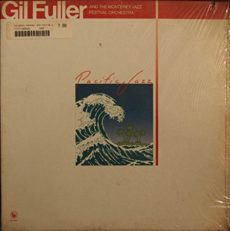
Walter Gilbert Fuller was born on April 14, 1920 in Los Angeles, California and is no relation to the jazz trumpeter and vocalist Walter “Rosetta” Fuller. In the 1930s and 1940s he did extensive work writing and arranging for bandleaders such as Les Hite, Floyd Ray, Jimmie Lunceford, Billy Eckstine, and Tiny Bradshaw.
He also worked with Benny Carter, Benny Goodman, Woody Herman, Count Basie, Machito and Tito Puente. Following World War II, Gil found himself increasingly in demand as a bebop arranger along with fellow modern arrangers Tadd Dameron, Gil Evans, and George Russell. Fuller’s work with Dizzy Gillespie was of particular note, yielding the tunes “Manteca”, “Swedish Suite”, and “One Bass Hit”. He is the composer of the jazz standard ballad “I Waited For You”, co-credited with Dizzy Gillespie.
Fuller started his own publishing company in 1957, and while he continued to work with some jazz musicians including Stan Kenton in 1955 and again in the 1960s, he also branched out into film music and pop with Ray Charles, among others.
Arranger Gil Fuller recorded a few albums before he passed away on May 26, 1994 in San Diego, California.
Sponsored By

#preserving genius
More Posts: arranger
Daily Dose Of Jazz…
Alexander Gafa was born on April 9, 1941 in New York City and worked as a student in the city from 1964 to 1969, playing guitar with Kai Winding and Sam Donahue . During the late Sixties he was a part of the New York Playboy Club playing with Winding, Earl May and Al Foster.
From 1969 to 1970, he was musical director and accompanist for Carmen McRae and performed as a member of the Sammy Davis Jr. orchestra in 1970 and 1971. During this decade he also did some live dates with Sarah Vaughan, one of which aired on PBS.
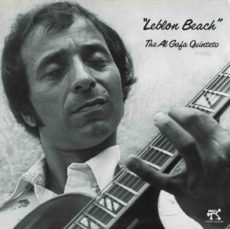
In 1971 Al played with Dizzy Gillespie and joined his group and toured with him for a period. Under his own name, he recorded the album Leblon Beach in 1976 for Pablo Records. He has recorded as well with Susannah McCorkle, Paul Simon, The Monkees, Alex Leonard, Duke Pearson, Johnny Hartman, Joe Albany and Sonny Stitt.
Before the fall of the World Trade Centers, he and bassist Dr. Lyn Christie would play in a duo configuration in the restaurant on the top floor. He is also part of Tom Lord’s 34 recording sessions from 1934 to 2011 of acoustic and electric guitar, and banjo. Guitarist Al Gafa currently resides in Brooklyn, New York where he performs occasionally.
Sponsored By
www.whatissuitetabu.com
#preserving genius
More Posts: guitar