

Daily Dose Of Jazz…
Born Martin Flachsenhaar, Jr. in New York City on October 7, 1924, Marty Flax played flute, clarinet and trombone in addition to baritone saxophone. He was a mainstay in the bands of Louis Jordan, Dizzy Gillespie, Perez Prado, and Tito Puente. He was also a member of the bands that performed on the soundtracks composed by Raymond Scott.
Marty worked with Les Elgart and Claude Thornhill in the late 1950s, then with Quincy Jones, Melba Liston and Gillespie, including on the State Department tours of the Middle East and South America.
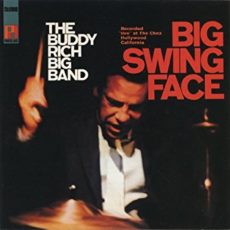
Early in the 1960s he again toured South America with the Woody Herman Orchestra. When not on tour he led a house band at the Cafe Society and worked with Sammy Davis, Jr. and Buddy Rich recording on the Reprise, Norgran and Verve labels.
Baritone saxophonist Marty Flax, a consummate sideman and bandleader who never recorded under his own name, passed away on July 3, 1972.

Dose A Day-Blues Away

More Posts: saxophone
Daily Dose Of Jazz…
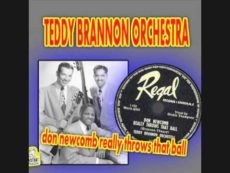
Teddy Brannon was born Humphrey Brannon on September 27, 1916 in Moultrie, Georgia. He began learning piano at age nine and played in dance bands in high school while working locally in Newark, New Jersey nightclubs from 1937 – 1942.
Between 1942 to 1945 he was a member of Benny Carter’s ensemble, after which he freelanced on 52nd Street in New York City. The 1950s and 1960s saw Brannon working in the studios with doo wop groups and though he never recorded as a leader, he recorded as a leader with his orchestra in the late Forties and played extensively in the jazz idiom with but not limited to Don Byas, Roy Eldridge, Buddy Rich, Bennie Green, Johnny Hodges, Jonah Jones, Don Newcomb and Illinois Jacquet.
An accomplished accompanied he performed and recorded with such singers as Dinah Washington, Ruth Brown, Billie Holiday, and Babs Gonzales, who was Brannon’s cousin. Pianist Teddy Brannon passed away on February 24, 1989 in Newark, New Jersey.
Give A Gift Of Jazz – Share
More Posts: piano
Daily Dose Of Jazz…
Bill Tole was born on September 23, 1937 and raised in Pittsburgh, Pennsylvania. His father was a high school band director, trombonist and pianist, his mother a music teacher, played piano and performed as a vocalist. Graduating from Duquesne University School of Music, he auditioned for the Tommy Dorsey Orchestra, went on tour and then joined the Air Force dance band, The Airmen of Note. He was solo trombonist and assistant leader for four years.
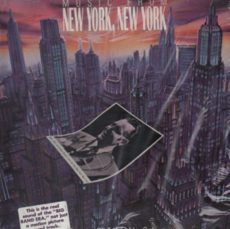
Moving to New York City in the 1960s he played with Broadway shows, headliners artists, club dates and recording during the studio’s prime years. Afterwards, he moved to Los Angeles in 1967 and recorded albums, commercials, television and movies. His career took a turn when a producer put out a casting call for a trombonist to portray Tommy Dorsey in a film starring Liza Minelli and Robert Deniro. They realized their luck with Tole who understood the era of music, professionally played trombone and had his own big band for the movie. He played as sweet as Dorsey, looked the part of the character and his band recorded their version of the soundtrack of New York, New York after the film was completed.
Bill has worked with Ray Anthony, Tex Beneke, Louis Bellson, Les Brown, Bob Crosby, Harry James, Quincy Jones, Nelson Riddle and Si Zentner as well as vocalists Frank Sinatra, Tom Jones, Ella Fitzgerald, Pearl Bailey and Tony Martin, to name a few.
Trombonist Bill Tole, very much in demand, continues to perform, record and tour as a soloist, teacher and clinician across the globe.
Take A Dose On The Road
#preserving genius
More Posts: trombone
Daily Dose Of Jazz…
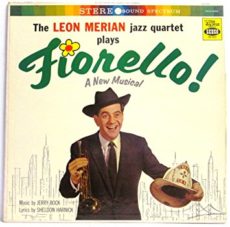
Leon Merian was born Vahan Leon Megerdichian on September 17, 1923 in Braintree, Massachusetts to Armenian immigrants and raised in Boston’s struggling Roxbury district. Showing an early interest in music, his first trumpet was a Christmas present at age 10 that led to taking lessons and by sixteen he was playing with the school band. Before long he was sitting in with musicians in local Boston clubs while still in high school in the late Thirties. He passed on a physics scholarship to pursue his music.
Early in his career, a record producer persuaded him to legally shorten his last name to Merian and he had already stopped using his first name as a child to avoid being teased. One of the first white musicians to play with a black band in the 1940s, he was hired by Lucky Millinder in 1942 at the age of 19 Charlie Shavers and Sonny Stitt and Gene Krupa and as the band toured the South got his initial introduction to racial discrimination. Leon recorded and performed with Frank Sinatra, Ella Fitzgerald, Elvis Presley, Dizzy Gillespie and other notable singers and jazz bands during a career of big bands, recording studios, major network orchestras, Broadway orchestra pits and nightclubs.
Merian played on the soundtracks of the Oscar-winning movies The Godfather and Ben-Hur, performed in Cole Porter’s Broadway musical Silk Stockings starring Rosalind Russell, and worked with the studio orchestras at ABC, CBS and NBC.
After serving as department chairman of foreign languages at New Rochelle High School in New York and at Endicott College in Beverly, Massachusetts, Merian went into the Milton, Massachusetts public schools, where he was chairman of the foreign languages department until he retired in 1982 to concentrate on music. Moving south to Florida in the late Eighties he led a 14-piece Leon Merian Big Band and his smaller Leon Merian Quintet in clubs and concert performing one his last at the age of 80.
Trumpeter, bandleader and educator Leon Merian, whose career spanned some sixty years, passed away on August 15, 2007 due to complications from diabetes.
Jazz Is Global – Share
More Posts: trumpet
Daily Dose Of Jazz…
Lisle Arthur Atkinson was born on September 16, 1940 in New York City and his mother played piano, his father played bass. He began his music lessons on the violin and later switched to bass, attended the High School of Music and Art and the Manhattan School of Music .
Lisle began his career working with Freddy Cole, from 1959 to 1961. From 1962 to 1966 he accompanied Nina Simone and contributed to several of their albums with such Broadway Blues Ballads . The late Sixties saw him performing alongside Norman Simmons and Al Harewood backing Betty Carter and joined with her in 1970 at the Village Vanguard. He has performed and recorded with Michael Fleming, Milt Hinton, Richard Davis, Ron Carter, Sam Jones and with Bill Lee’s New York Bass Violin Choir.
In the early 1970s he worked with Stanley Turrentine, Wynton Kelly, Billy Taylor, Kenny Burrell, Dakota Staton, Frank Foster, Horace Parlan, Grady Tate, Howard McGhee, Johnny Hartman and Joe Williams.
In 1976 he played with Walt Dickerson and Andrew Cyrille. In the early 1980s he worked with Charles Sullivan, Nancy Wilson, Eddie Harris and played 1985 in the formation of Neo Brass Ensemble. In the second half of the 80s he played with Benny Carter in which Grover Mitchell Big Band, with Lee Konitz and in the quintet of Ernie Wilkins and Joe Newman . In 1995 he worked in a trio with Cyrille and James Newton on Good to Go with a Tribute to Bu.
Since 1971, Atkinson taught in the Jazz Mobile project. He also participated in recordings of Richard Wyands, George Coleman , Helen Humes and Hal Singer. In 1979 he recorded as a leader on Storyville Records album Bass Contrabass with Wyands and Al Harewood. Bassist Lisle Atkinson continued to perform and record until he passed away on March 25, 2019, at the age of 78.
Sponsored By

Voices From The Community
More Posts: bass