

Daily Dose Of Jazz…
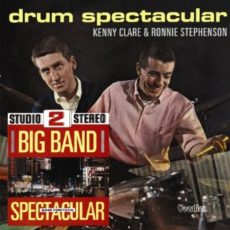
Kenneth Clare was born on June 8, 1929 in Leytonstone, London, England and played with Oscar Rabin on English radio in his early 20s. Following this, he played with Jack Parnell and then with Johnny Dankworth for an extended period in the 1950s and early 1960s. In the latter decade he played with Ted Heath and Ronnie Stephenson as well as playing in the studios as a member of Sounds Orchestral.
Clare played drums for the Kenny Clarke-Francy Boland Big Band in 1963 to 1966 when Clarke was unavailable. But from 1967 through 1971, when the band folded, he was a regular paired with Clarke in what became a two-drummer band for performances, concerts, and at least 15 recordings issued by various labels.
He accompanied singers including Ella Fitzgerald, Tony Bennett and Cleo Laine. On December 5, 1971 he performed in concert at Queen Elizabeth Hall with fellow drummers Buddy Rich and Louie Bellson. Drummer Kenny Clare, who also did extensive work for radio, television, film, and commercials, passed away December 21, 1984.

Put A Dose In Your Pocket

More Posts: drums
Daily Dose Of Jazz…
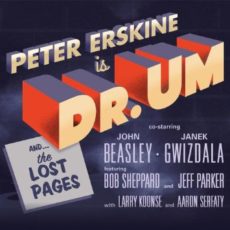
Peter Erskine was born on June 5, 1954 in Somers Point, New Jersey and began playing the drums at the age of four. He graduated from the Interlochen Arts Academy in Michigan, then studied percussion at Indiana University.
He began playing professionally in 1972 when he joined the Stan Kenton Orchestra. After three years with Kenton he spent two years with Maynard Ferguson and in 1978 Erskine joined Weather Report along Jaco Pastorius in the rhythm section. After four years and five albums with Weather Report and the Jaco Pastorius big band Word of Mouth, he joined Steps Ahead.
Over the course of his prolific career Peter has recorded 20 albums as a leader and to date has been a sideman on over ninety-five albums working with John Abercrombie, Diana Krall, Eliane Elias, Queen Latifah, Linda Ronstadt, Eberhard Weber, Kate Bush, Gary Burton, Randy and Michael Brecker, George Cables, Pino Daniele, Eddie Daniels, Al Di Meola, Marty Ehrlich, Joe Farrell, Jan Garbarek, Giorgio, Gordon Goodwin, Joe Henderson, Bobby Hutcherson, Marc Johnson, Rickie Lee Jones, Gary Peacock, Joni Mitchell, Steely Dan, Rod Stewart, Ralph Towner, Joe Zawinul, Kenny Wheeler and many more.
Drummer Peter Erskine currently splits his time between performing and teaching. He ss a professor at the Thornton School of Music at the University of Southern California. His big band recordings with the Bob Mintzer Big Band are modern big band jazz/funk performances studied by many students of drums and drumming. He has published five books on drumming and has one DVD titled The Erskine Method of Drumming.
Sponsored By

Voices From The Community
More Posts: drums
Daily Dose Of Jazz…
Dave Barbour was born May 28, 1912 in Long Island, New York and started off as a banjoist with Adrian Rollini in 1933 and then Wingy Manone in 1934. He switched to guitar in the middle of the decade and began playing with Red Norvo in 1935-1936.
Through the rest of the decade and the Forties he found a sizable amount of work as a studio musician and played in ensembles with Teddy Wilson and Billie Holiday, Artie Shaw, Lennie Hayton, Charlie Barnet, Raymond Scott, Glenn Miller, Lou Holden, Woody Herman, André Previn and Benny Goodman.
While performing with Goodman’s ensemble, he fell in love with lead singer Peggy Lee, and they quit the group to marry and moved to Los Angeles, California where Johnny Mercer put them to work as a songwriting team, writing a number of Lee’s hits, such as Mañana (Is Soon Enough for Me) and It’s a Good Day. Unfortunately Dave’s alcoholic and domestic troubles with Lee eventually split apart their marriage.
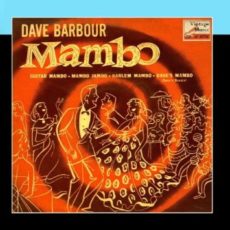
His orchestra had the best-selling US version of the peppy song Mambo Jambo and though his remaining career was far less successful thanhis ex-wife’s, his songwriting royalties sustained him, as the tunes he co-wrote with Lee were covered by many hitmakers of the 1950s. He acted in the films The Secret Fury and Mr. Music, and occasionally performed, including with Benny Carter in 1962. Guitarist Dave Barbour passed away on December 11, 1965 of a hemorrhaged ulcer in Malibu Beach, California, aged 53.
Give A Gift Of Jazz – Share
More Posts: guitar
Daily Dose Of Jazz…
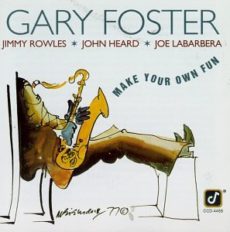
Gary Foster was born May 25, 1936 in Leavenworth, Kansas and started on the clarinet at age 13. His first personal musical inspiration was Olin Parker, his Jr. High School music director and private teacher who introduced him to Woody Herman, Count Basie and many other types of music. He listened closely to the Woody Herman orchestra recording of “Four Brothers” from the late 1940s which featured jazz saxophonists Stan Getz, Zoot Sims and Serge Chaloff and for him, Getz stood out on the tenor saxophone because of his tone. but Lester Young and Charlie Parker were also major influences.
His earliest professional experience was at age of 15 playing Leavenworth VFW Hall dances with bassist Harold Stanford. After high school Gary studied at Central College in Fayette, Missouri, he then transferred to the University of Kansas studying classical clarinet, music education, musicology and conducting. While there he met and played with Kansas City jazz trumpet great Carmell Jones.
In 1961 at age 26 Foster moved to Los Angeles, California to join the West Coast jazz scene, teaching privately and studying the flute but finding little work for a saxophonist to make a living only playing jazz he turned to studio work as a woodwind doubler to support his family. His initial associations and friendships with Clare Fischer and Warne Marsh were vital to Foster’s artistic approach to music and jazz improvisation.
He joined at its inception in 1973 he was a member of the Grammy Award winning Toshiko Akiyoshi – Lew Tabackin Big Band, worked with the big bands of Clare Fischer, Louis Bellson, Mike Barone, Ed Shaughnessy, and the Marty Paich Dek-tette, as well as with Cal Tjader, Poncho Sanchez, Sammy Nestico, Shelly Manne, and Rosemary Clooney and numerous others.
For over 45 years he has made his studio work has included television, movies, recordings, media and soundtracks such as Monsters, Inc., Ice Age, Elf, Meet The Fokkers, and Haunted Mansion to name a few. Foster has been in the Academy Awards Television Orchestra for 30 different broadcasts of the show, performed regularly with the Los Angeles Philharmonic, the Los Angeles Chamber Orchestra, the Los Angeles Opera Orchestra and the Hollywood Bowl Orchestra.
Saxophonist, clarinetist and flutist Gary has taught at Pasadena City College, University of Missouri, University of California, Los Angeles and California State University and founded Nova Music Studios. He has co-authored educational materials and conducts clinics at colleges and performs and lectures at professional music symposiums.
Dose A Day-Blues Away
Daily Dose Of Jazz…
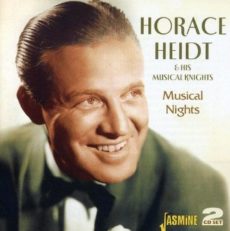
Horace Heidt was born on May 21, 1901 in Alameda, California, He went on to attend the University of California Berkeley as a guard on the football team. But a broken back dashed those dreams and he turned his attention to music, forming The Californians with some classmates.
From 1932 to 1953, he became one of the more popular radio bandleaders beginning on NBC’s Blue Network with Shell Oil’s Ship of Joy and Answers by the Dancers and Horace Heidt’s Alemite Brigadiers. He broadcasted from CBS from 1937-1939.
Horace would employ singer Matt Dennis and singing comedian Art Carney. His recordings were highly successful with Gone With The Wind and Ti-Pi-Tin going to No. 1 and The Man With The Mandolin hitting No. 2 on the charts. His 1941 song, The Hut-Sut Song is heard in the movie A Christmas Story.
He returned to NBC to perform on Pot o’ Gold radio show from 1939-194, portraying himself in the film of the same name starring James Stewart and Paulette Goddard. From 1940 to 1944 he did Tums Treasure Chest, followed by 1943–45 shows on the Blue Network. Lucky Strike sponsored The American Way on CBS in 1953.
On December 7, 1947, NBC launched The Horace Heidt Youth Opportunity Program and accordionist Dick Cortino the first winner of the $5,000 prize, soon had his own show. Heidt’s talent search catapulted a number of performers such as Carney, Frankie Carle, the King Sisters, Alvino Rey, Gordon McRae, Frank DeVol, Johnny Standley and Al Hirt. When the program expanded from radio to television in 1950, it was one of the first talent shows.
Pianist and bandleader Horace Heidt passed away on December 1, 1986 in Los Angeles, California. For his contribution to radio and television he has two stars on the Hollywood Walk of Fame and a Golden Palm Star on the Palm Springs Walk of Stars.
Uplift Someone’s World
More Posts: piano