

Daily Dose Of Jazz…
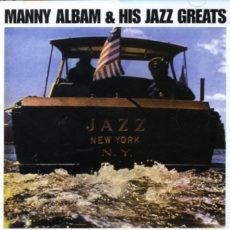
Manny Albam was born on June 24, 1922 in Samana, Dominican Republic. Growing up in New York City he became interested in jazz after hearing Bix Beiderbecke and at sixteen dropped out of school to play for Dixieland trumpeter-leader Muggsy Spanier, but it was his membership in a group led by Georgie Auld that turned his career around.
While playing with Auld group, saxophonist Budd Johnson mentored Albam as an arranger. By 1950, Albam put down his baritone sax and began to concentrate strictly on arranging, writing, and leading. Within a few years, he became known for a bebop-oriented style that emphasised taut and witty writing with a flair for distinctive shadings. Flute-led reed sections became his trademark.
He became known for his work for bandleaders Charlie Barnet and Charlie Spivak, before moving forward to collaborate with Count Basie, Stan Getz, Bob Brookmeyer, Coleman Hawkins, Dizzy Gillespie, Freddie Hubbard, Hank Jones, Mel Lewis, Art Farmer, Urbie Green, and Milt Hinton, among others.
Manny found an entree into the classical music world when he arranged Leonard Bernstein’s score for West Side Story in 1957. Bernstein was said to have been so impressed that he invited him to write for the New York Philharmonic, and, in due course, write such works as Concerto for Trombone and Strings, became musical director for United Artists-Solid State Records, composed the score for a few films and television programs, and recording the albums The Blues is Everybody’s Business, The Drum Suite, The Jazz Workshop, Jazz New York, Something New, Something Blue and his jazz suite The Soul of the City.
As an educator Manny started teaching summer workshops at the Eastman School of Music in Rochester, New York in 1964. He later joined the faculties of Glassboro State College in New Jersey and the Manhattan School of Music in New York. By 1988 he helped establish the BMI Jazz Composer’s Workshop to foster young composers and arrangers. In 1991 he eventually took over as director from Bob Brookmeyer and has as long list of former students throughout the music industry and in higher education, a pursuit he continued until his death.
Baritone saxophonist,composer,arranger, producer and educator Manny Albam passed away of cancer on October 2, 2001 in Croton-on-Hudson, New York.
Sponsored By

www.whatissuitetabu.com

More Posts: saxophone
Daily Dose Of Jazz…
Eli Robinson was born on June 23, 1911 in Greenville, Georgia. After working in Cincinnati in bands led by Speed Webb and Zack White, he worked as well with McKinney’s Cotton Pickers.
Robinson made his first recordings in 1935 with Blanche Calloway. In 1936 he moved to New York City where he played with Teddy Hill, and Willie Bryant. After working briefly with Roy Eldridge in Chicago in 1939, he joined Count Basie from 1941 to 1947.
During the 1950s and 60s, he worked with Lucky Millinder and Buddy Tate. Trombonist and arranger Eli Robinson passed away on December 24, 1972.

Dose A Day-Blues Away
More Posts: trombone
Daily Dose Of Jazz…
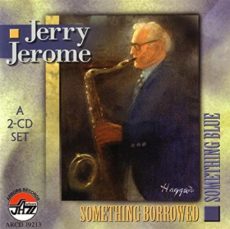
Jerry “Buck” Jerome was born on June 19, 1912 in Brooklyn, New York and began playing the saxophone in high school in Plainfield, New Jersey. In 1936 he was part of a national tour with bandleader Harry Reser and his Clicquot Club Eskimos.
He joined Glenn Miller’s original orchestra in 1937 and was a member until it broke up in 1938. He played on the Miller recording Doin’ the Jive in which in soloed. He then joined the Red Norvo band followed by taking a chair in the Benny Goodman Orchestra in 1938.
When Goodman broke up his band in 1940, Buck joined the Artie Shaw Orchestra. While with Shaw he appeared in the 1940 film Second Chorus starring Fred Astaire and Burgess Meredith.
Tenor saxophonist Jerry Jerome, who was a mainstay during the big band era and led four recording sessions, passed away on November 17, 2001.
Sponsored By


More Posts: saxophone
Daily Dose Of Jazz…
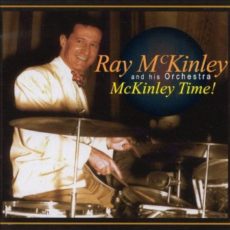
Ray McKinley was born on June 18, 1910 in Fort Worth, Texas. He got his start at age 9 working with local bands in the Dallas–Fort Worth area. Leaving home when he was 15, he played with Milt Shaw’s Detroiters and the Smith Ballew and Duncan-Marin bands. It was with the Smith Ballew band in 1929 that McKinley met Glenn Miller. The two formed a friendship that lasted from 1929 until Miller’s death in 1944. McKinley and Miller joined the Dorsey Brothers in 1934.
The Dorsey brothers split in 1935 and Ray remained with Jimmy Dorsey until 1939, when he joined Will Bradley, becoming co-leader. His biggest hit with Bradley, as a singer, was Beat Me Daddy, Eight to the Bar, which he recorded in 1940 and got a partial songwriting credit. Known also as Eight Beat Mack, taken from the lyrics to Down the Road a Piece, he recorded the song a trio with Will Bradley and Freddie Slack.
Splitting with Bradley in 1942, McKinley formed his own band and recorded for Capitol Records. The band was short-lived and he joined Glenn Miller’s Army Air Force Band, which he co-led with arranger Jerry Gray after Miller’s disappearance in December 1944. Upon discharge he formed a modern big band that featuring original material by legendary arranger Eddie Sauter and vocals by the leader. However, with business declining, by 1950 that band was history and his interest turned towards becoming a part-time leader and radio and TV personality.
In 1956, capitalizing on the popularity of The Glenn Miller Story movie with James Stewart, McKinley was chosen to be the leader of the revived Glenn Miller band, which he led until 1966. He co-hosted, with former Air Force band vocalist Johnny Desmond, a 13-week CBS-TV summer replacement series with the band called Glenn Miller Time in 1961. He also wrote the lyrics to the 1945 wartime song My Guy’s Come Back with music by Mel Powell and recorded by Benny Goodman with vocals by Liza Morrow on Columbia Records. His final recording session was in 1977 for Chiaroscuro Records. Drummer, singer, and bandleader Ray McKinley passed away on May 7, 1995.
Uplift Someone’s World
More Posts: drums
Daily Dose Of Jazz…
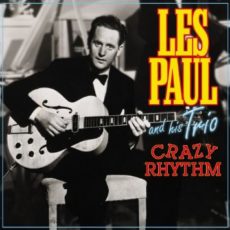
Les Paul was born Lester William Polsfuss on June 9, 1915 in Waukesha, Wisconsin. At the age of eight, he began playing the harmonica and after trying to learn the piano, he switched to the guitar, teaching himself how to play. It was during this time that he invented a neck-worn harmonica holder, allowing him to play both sides of the harmonica hands-free while accompanying himself on the guitar. By age thirteen, he was performing semi-professionally as a country music singer, guitarist, and harmonica player.
He began his first experiment with sound wanting to make himself heard by more people at the local venues, so he wired a phonograph needle to his guitar and connected it to a radio speaker, using that to amplify his acoustic guitar. As a teen Les created his first solid body electric guitar using a 2-foot piece of rail from a nearby train line. By age seventeen, he was playing with Rube Tronson’s Texas Cowboys and soon after he dropped out of high school and joined Sunny Joe Wolverton’s Radio Band in St. Louis, Missouri on KMOX.
Moving to Chicago in 1934 he continued to perform on radio, met pianist Art Tatum, whose playing influenced him. Paul formed a trio in 1937 with singer/rhythm guitarist Jim Atkins and bassist/percussionist Ernie “Darius” Newton. Four years later he was in New York in 1938 with a featured spot on Fred Waring’s Pennsylvanians radio show. Drafted into the Army working on the Armed Forces Radio Network, he backed Bing Crosby, The Andrews Sisters and performed as a leader. His guitar style was strongly influenced by the music of Django Reinhardt, whom he greatly admired, met and befriended after World War II and paid part of the funeral cost when Django died in 1953.
He would go on to play with Nat King Cole at the inaugural Jazz At The Philharmonic in 1944, record with Crosby and the Andrews Sisters and then nearly lose his career after his right arm was shattered in a near fatal car crash. Los Angeles doctors set his arm just under a ninety degree angle, giving him the ability to cradle and pick the guitar after a year and a half recovery.
Paul performed in the genres of jazz, country and blues, was also a songwriter, luthier, inventor and pioneer of the solid body electric guitar, utilized multi-tracking, overdubbing, tape delay and phasing effects in his recordings aided in his innovative playing style of licks, trills, chording sequences and fretting techniques that set him apart from his contemporaries and inspired many guitarists of the present day. With his wife Mary Ford he recorded in the 1950s, and together they sold millions of records.
Guitarist Les Paul has been honored with induction into the Rock and Roll Hall Of Fame, the National Inventors Hall of Fame, won several Grammy Awards, Grammy Trustees Award, with Mary Ford their How High The Moon was inducted into the Grammy Hall of Fame, National Medal of Arts, was inducted into the Big Band Hall of Fame and the Jazz Hall of Fame, received an Emmy Lifetime Achievement Award in Engineering, the Lifetime Achievement in Music Education from the Wisconsin Foundation for School Music, and a star on the Hollywood Walk of Fame, among numerous other honors.
Suffering from arthritis in the mid-1960s his condition worsened over his career and in his final years he lost the use of his right hand except for two fingers. On August 12, 2009 guitarist Les Paul passed away from complications from pneumonia at White Plains Hospital in New York.
Give The Gift Of Knowledge
More Posts: guitar