

Daily Dose Of Jazz…
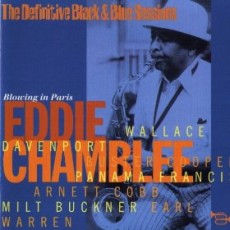
Edwin Leon Chamblee was born in Atlanta, Georgia on February 24, 1920 and grew up in Chicago, Illinois where he began learning the saxophone at the age of 12. After leaving Wendell Phillips High School he studied law at Chicago State University, playing in clubs in the evenings and on weekends.
Chamblee played in U.S. Army bands between 1941 and 1946 and after leaving the service joined Miracle Records. He played on Sonny Thompson’s hit record Long Gone in 1948, and on its follow-up Late Freight credited to the Sonny Thompson Quintet featuring Eddie Chamblee. Both records reached no. 1 on the national Billboard R&B chart and two following records also charted in 1949.
From 1947, Eddie led his own band in Chicago clubs, as well as continuing to record with Thompson, work on other sessions in Chicago, including The Four Blazes hit Mary Jo in 1952. By 1954 he switched gears joining Lionel Hampton’s band for two years, touring in Europe, before returning to lead his own group again in Chicago. He accompanied Amos Milburn, Lowell Fulson and Dinah Washington during the late 50s to early 60s. The two performed vocal duets in a style similar to that later adopted by Washington with Brook Benton.
Known also by his nickname Lone Gone, he recorded for the Mercury and EmArcy labels and with his own group in the early 1960s for Roulette and Prestige Records. In the 1970s he rejoined Hampton for tours of Europe, where he also played with Milt Buckner, recorded for the French Black & Blue label, and performed with the Count Basie Orchestra in 1982. From the 1980s until his passing at age 79 on May 1, 1999, tenor and alto saxophonist Eddie Chamblee performed with the Harlem Blues and Jazz Band.

Inspire A Young Mind
More Posts: saxophone
Daily Dose Of Jazz…
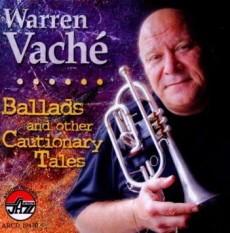
Warren Vaché, born February 21, 1951 in Rahway, New Jersey came from a musical family. His father was a bassist, author of several jazz books and a critic, while his mother was a secretary at Decca Records. He began playing piano in the third grade but soon switched to trumpet so he could play in the fourth grade band and his father immediately bought him a cornet.
Over the years Warren has looked to Louis Armstrong, Roy Eldridge, Bobby Hacket, Fats Navarro, Tom Harrell and Ruby Braff as his sources of inspiration. Throughout high school and while attending Montclair State College he played gigs from dance to weddings and all kinds of receptions.
Part of his formal training by studying under Pee Wee Erwin and continued with him playing in polka, Dixieland, big dance and Broadway pit bands, as well as small jazz groups and large free-wheeling combos.
His first professional job was with the Billy Maxted band in Detroit in 1972. From there he ventured on to play th Broadway production of Mr. Jazz, work with George Wein and finally landing in Benny Goodman’s band. There he played with Hank Jones, Urbie Green, Zoot Sims and Slam Stewart.
He became part of the Condon’s house band, had his debut release, First Time Out on the Monmouth label, but Concord Records gave him his biggest exposure working with Scott Hamilton, John Bunch, Jake Hanna and Cal Collins. He has also worked with Bucky Pizzarelli and Howard Alden.
Swing master cornet, flugelhorn and trumpeter Warren Vaché currently maintains a full schedule of recording, worldwide festivals appearances, Broadway and club dates.
Give The Gift Of Knowledge
More Posts: cornet,flugelhorn,trumpet
Daily Dose Of Jazz…
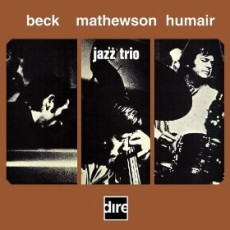
Ron Mathewson was born 19 February 1944 Lerwick, Shetland Isles, Scotland into an unusually musical household. At eight years old he was studying classical piano, continuing his studies and performing classical piano until he reached sixteen. A year earlier he started playing bass guitar and his talent was noted and encouraged by Shetland musician, Peerie Willie Johnson.
In 1962, Mathewson was in Germany playing professionally with a Scottish Dixieland band, then in London he also performed with various jazz and R&B bands through to the middle of the decade. Around this time he was also a member of the Kenny Clarke-Francy Boland Big Band.
By1966 Ron became a member of the Tubby Hayes band, with which he performed until 1973. From 1975 on in to the 1990s, he was frequently a participant in various Ronnie Scott recordings and concerts.
In 1983, he appeared on Dick Morrissey’s solo album After Dark with Jim Mullen, John Critchenson, Martin Drew and Barry Whitworth. In 2007 a benefit concert was held for him after he had an accident that left him recovering from two broken hips, a broken wrist and a burst artery.
Best known for his years spent with Scott, the double bassist and bass guitarist has recorded with Stan Getz, Joe Henderson, Ben Webster, John Taylor, Gordon Beck, Philly Joe Jones, Roy Eldridge, Tony Oxley, Kenny Wheeler, Oscar Peterson, John Stevens, Terry Smith, Bill Evans, Phil Woods and His European Rhythm Machine, Acoustic Alchemy, Ian Carr, Spontaneous Music Ensemble, Ray Nance and Charles Tolliver, among numerous others.
Jazz Is Global – Share
Daily Dose Of Jazz…
Chris Pyne was born Norman Christopher Pyne on February 14, 1939 in Bridlington, England and played piano as a child before switching to trombone.
Beginning in 1963 he played with Fat John Cox, Alexis Korner’s Blues Incorporated, John Stevens’s Spontaneous Music and the London Jazz Orchestra before settling in with Humphrey Littleton from ’66 until 1970.
During the Sixties he recorded with John Dankworth, Ronnie Scott and Stan Tracey. Staying very busy in the 70s Chris played with Mike Gibbs off and on from 1967-1979, toured with Frank Sinatra’s backing bands from 1970 and 1983, and was also performing with the John Taylor Sextet between 1971 and 1981.
Pyne also performed or recorded with Kenny Wheeler, John Surman, Philly Joe Jones, Maynard Ferguson, Tony Coe, Bobby Lamb, Ray Premru, Ronnie Ross, Barbara Thompson, John Stevens, Norman Winstone and Alan Cohen.
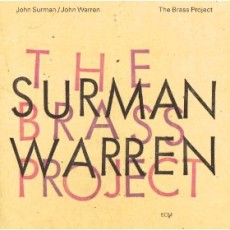
He toured with Gordon Beck in the Eighties, joined Surman’s Brass Project from ’84-’92 and later in his musical life became a member of the Charlie Watts Big Band. Trombonist Chris Pyne passed away on April 12, 1995 in London, England without ever recording as a leader.
Give The Gift Of Knowledge
More Posts: trombone
Daily Dose Of Jazz…
Les Hite was born in DuQuoin, Illinois on February 13, 1903. He attended the University of Illinois and played saxophone with family members in a band in the 1920s. Following this, he played with Detroit Shannon, then with the Helen Dewey Show, but when this group disbanded abruptly, he relocated to Los Angeles, California.
In L.A. he played with The Spike Brothers Orchestra, Mutt Carey, Curtis Mosby and Paul Howard. He became leader of Howard’s band in 1930, and played at the Cotton Club in Los Angeles for several years, accompanying Louis Armstrong and Fats Waller among others. The band also recorded frequently for film soundtracks and occasionally appeared on camera.
Hite’s big band, known as Sebastian’s Cotton Club Orchestra, primarily played in Los Angeles, though they occasionally went on tour. Musicians who played in the band included Lionel Hampton, Marshal Royal, Lawrence Brown, Britt Woodman, Joe Wilder, T-Bone Walker and Dizzy Gillespie.
Rarely recorded, for this reason much of the details of his life and work are poorly documented. The only sessions he did were 14 numbers recorded between 1940 and 1942. Saxophonist and bandleader Les Hite passed away at St. John’s Hospital in Santa Monica, California on February 6, 1962 from complications following a heart attack one week before his 59th birthday.
Put A Dose In Your Pocket
More Posts: saxophone