

Daily Dose Of Jazz…
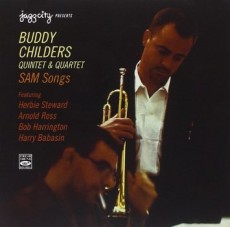
Buddy Childers was born Marion Childers in Belleville, Illinois on February 12, 1926. He came to fame in 1942 at the age of 16 when he took over the first trumpet chair in the Stan Kenton Orchestra. For years he worked with Kenton as well as performing with Tommy Dorsey, Woody Herman, Les Brown, Charlie Barnet, Dan Terry and other big bands.
He would go on to work with Gene Ammons, Elmer Bernstein, Maynard Ferguson, Clare Fischer, Milt Jackson, Carmen McRae, Oliver Nelson and Lalo Schifrin among others. No stranger to television programs and or films, Childers put together a big band that recorded for Candid Records in the 1980s and 1990s. He also recorded quintet and quartet sessions with Herbie Steward, Arnold Ross, Bob Harrington and Harry Babasin on the Jazz City label.
Trumpeter, composer and ensemble leader Buddy Childers passed away of cancer on May 24, 2007, at the age of 81.

Jazz Is Global – Share
More Posts: trumpet
Daily Dose Of Jazz…
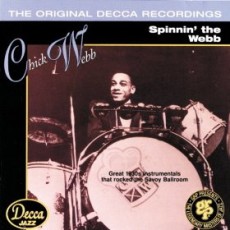
Chick Webb was born William Henry Webb on February 10, 1905 in Baltimore, Maryland. Suffering from tuberculosis of the spine as a child, it left him short of stature and with a badly deformed spine, causing him to appear hunchbacked. His doctor suggested playing an instrument would loosen up his bones and after saving up his newspaper boy money bought a set of drums and was playing professionally by age 11.
At the age of 17 Chick moved to New York City, took drum lessons from Tommy Benford and by 1926 was leading his own band in Harlem. He alternated between band tours and residencies at New York City clubs through the late 1920s and by 1931 his band became the house band at the Savoy Ballroom. He became one of the best-regarded bandleaders and drummers of the new swing style.
Webb couldn’t read music but memorized the arrangements played by the band and conducted from a platform in the center. Although his band was not as influential and revered in the long term, it was feared in the battle of the bands, with the Savoy often featured “Battle of the Bands” where Webb’s band always came out on top over Goodman’s or Basie’s band. He was crowned the first King of Swing and didn’t lose until 1937 to Duke Ellington.
In 1935 he began featuring a teenaged Ella Fitzgerald and the two electrified the Swing Era with hits like Van Alexander’s A-Tisket A-Tasket. By 1938, Webb’s health began to decline; for a time, however, disregarding his own discomfort he continued to play, refusing to give up touring so that his band could remain employed during the Great Depression. Finally, following a major operation at John Hopkins Hospital, drummer and bandleader William Henry “Chick” Webb passed away from spinal tuberculosis at age 34 on June 16, 1939, in Baltimore, Maryland.
His death hit the jazz/swing community very hard and after his death Ella Fitzgerald led the band until it disbanded when she left to focus on her solo career in 1942.
Inspire A Young Mind
More Posts: drums
Daily Dose Of Jazz…
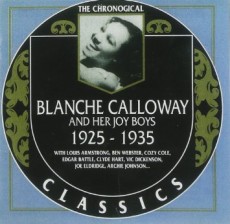
Blanche Calloway was born Blanche Dorothea Jones Calloway on February 9, 1902 in Rochester, New York. Her mother was a music teacher and gave her children a passion for music. The older sister of Cab Calloway, she was a successful singer before her brother.
Influenced as a youth by Florence Mills and Ida Cox, she was encouraged to audition for a local talent scout and dropped out of Morgan College in the early 1920s to pursue her music career. Blanche made her professional debut in Baltimore in 1921 with Eubie Blake and Noble Sissle’s musical Shuffle Along but her big break came two years later on the national tour of Plantation Days. With the tour ending in Chicago, she decided to stayand gained popularity on the town’s jazz scene.
By 1925 she recorded two blues songs accompanied by Louis Armstrong and Richard M. Jones that became the first inception of her Joy Boys orchestra. She would perform with Rueben Reeves and record for Vocalion Records, work with Andy Kirk’s Clouds of Joy, and worte and recorded three songs of which her theme song would emerge, I Need Lovin’. Calloway would go on to form another Joy Boys big band with Ben Webster, Cozy Cole, Andy Kirk, Chick Webb and Zack Whythe, making her the first woman to lead an all-male jazz orchestra.
She struggled in the racially segregated and male-dominated music industry of the period, frequently played to segregated audiences and arrested for using white only restrooms on the road. While sitting in a Mississippi jail a band member stole the group’s money and she had to sell her yellow Cadillac to leave the state. Though an exceptional musician, she received few opportunities outside singer and dancer due to gender roles of the time. By the mid-1930s Calloway began to struggle to find bookings, just as her brother’s own career grew in popularity.
After years of struggling for major success, in 1938 she declared bankruptcy, broke up her orchestra and a couple of yeas later put together a short-lived all-female orchestra during World War II. Struggling once again for bookings she moved to the Philadelphia suburbs and became a socialite, served as a Democratic committeewoman, moved to Washington, DC and managed the Crystal Caverns nightclub. She hired Ruth Brown to perform and gained credit for discovering her and getting her a record deal with Atlantic Records.
In the late 1950s she moved to Florida and became a deejay for WMBM in Miami Beach, then became the program director for twenty years. She became the first Black woman to vote in Florida, was an active member of the NAACP and the Congress of Racial Equality (CORE) and served on the board of the National Urban League.
Vocalist, composer and bandleader Blanche Calloway, whose flamboyant style was a major influence on her brother Cab, eventually moved back to Baltimore, and married her high school sweetheart, passing away on December 16, 1978, from breast cancer, aged 76.
Dose A Day – Blues Away
More Posts: vocal
Daily Dose Of jazz…
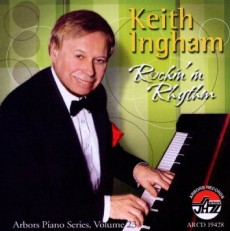
Keith Ingham was born February 5, 1942 in London, England. His first professional gigs occurred in 1964 playing with Sandy Brown, Bruce Turner, and Wally Fawkes throughout the decade.
Ingham played with Bob Wilber and Bud Freeman in 1974 and moved to New York City in 1978. During the 1980s he played with Benny Goodman, the World’s Greatest Jazz Band and Susannah McCorkle. He also worked with Maxine Sullivan, Marty Grsz, Harry Allen and Eddie Condon.
During the 1930s he record a series of albums for Jump Records, and in the 90s recorded a baker’s dozen sessions for Sackville, Stomp Off and Spotlight record labels. He continues to perform and record.
Jazz Is Global – Share
More Posts: piano
Daily Dose Of Jazz…
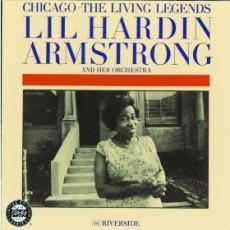
Lil Hardin Armstrong was born Lillian Hardin on February 3, 1898 in Memphis, Tennessee and grew up with her grandmother learning hymns, spirituals and classics on the piano, but she was drawn to pop music and later blues. Her initial piano instruction came from her third grade teacher, Miss Violet White, followed by enrollment in Mrs. Hook’s School of Music, but it was while attending Fisk University that she was taught a more acceptable approach to the instrument.
In 1918, Lil moved to Chicago and landed a job as a sheet music demonstrator at Jones Music Store for $3 a week. Shortly afterward bandleader Lawrence Duhé offered her $22.50 she joined him. From cabaret to the De Luxe Café to Dreamland playing behind Alberta Hunter and Ollie Powers. Replace by King Oliver’s Creole Jazz Band, he asked her to stay, which led to an engagement in San Francisco, back to Chicago playing eventually with Oliver again.
Hardin met Louis Armstrong when Oliver sent for him and subsequently were married in 1924. She took him shopping and taught him how to dress more fashionably, and finally convinced him to strike out on his own. Moving to New York City he joined Fletcher Henderson, while she stayed in Chicago with Oliver and then leading her own band.
Hardin, Armstrong, Kid Ory, Johnny St. Cyr and Johnny Dodds comprised the Hot Five recordings for Okeh Records. She would go on to record sessions with the same group as a leader for Vocalion, Columbia Records and New Orleans Wanderers. In the late 1920s Hardin and Louis parted ways and she formed a band with a cornet player she considered Louis equal, Freddie Keppard. In the 1930s, she sometimes billed herself as Mrs. Louis Armstrong, led an All Girl Orchestra, then a mixed-sex big band, which broadcasted nationally over the NBC radio network.
The same decade she recorded a series of sides for Decca Records as a swing vocalist, recorded with Red Allen, and back in Chicago collaborated with Joe Williams, Oscar Brown Jr., Red Saunders and Little Brother Montgomery. Throughout the rest of her career she continued to perform and record, and began writing an autobiography that she never completed. A month after attending Louis’ funeral in New York City, she was performing at a televised memorial concert for Louis, Lil Hardin Armstrong collapsed at the piano and died on the way to the hospital.
Pianist, composer, arranger, singer and bandleader Lil Hardin Armstrong, second wife and recording collaborator of Louis Armstrong in the 1920s, passed away on August 27, 1971. Her compositions have been sampled and revived by many and was inducted into the Memphis Music Hall of Fame in 2014.
Inspire A Young Mind