

Daily Dose Of Jazz…
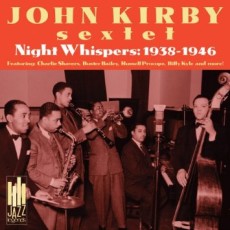
John Kirby was born John Kirk in Winchester, Virginia on December 31, 1908. His mother gave him up for adoption and was raised by Reverend Washington and Nancy Johnson. He was a student at the Winchester Colored School and started trombone lessons around nine years old under the guidance of Professor Powell Gibson. As a kid and that he learned to play music just as it was written and his formal education ended around 1923.
Kirby arrived in Baltimore around 1927 and met trombonist Jimmy Harrison, saxophonist Coleman Hawkins and composer Duke Ellington. It was Harrison who persuaded him to switch from trombone to tuba. He played tuba with Bill Brown and His Brownies, pianist Charlie Sheets and then with John C. Smith’s Society Band. He joined Fletcher Henderson in 1929, recorded tuba on a number of sessions, but switched to double-bass when tuba fell out of favor as jazz bands’ primary bass instrument.
In the early 1930s, John took bass lessons from legendary bassists Pops Foster and Wellman Braud, left Henderson to play with Chick Webb, then joined Lucky Millinder and briefly led a quartet in 1935, but was more often than not a sideman in other groups. He performed behind Billie Holiday and Teddy Wilson on their first recording date.
By 1936, Kirby was a successful sideman on the New York City jazz scene, secured a gig at the Onyx Club leading Charlie Shavers, Buster Bailey, Billy Kyle, Russell Procope and O’Neill Spencer, becoming one of the more significant small groups in the big band era. They recorded the Shaver’s classic Undecided, with Maxine Sullivan most often performing the vocal duties for the group.
Along with his orchestra, John had a 30-minute radio program, Flow Gently, Sweet Rhythm, also known as The John Kirby Show on CBS from April 1940 – January 1941. The program also featured Sullivan and the Golden Gate Quartet and they have been cited as the first black artists to host a jazz-oriented series.
He tended toward a lighter, classically influenced style of jazz often referred to as chamber jazz. He was very prolific and extremely popular from 1938-1941 but lost most of his group to World War II. Through the war years he was able to attract Dizzy Gillespie, Benny Carter, Ben Webster, Clyde Hart, Budd Johnson and Zutty Singleton to his small groups and club dates. As Kirby’s career declined, he drank heavily and was beset by diabetes.
After the war, Kirby got the surviving sextet members back together, with vocalist Sarah Vaughan but the reunion did not last. A concert at Carnegie Hall in December 1950, with Bailey plus drummer Sid Catlett, attracted only a small audience, crushing his spirit and badly damaging what little was left of his career. Double-bassist, trombonist and tubist John Kirby passed away on June 14, 1952 in Hollywood, California at age 43.

Give A Gift Of Jazz – Share
Daily Dose Of Jazz…
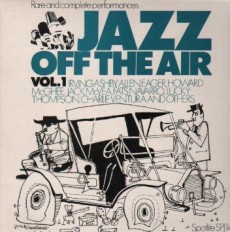
Irving C. Ashby was born December 29, 1920 in Somerville, Massachusetts. After playing rhythm guitar in Lionel Hampton’s orchestra, he played in the Nat King Cole Trio from 1947 to 1951. He then briefly replaced drummer Charlie Smith in the Oscar Trio, producing a lineup of piano, guitar and bass similar to the Cole Trio’s, a substitution that continued until 1958.
After leaving the Peterson Trio, Ashby concentrated on session work for the labels. His subsequent recordings included sessions with Norman Granz, Sheb Wooley, LaVern Baker, Howard Roberts, B.B. King, Louis Jordan, Pat Boone and Illinois Jacquet.
In addition to performing on guitar, Irving Ashby also played the upright bass until his passing on April 22, 1987 in Perris, California at the age of 66.
Dose A Day – Blues Away
Daily Dose Of Jazz…
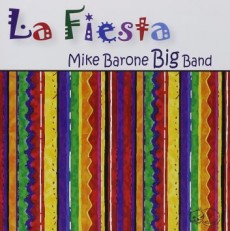
Mike Barone was born on December 27, 1936 in Detroit, Michigan. He started playing the trombone at age 12 and was taught by his trumpeter father Joe Barone, who played with the Bob Crosby Orchestra and other big bands. He graduated from Brush High School in Cleveland, Ohio in 1954 and studied trombone, guitar and arranging until 1956 until his acceptance into the West Point Army band studying with Louis Van Haney of the New York Philharmonic Orchestra. After graduation he was stationed in Germany with the Special Services and formed his first jazz big band touring service clubs.
By 1959 Mike was back in California attending Valley College but left to tour with Sy Zentner and Louis Bellson Orchestra. He worked many years arranging, performing and recording with Louis and Pearl Bailey, recording with Lalo Schifrin’s New Continent and Dizzy Gillespie’s Quintet. He has performed with Dick Grove, Pete Jolly, Gabor Szabo, Oliver Nelson, Terry Gibbs, Gerald Wilson and many more. Twenty-seven of his arrangements have been recorded by Wilson and others, and the now classic Johnny Hartman album Unforgettable has 7 tunes were his arrangements.
He put together a quintet with Frank Rosolino, formed the Mike Barone Big Band, recorded with Bob Edmondson, John Williams and Shelly Manne, took session work for film including Harper, The Dirty Dozen, Kelly’s Heroes, Sweet Charity, Up the Down Staircase and The Thomas Crown Affair. On television he performed the theme Mission Impossible, Dynasty, Falcon Crest, The Grammys, The Midnight Special, Redd Foxx Show and the Johnny Carson Tonight Show among others.
Since 1997 Mike returned to Los Angeles, California after stints in Colorado and Vancouver, he formed a new band and performed at area clubs. Arranger, composer, trombonist Mike Barone, known for one of the best known West Coast big bands in the Sixties, continues to arrange, perform and tour.
Jazz Is Global – Share
<
More Posts: trombone
Daily Dose Of Jazz…
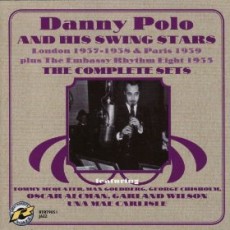
Danny Polo was born on December 22, 1901 in Toluca, Illinois. His father was also a clarinetist and he learned to play from a young age, working in marching bands from age eight. During his youth Polo played with Claude Thornhill as a duo.
In the 1920s, Polo played with Elmer Schoebel, Merritt Brunies, Arnold Johnson,, Ben Bernie, Jean Goldkette and Paul Ash. 1927 saw him in Europe with Dave Tough, playing with several Continental bandleaders including Ben Firman, Lud Gluskin, George Carhart, Ben Berlin and Arthur Briggs. From 1930-1935 he played with Ambrose & His Orchestra, then returned to the U.S. in December of that year.
In 1938, Danny returned to Britain to play with Ambrose again, and worked with Ray Ventura in Paris in 1939. Late that year he moved back to the States for good and spent the early Forties working with Joe Sullivan, Jack Teagarden, worked on the Bing Crosby film Birth of the Blues and with Claude Thornhill again.
The clarinetist led his own Midwestern territory band, Danny Polo and His Jive Five, for a time, then returned to play with Thornhill once more in 1947. He recorded two sessions as a leader with His Swing Stars, which include Alix Combelle, both in Europe, in 1938-39. He also played in several experimental sessions with Miles Davis around 1947-48. While performing with Thornhill, Danny Polo became ill, and passed away rather suddenly on July 11, 1949 in Chicago, Illinois.
Inspire A Young Mind
More Posts: clarinet
Daily Dose Of Jazz…
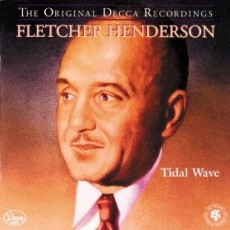
Fletcher Henderson was born James Fletcher Hamilton Henderson, Jr. on December 18, 1897 in Cuthbert, Georgia. The home he grew up in, known as the Fletcher Henderson House, is now a historic site. He attended Atlanta University in Atlanta, Georgia graduating in 1920, leaving with the nickname “Smack” due to his college baseball hitting skills. Moving to New York City he enrolled at Columbia University to pursue a masters degree in chemistry but found job prospect lean so he chose music to make a living.
During the early to mid-Twenties Fletcher was the recording director of the fledgling Black Swan record label, provided solo piano accompaniment for many blues singers, and led the backing group for Ethel Waters during one of her national tours. In 1922 he formed his own band with Don Redman arranging the charts, took residency at the Club Alabam, then at the Roseland Ballroom, and quickly became known as the best Black band in New York. When Louis Armstrong joined his orchestra in 1924 for a year, he saw the richer potential for jazz band orchestration. As an arranger, Henderson came into his own from 1931 into the mid-1930s.[2]
His bands included Howard Scott, Coleman Hawkins, Charlie Dixon, Kaiser Marshall, Buster Bailey, Elmer Chambers, Charlie Green, Ralph Escudero, Don Redman, Henry “Red” Allen, Joe Smith, Rex Stewart, Tommy Ladnier, Doc Cheatham, Roy Eldridge, Benny Carter, Chu Berry and Sun Ra among many others.
After about 1931, his arrangements became influential. In addition to his own band, he arranged for Teddy Hill, Isham Jones, and Benny Goodman, the latter always giving him credit. After sustaining a concussion in a car accident his success began to wane but Goodman along with John Hammond bought Henderson’s arrangements to support him during his illness.
By 1939, Fletcher disbanded his orchestra and joined Goodman’s, first as pianist and arranger and then working full-time as staff arranger. He re-formed bands of his own several times in the 1940s, toured with Ethel Waters again in 1948–1949, suffered a stroke in 1950 resulting partial paralysis that ended his piano playing.
He was responsible for bridging the gap between Dixieland and swing, establishing the formula for swing music by breaking the band into section that would play n call-and-response style and riffs. He also played a key role in bringing improvisatory jazz styles from New Orleans and other areas of the country to New York City, where they merged with a dance-band tradition that relied heavily on arrangements written out in musical notation.
Pianist, composer, arranger and bandleader Fletcher Henderson passed away in New York City on December 29, 1952. He was one of the most prolific and influential black musical arrangers and bandleaders in jazz history ranked along with Duke Ellington.
Put A Dose In Your Pocket
More Posts: piano