

Daily Dose Of Jazz…
Anita Brown was born June 17, 1959 in South Hamilton, Massachusetts. She attended and graduated the Pingree School and Andover High School before her family moved to Long Island, New York in 1977. It was at this juncture in her life that she began studying voice, phrasing and inflection with Lennie Tristano, first imitating Billie Holiday and then singing the solos of Lester Young.
A year later she enrolled at SUNY Old Westbury, majored in Music Education, adding photography, dance and choreography to her schedule. In 1980 Anita transferred her major to the University of New Hampshire concentrating on classical piano and voice. In her junior year that she discovered her passion of conducting and by the time she graduated she had a considerable transcript of instrumental and choral conducting along with score study under her belt.
Brown began her career in conducting also in her third year at UNH as a part time band director, prior to graduation and moving back to New York. In addition to studying clarinet, she took on and mastered the trumpet, continuing to play, write and teach. By 1995 she was at the BMI Jazz Composers Workshop and building a body of work for jazz orchestra guided by Jim McNeely, Manny Albam and Mike Abene. There she composed and contributed compositions that were featured in the annual concerts and was a finalist in 2001 and 2003 Charlie Parker Composition Competitions.
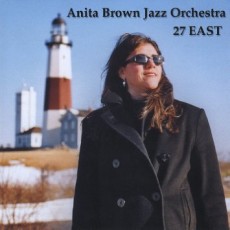
In 2000 she founded the Anita Brown Jazz Orchestra, independently recording and releasing her debut CD, 27 East, to critical acclaim and was appeared in six categories on the ballot for the 46th Grammy Awards. She was the first recipient of the ASCAP/International Jazz Composers’ Symposium New Music Award for Big Band Works for her piece The Lighthouse, selected by Bob Brookmeyer, ohn Clayton and Dave Douglas.
She has written arrangements for Nnenna Freeelon, The ount Basie Orchestra, the Jon Faddis jazz Orchestra, Chiuck Owen, and the Jazz Surge, Roseana Vitro, Bobby Short and a number of New York R&B bands.
The Vanguard Jazz Orchestra, the U.S. Army Jazz Ambassadors, BMI New York Jazz Orchestra and numerous college and high school jazz ensembles have performed her original works. As an educator she is on the faculty of New Jersey City University and Sara Lawrence College, and established her Composer Residency Project.
Conductor, arranger and composer Anita Brown consults planning and producing recordings and performances, has served as copyist and/or assistant to Jim McNeely, Maria Schneider, Many Albam, Don Sebesky, John Pizzarelli, the Vanguard Jazz Orchestra, Carnegie Hall Jazz Band and Toshiko Akiyoshi Big Band while serving as archivist for the Gil Evans and Manny Albam estates.
Music: https://youtu.be/9KZo1ItnDCE

Take A Dose On The Road

Daily Dose Of Jazz…
Pepsi Auer was born Josef Auer on June 14, 1928 in Munich, Germany. He first played accordion in a youth orchestra, then he taught himself to play the vibraphone in 1936. A move to America in 1945 saw him performing in jazz clubs and by 1949 he moved to the piano. He would go on to work in the combo of Freddy Christmann in 1954, ultimately taking leadership two years later.
Pepsi worked with Freddie Brocksieper in 1958, the German All Stars in ’58, worked and toured from 1958 to 1960 with Albert Mangelsdorff jazz ensemble and then with Kurt Edelhagen. By the Sixties his style of approach mimicked Bud Powel and Horace Silver and in 1962 he worked in the Bayerischen Rundfunks.
Auer accompanied Stan Getz, Eric Dolphy and Benny Bailey on their tours of Germany, as well as with Miriam Klein. He would team up once again with Freddie Brocksieper from 1955-1964 and participate in recording sessions as well as with the German All Stars. From the mid-1960s he worked as a studio musician and increasingly composed music for television such as “A Summer With Nicole”.
In 1967 he took part in the Montreux Jazz Festival as a member of the Jazz Orchestra of the Bayerischer Rundfunk, where he and Don Manza were co-leaders. Pianist, vibraphonist and composer Pepsi Auer passed away on March 29, 2013.
Jazz Is Global – Share
More Posts: piano,vibraphone
Hollywood On 52nd Street
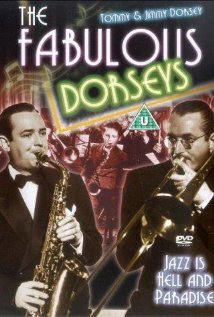
I’m Getting Sentimental Over You lyrics were written by Ned Washington and the music by George Bassman and surfaced to become a jazz classic out of the 1947 fictionalized biographical film The Fabulous Dorseys.
The Story: The rise and rise of the Fabulous Dorsey brothers is charted from their humble beginnings of boyhood in Shenandoah, Pennsylvania in this whimsical step down memory lane, Tommy and Jimmy Dorsey play themselves in this vehicle for their excellent music. From being raised by their father who insists on them learning music, to the split that just saw their careers rise even further, to their personal reunion.
Sponsored By

www.whatissuitetabu.com
Daily Dose Of Jazz…
Eddie Beal was born June 13, 1910 in Redlands, California. He started on drums but switched to piano in his teens. Early in the 1930s he worked in the orchestras of Earl Dancer and Charlie Echols and 1933 to 1936 he toured China with Buck Clayton. Following that stint he freelanced in California with Maxine Sullivan and others until 1941.
After military service from 1941–43, Beal accompanied Ivie Anderson and then led his own trio accompanying Billie Holiday at one point. He also worked in the Spirits of Rhythm. As a composer, he penned the tunes “Softly” (covered by Holliday) and “Bye and Bye”, a hit for The Turbans. He plays on the soundtrack to the 1951 film The Strip, he also makes an appearance in the film.
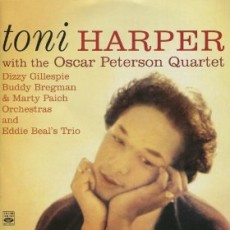
His later recording credits included but not limited to work with Toni Harper, Jimmy Mundy, Herb Jeffries, Helen Humes and Red Callender. He led his own group in Las Vegas, Nevada in 1973-74, and in 1974-75 he played with Tommy Dorsey.
Pianist Eddie Beal passed away on December 15, 1984 in Los Angeles, California.
Give A Gift Of Jazz – Share
More Posts: piano
Daily Dose Of jazz…
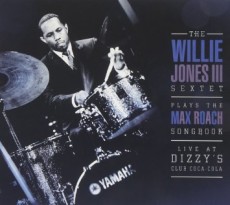
Willie Jones III was born on June 8, 1968 in Los Angeles, California. His initial exposure to music came from his father Willie Jones II, an accomplished jazz pianist. With his guidance and inspiration the young drummer began studying with acclaimed drummers and music instructors. By the time he was in his teens her was performing with numerous distinguished musicians. He completed his training at California Institute of the Arts under the tutelage of Albert “Tootie” Heath.
As a co-founder of the group Black Note, he took the West Coast bop movement and gave it a hard swing, propelling them into first place in the John Coltrane young Artist Competition in 1991. He would go on to become a semifinalist the following year at the Thelonious Monk Jazz Drum Competition, and eventually the group released four albums. He has played, toured, and/or recorded with Milt Jackson, Horace Silver, Arturo Sandoval, Roy Hargrove, Peter Zak, Hank Jones, Cedar Walton, Herbie Hancock, Eric Reed, Kurt Elling and Wynton Marsalis Jazz at Lincoln Center.
Jazz musicians appreciate his exceptional speed and control together with his use of a wide range of textures that characterize most of his playing. He is a master of many styles and moves quickly and easily between bebop, big band, avant-garde, Latin jazz grooves, hard bop and swing.
He has released several albums under his own name as a leader and on his indie label, WJ3 Records. His music has been sampled, however, he has filed a lawsuit in 2014 against California rapper Kendrick Lamar for allegedly sampling “The Thorn” illegally in Lamar’s song Rigamortis. Drummer Willie Jones III continues to perform, record and tour both as a leader and sideman.
Jazz Is Global – Share
More Posts: drums