


Daily Dose Of Jazz…
Valaida Snow was born on June 2, 1903 in Chattanooga, Tennessee into a family of musicians where her mother taught her and sisters Alvaida and Hattie, and brother Arthur Bush how to play multiple instruments. She was taught to play cello, bass, violin, banjo, mandolin, harp, accordion, clarinet, saxophone and trumpet. By the young age of fifteen she was already a recognized professional singer and trumpeter and while her beauty attracted audiences, it was her incredible talent as a jazz trumpeter which truly captivated them. Obtaining the nickname, “Little Louis” due to her Louis Armstrong-like playing style, hitting those high C’s just like Louis.
Snow toured and recorded frequently in the United States, Europe and the Far East both with her own bands and other leaders’ bands. She took part in a session with Earl Hines in New York in 1933 and also performed with Count Basie, Teddy Weatheford, Willie Lewis and Fletcher Henderson at various places and times.
Not limiting herself to jazz she branch out to the stage and as an actress she debuted on Broadway in 1924 as Mandy in Eubie Blake and Noble Sissles’s musical ‘Chocolate Dandies.’ Later, she appeared on Broadway in Ethel Waters’ show, ‘Rhapsody in Black’ in 1934; she appeared in the London production of ‘Blackbirds’ in 1935 with Johnny Claes and also in its Paris production. She could be seen in ‘Liza’ across Europe and Russia in the 30’s and was also in the Hollywood films ‘Take It from Me’ in 1937, ‘Irresistible You,’ ‘L’Alibi’ and ‘Pieges’ in 1939 with her husband Ananais Berry. Valaida Snow shocked people in the USA, with her eccentric behavior. She traveled in an orchid colored Mercedes, dressed in an orchid suit, her pet monkey rigged out in an orchid jacket and cap, with the chauffeur in orchid as well.
Snow’s incarceration has been written about several times and debunked by a few that while touring through Denmark in 1941, she was arrested by the Nazis during the German occupation and kept at Vestre Faengsel (Western Prison), a Danish prison in Copenhagen that was run by the Nazis. She was released on a prisoner exchange in May 1942. What is know is that Snow stayed in wartime Denmark by choice, that she survived the Nazis and was never shy about using and stretching the truth to suit her purposes.
By the early 1950s Valaida recorded for the Derby label with the Jimmy Mundy Orchestra. The result was “Tell Me How Long The Train’s Been Gone” and “When A Woman Loves A Man”. The record does nicely in certain areas, especially Philadelphia and St. Louis. The Derby release is her first real effort since her tragic imprisonment and it does well. She embarked on a tour of the Northeast and is a particular favorite at the Monte Carlo in Pittsburgh. In the fall she is at the 845 Club in New York and is held over. In a bit of a surprise she leaves Derby Records and signs with Apollo Records late in the year.
In February of 1951 she records “Porgy” and “The More I Know About Love” for Apollo with the Bobby Smith Orchestra. She continues her many in person appearances throughout the country, and in early 1952 embarks on a true R & B tour with Joe Liggins & His Honeydrippers up and down the West coast. Her records are sporadic, and after a well-attended stay at Chicago’s Crown Propeller Lounge in late 1953, Snow signed with that city’s Chess label. “I Ain’t Gonna Tell” and “If You Mean It” are released by Chess. The next two years are spent mostly appearing in the musical revues that have always been her first love.
It is just at this time that the final curtain descends on Valaida Snow, who spoke seven languages, was billed as “Queen Of The Trumpet”, performed in the top theatrical productions of her day, wrote and recorded her theme song, “High Hat, Trumpet and Rhythm” and was the toast of Paris and London, passed away on May 30, 1956 of a cerebral hemorrhage backstage at the Palace Theater in New York. She left this world doing what she loved most, entertaining the public with her great talents.

Give A Gift Of Jazz – Share
Daily Dose Of Jazz…
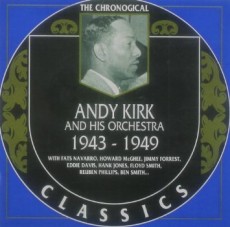
Andrew Dewey Kirk was born on May 28, 1898 in Newport, Kentucky but grew up in Denver, Colorado and was tutored by Paul Whiteman’s father, Wilberforce. He started his musical career playing with George Morrison’s band, but then went on to join Terence Holder’s Dark Clouds of Joy. In 1929 he was elected leader after Holder departed, renamed the band Clouds of Joy and also relocated the band from Dallas, Texas, to Kansas City, Kansas.
Also known as the Twelve Clouds of Joy for the number of musicians, they set up in the Pla-Mor Ballroom on the junction of 32nd and Main. They made their first recording for Brunswick Records that same year. Mary Lou Williams came in as a last moment pianist and so impressed the label’s Dave Kapp that she became a regular member and arranger of the band.
With the move they grew highly popular as they epitomized the Kansas City jazz sound and in mid-1936 Andy signed with Decca and made scores of popular records for the next decade. In 1938, he and band held the top spot of the Billboard chart for 12 weeks with “I Won’t Tell a Soul (I Love You)”, written by Hughie Charles and Ross Parker and featured Pha Terrell on vocals. In 1942 leading His Clouds of Joy, they recorded “Take It and Git”, which on October 24, 1942, became the first single to hit number one on the Harlem Hit Parade, the predecessor to the Billboard R&B chart. In 1943, with June Richmond on vocals, he had a number 4 hit with “Hey Lawdy Mama”.
Over time the band had Buddy Tate, Claude Williams, John Williams, bill coleman, Don Byas, Shorty Baker, Howard McGhee, Jimmy Forrest, Fats Navarro, Charlie Parker, Ben Thigpen,, Hank Jones, Joe Williams and Reuben Phillips among others.
In 1948, Kirk disbanded the Clouds of Joy and continued to work as a musician, but eventually switched to hotel management and real estate, but kept his hand in music serving as an official in the Musicians’ Union.[
Although the leader of the band, saxophonist and tubist Andy Kirk seldom was a soloist, utilizing the talent in his band for the spotlight. His genius lay in realizing how best to make use of his band members’ skills. On December 11, 1992 at the age of 94, he passed away in New York City.
Give A Gift Of Jazz – Share
Daily Dose Of Jazz…
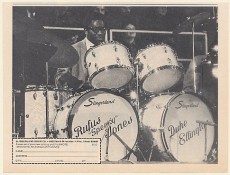
Rufus “Speedy” Jones was born May 27, 1936 in Charleston, South Carolina. Starting out on trumpet he switched to drums at the age of 13. He got an early start in 1954 with Lionel Hampton before being drafted. While stationed at Fort Jackson, Rufus played in a quintet every Saturday night at the black United Service Organization clubhouse in Columbia.
From 1959 to 1963 Rufus played with Henry “Red” Allen and Maynard Ferguson’s Orchestra. He led his own quintet during 1963-1964 producing a Cameo LP, his only album as a leader. He gained fame for his flamboyant work with Count Basie in the mid-1960s and backed that up with Duke Ellington in the latter half of the decade. He also notably appeared with James Brown. On April 25, 1990 drummer Rufus “Speedy” Jones passed away in Las Vegas, Nevada.
Inspire A Young Mind
More Posts: drums
Daily Dose Of Jazz…
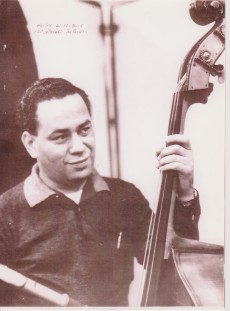
Lloyd Trotman was born on May 25, 1923 in Boston, Massachusetts. He began playing the club scene on 52nd Street in New York in 1945, playing with the likes of Duke Ellington and Billie Holiday. One of his earliest recording sessions was on Duke Ellington’s 1950 album Great Times Piano Duets with Billy Strayhorn and Oscar Pettiford.
He worked with, traveled with, and recorded with many jazz artists including Johnny Hodges, Woody Herman, Bud Powell, Red Allen, Coleman Hawkins, Jimmy Scott, Billie Holiday, Lucky Millinder, Boyd Raeburn and Blanche Calloway. He was a member of the Apollo house band during the late 40’s and early 1950s.
During the 1950s Lloyd worked as a session musician at Atlantic, RCA Victor, Mercury, Okeh, Vik, Cadence, Brunswick and many other recording studios alongside producers and arrangers such as Ahmet Ertegun, Jerry Wexler, Leiber and Stoller, Jesse Stone, Sammy Lowe, Leroy Kirkland and Archie Bleyer. He played behind Sam “The Man” Taylor, King Curtis, Panama Francis, Mickey Baker, Ernie Hayes, Al Caiola among others and was a member of Alan Freed’s Rock & Roll Orchestra at the Brooklyn Paramount and Fox Theaters during the late 1950s.
He continued to play many weekend nightclub dates into the early 1980’s and after retiring from the music business, he became a loan officer at Islip National Bank. Jazz bassist Lloyd Trotman, who backed numerous jazz, Dixieland, R&B, and rock and roll artists in the 1940’s, 1950s and 1960s, passed away at the aged 84, on October 3, 2007 on Long Island, New York.
Take A Dose On The Road
More Posts: bass
Daily Dose Of Jazz…
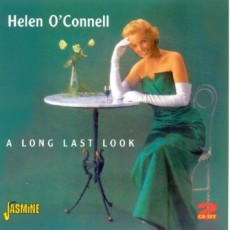
Helen O’Connell was born on May 23, 1920 in Lima, Ohio but grew up in Toledo, Ohio. By the time she was 15, she and her older sister, Alice, were singing duets in clubs and hotels and on hometown radio stations. She launched her career as a big-band singer with Larry Funk and his Band of a Thousand Melodies. She was singing with Funk’s band in Greenwich Village when Jimmy Dorsey’s manager discovered her. She joined the Dorsey band in 1939 and achieved her best selling records in the early 1940s with Green Eyes, Amapola, Tangerine and Yours.
By 1953, O’Connell and Bob Eberly were headlining TV’s Top Tunes with Ray Anthony and his orchestra. She became a featured singer on The Russ Morgan Show and had her own 15-minute program, The Helen O’Connell Show, twice a week on NBC.
She retired from show business upon her first marriage in 1943 but returned when her marriage ended in 1951, achieving some chart success and making regular appearances on television. At one point she was interviewing celebrities on her own NBC program Here’s Hollywood, hosted the pageants and sang duets with Bing Crosby, Johnny Mercer and Dean Martin.
She won the Down Beat Readers Poll as best female singer in 1940 and 1941, won the 1940 Metronome magazine poll for best female vocalist and was named as the darling of GIs during World War II.Her 1942 recording of Brazil with the Jimmy Orchestra was a 2009 addition to the Grammy Hall of Fame. On September 9, 1993 vocalist Helen O’Connell succumbed to her battle with Hepatitis C in San Diego, California.
Inspire A Young Mind
More Posts: vocal