

Daily Dose Of Jazz…
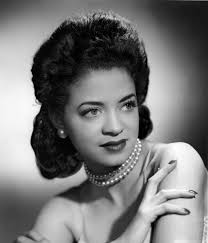
Kay Davis was born Katherine McDonald on December 5, 1920 in Evanston, Illinois. She studied voice and piano at Northwestern University, earning bachelor and master’s degrees.
In 1944 Kay joined Duke Ellington’s orchestra, singing alongside Joya Sherrill and Al Hibbler. She is best known for her wordless vocals in pieces such as “Transblucency” and “On a Turquoise Cloud” but also sang many lyrical compositions and is the only person Ellington ever allowed to reprise Adelaide Hall’s famous wordless vocal on “Creole Love Call”.
Although she never recorded as a solo artist, Davis’ tenure with Ellington’s band coincided with their increasing exposure on film, especially for Universal Pictures. She performed with Billy Strayhorn on the very first performance of his composition “Lush Life” at Carnegie Hall in 1948, though he wrote the song in the Thirties.
Kay toured England with Ellington alongside Ray Nance in 1948 and two years later with the full orchestra throughout Europe. In 1950 vocalist Kay Davis left the Ellington organization, got married and retired to Florida. After a long and full life, the vocalist passed away on January 27, 2012 in Apopka, Florida.

Give A Gift Of Jazz – Share
More Posts: vocal
Daily Dose Of Jazz…
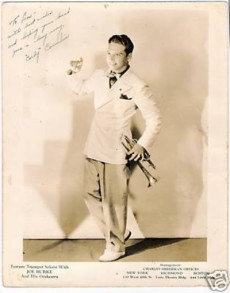
Edward “Corky” Cornelius was born in Indiana on December 3, 1914 but was raised in Binghamton, New York. Learning music from his father who worked as a drummer in regional Texas dance bands, he began his professional career in the early 1930s.
The trumpeter was first hired by Les Brown, Corky would go on to play with Frank Dailey and Buddy Rogers but by 1039 was playing alongside Gene Krupa in Benny Goodman’s band. Following his short tenure Cornelius left with Gene Krupa when the later decided to form his own band.
It was during this period that Cornelius met and married popular vocalist Irene Daye and left Krupa for the Casa Loma Orchestra from 1941 until his sudden death from kidney failure at age 28 on August 3, 1943.
Put A Dose In Your Pocket
More Posts: trumpet
Daily Dose Of Jazz…
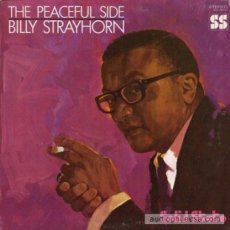
Billy Strayhorn was born William Thomas Strayhorn on November 29, 1915 in Dayton, Ohio but the family moved to Pittsburgh, Pennsylvania shortly after his birth. Protecting him from his father’s drunken sprees his mother sent him to live with his grandparents in North Carolina, which is here he first became interested in music. He learned to play hymns on the piano and listening to records on her Victrola.
By high school he was back in Pittsburgh and began his music career studying classical music, writing a school musical, forming a trio that played daily on the radio and composing Life Is Lonely (renamed Lush Life), My little Brown Book and Something To Live For while still in his teens.
When the harsh reality of a black man making it in the white classical world shattered his 19-year-old ambitions, Strayhorn turned to the music of Art Tatum and Teddy Wilson and was guided into jazz. In 1938 he met Ellington, impressed him with an arrangement of a Duke piece, went to New York and collaborated with Ellington for the next quarter century. He composed Take The “A” Train, Chelsea Bridge, Day Dream, Such Sweet Thunder and A Drum I A Woman among others and the landmark score to the film Anatomy Of A Murder.
Billy was openly gay, participated in many civil rights causes, was a committed friend to Dr. Martin Luther King, influenced and help propel the singing career of Lena Horne, embarked on a solo career and continued to compose and arrange for Ellington.
Billy Strayhorn, composer, pianist and arranger whose compositions are known for the bittersweet sentiment and classically infused designs that set him apart from Duke succumbed to esophageal cancer on May 31, 1967. His final song “Blood Count”, composed while in the hospital, was the first track on Ellington’s memorial album for Strayhorn, …And His Mother Called Him Bill. The final track is a solo version of Lotus Blossom performed by Duke for his friend while the band was packing up.
Inspire A Young Mind
Daily Dose Of Jazz…
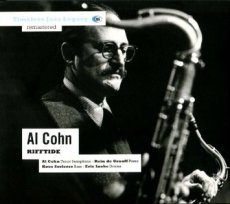
Alvin Gilbert Cohn was born on November 24, 1925 in Brooklyn, New York. He was initially known in the 1940s for playing in Woody Herman’s Second Herd as one of the Four Brothers, along with Zoot Sims, Stan Getz and Serge Chaloff. He contributed arrangements to the band until he left and formed a long association co-leading a quintet with Zoot while also playing with a variety of other musicians.
The partnership that began in 1956 lasted until Sims’ death and yielded one of their best albums on Mercury Records called You ‘n’ Me in 1960 and also backed Jack Kerouac on a few of his recordings. An accomplished arranger, Cohn worked Broadway arranging for such shows as Raisin’ and Sophisticated Ladies, worked with Linda Rondstadt, and appeared with Elvis Presley at Madison Square Garden.
Al Cohn, a tenor saxophonist, who had a reputation as a lyrical flowing soloist, passed away in Stroudsburg, Pennsylvania on February 15, 1988.
Take A Dose On The Road
More Posts: saxophone
Daily Dose Of Jazz…
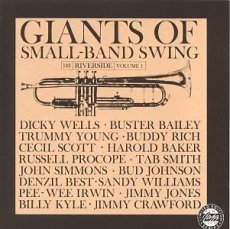
Cecil Scott was born in Springfield, Ohio on November 22, 1905 and played clarinet and tenor saxophone as a teenager with his brother, drummer Lloyd Scott. They played together as co-leaders through the end of the 1920s, holding residencies in Ohio, Pittsburgh, Pennsylvania and in New York City at the Savoy Ballroom. Among the members of this ensemble were Dicky Wells, Frankie Newton, Bill Coleman, Roy Eldridge, Johnny Hodges and Chu Berry.
By 1929 Cecil took full music control over the group in 1929, though Lloyd continued to manage the group. However, he was seriously injured in an accident in the early 1930s that temporarily sidelined his career. After recovery, he would play in different groups through the Thirties with Ellsworth Reynolds, Teddy Hill, Clarence Williams and Teddy Wilson accompanying Billie Holiday.
The early 1940s saw Scott playing with Albert Socarras, Red Allen, and Willie “The Lion” Smith prior to reassembling his band that hired at times Hot Lips Page and Art Hodes and towards the end of the decade worked with Slim Gaillard.
In 1950 Cecil disbanded the group, worked with Jimmy McPartland as a sideman, occasionally led groups and continued to play as a sideman up until the time of his death on January 5, 1964 in New York City. The clarinetist, tenor saxophonist and bandleader is credited on some 75 albums.
Inspire A Young Mind