

Daily Dose Of Jazz…
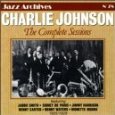
Charlie “Fess” Johnson was born on November 21, 1891 in Philadelphia, Pennsylvania. He led an ensemble called the Paradise Ten and played in Harlem clubs like Small’s Paradise between 1925 and 1935.
Though Charlie was an accomplished pianist very rarely did he eve solo on his recording sessions and as a unit never achieved the reputation is so deserved. It was noted later that the band rivaled Duke Ellington and anyone else and employed a number of notables like Sidney DeParis, Charlie Irvis, Dicky Wells, Benny Waters and Benny Carter, who also wrote arrangements for the band.
He led the ensemble until 1938 then his musical endeavors freelancing in various ensembles around New York City until he retired in the 1950s due to health issues. Pianist and bandleader Charlie Johnson, who nickname “Fess” it is assumed was shortened from Professor, passed away in Harlem Hospital on December 13, 1959 in New York City.

Give A Gift Of Jazz – Share
More Posts: piano
Daily Dose Of Jazz…
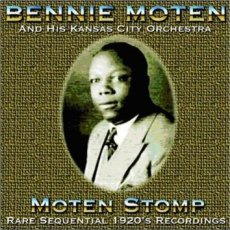
Bennie Moten was born on November 13, 1894 in Kansas City, Missouri. By the time he reached his mid-twenties he was leading the Kansas City Orchestra that was the most important of the itinerant, blues-based orchestras active in the Midwest at the time. The band helped develop the riffing style that would come to define many of the 1930s Big Bands.
Moten first recorded with Okeh Records in 1923 influenced by New Orleans and ragtime. His Victor Records sessions had a more sophisticated sound similar to Fletcher Henderson but featured a hard stomp popular to Kansas City.
By 1928 Bennie’s piano was showing some Boogie Woogie influences, but the real revolution came in 1929 when he recruited Count Basie, Walter Page and Oran “Hot Lips” Page. Walter Page’s walking bass lines gave the music an entirely new feel compared to the 2/4 tuba, colored by Basie’s understated, syncopated piano fills.
Their final session comprised of 10 recordings made in 1932 were made during a time when the band was suffering significant financial hardship but had added Ben Webster and Jimmy Rushing as their primary vocalist. These recordings showed the early stages of what became known as the “Basie Sound” some four years before Basie would record under his own name.
Pianist and bandleader Bennie Moten passed away after an unsuccessful tonsillectomy on April 2, 1935.
Jazz Is Global – Share
More Posts: piano
Daily Dose Of Jazz…
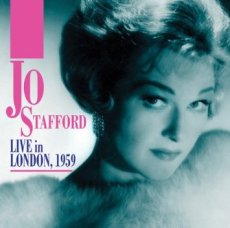
Jo Elizabeth Stafford was born on November 12, 1917 in Coalinga, California. Her mother was an accomplished banjo player who folk songs became of great influence. Her first public singing appearance came in Long Beach when she was 12. She attended Long Beach Polytechnical High School with dreams of a career in opera but with the onset of the Great Depression she joined her sisters and became The Stafford Sisters. Popularity grew and they got their start at KNX Radio when Jo was just 18 and went on to perform at KHJ Radio in Los Angeles
The sisters found work in the film industry as backup vocalists, made their first recording with Louis in 1936 and a year later she created arrangements for Fred Astaire on the soundtrack of “A Damsel In Distress”. Jo went on to join the Pied Pipers, work with Tommy Dorsey in New York, record four sides for RCA Victor and then returned to Los Angeles. After the Dorsey years the group was signed to Johnny Mercer’s new label Capitol Records and started singing on the radio shows of Frank Sinatra, Bob Crosby and Mercer.
In 1944, Stafford left the Pied Pipers going solo, picked up the nickname G.I. Jo for her continuous performance for the US troops, hosted “The Chesterfield Supper Club” and before the decade ended had a couple of million-seller tunes. By the 50s she was doing work for Voice of America, recording at Columbia Records becoming the first artist to sell 25 million records and hosted The Jo Stafford Show on TV. In the Sixties she recorded for Reprise, Warner and Dot record labels in the Sixties, won a Grammy for Best Comedy Album for her performance a part of the comedy duo Jonathan and Darlene Edwards.
Stafford went into semi-retirement in the mid-60s citing the music business as no longer fun and retiring completely in 1975. She devoted her time to charity for those with developmental disabilities. She donated her library to the University of Arizona and was inducted into the Big Band Academy of America’s Golden Bandstand in 2007.
Jo Stafford, singer of jazz standards and tradition pop music whose career spanned thirty years passed away of congestive heart failure on July 16, 2008. Her work in radio, television and music is recognized by three stars on the Hollywood Walk of Fame.
Put A Dose In Your Pocket
More Posts: vocal
Daily Dose Of Jazz…
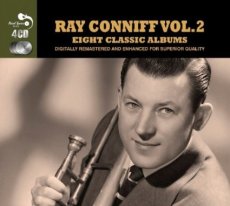
Joseph Raymond Conniff was born on November 6, 1916 in Attleboro, Massachusetts, learned to play trombone from his father and learned music arranging from a course book.
Post World War II he joined the Artie Shaw big band writing many of his arrangements. Hired by Mitch Miller, head of A&R at Columbia Records, Ray became the house arranger. During this period he worked with Rosemary Clooney, Johnny Mathis, Frankie Laine, Marty Robbins and Johnny Ray among others. In 1955 Ray wrote a top 10 arrangement for Don Cherry’s “Band of Gold” that sold more than a million copies.
From 1957 to 1969 Conniff arranged and recorded as a leader and sideman for Columbia and their subsidiary label Epic, became a bandleader and had 28 albums in the American Top 40, created the Ray Conniff Singers, toured Europe, was the first American popular artist to record in Russia and stepping out of his element he produced a couple of light jazz albums sans vocals.
Conniff’s most famous album was his 1966 release of “Somewhere My Love” written to the tune Lara’s Theme from the 1965 film Dr. Zhivago. It featured the 12 female and 13 male Ray Conniff Singers. The album went platinum, hit the top of the American and European charts and grabbed a Grammy Award.
The next three decades were equally lucrative for Ray recording mainly out of Los Angeles and finding fame touring Latin and South America. He recorded an average of two instrumental and one vocal album a year and sold over 70 million albums worldwide. He continued to record and perform until his death on October 12, 2002 in Escondido, California.
Jazz Is Global – Share
More Posts: trombone
Daily Dose Of Jazz…
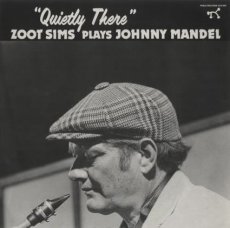
John Haley “Zoot” Sims was born on October 29, 1925 in Inglewood, California to vaudeville parents. Growing up in a performing family he learned to play both drums and clarinet at an early age along with steps taught him by his hoofer father.
Learning to play saxophone he followed in the footsteps of Lester Young, developing into an innovative saxophonist. Always fond of the higher register of the tenor sax, Sims was considered one of the strongest swingers in the field by his peers.
By the ‘50s and into the ‘60s Zoot had a long and successful partnership as co-leader of a quintet with tenor saxophonist Al Cohn, recording under the name of al & Zoot and a favorite at The Half Note club in New York. He added alto and soprano saxophones over the course of his career playing with renowned bands such as Benny Goodman, Artie Shaw, Stan Kenton and Buddy Rich. Zoot also play with Gerry Mulligan and later with Mulligan’s Concert Jazz Band.
During this period he recorded a series of albums for Norman Granz on his Pablo Records label and played on a few of Jack Kerouac’s recordings. However, it was early in his career that he acquired his nicknamed “Zoot” while working with the Kenny Baker band in California and was later appropriated for the sax-playing Muppet.
Zoot Sims, tenor and soprano saxophonist passed away in New York City on March 23, 1985.
Give The Gift Of Knowledge
More Posts: saxophone