


Daily Dose Of Jazz…
Jimmy Strong was born August 29, 1906 in Chicago, Illinois. As a teenage clarinetist he performed in Lottie Hightower’s Nighthawks. Around 1925, he did a national tour with a traveling revue and stayed in California for a time, freelancing with several groups.
Returning to Chicago he joined Carroll Dickerson’s orchestra, where he worked with Louis Armstrong, appearing on Armstrong’s Hot Fives recordings. In 1928, he also worked briefly with Clifford King. The 1930s saw him playing with Cassino Simpson, Zinky Cohn, and Jimmie Noone, as well as his own bands.
Around 1940 relocating to Jersey City, New Jersey he performed with local bands until his death. Clarinetist and tenor saxophonist Jimmy Strong transitioned in April 1977.

More Posts: clarinet,history,instrumental,jazz,music,saxophone
Daily Dose Of Jazz…
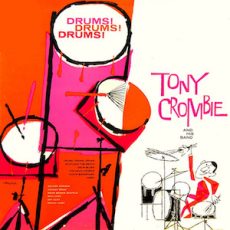
Tony Crombie was born Anthony John Kronenberg on August 27, 1925 in London, England’s East End Jewish community. A self-taught musician, he began playing the drums at the age of fourteen. He was one of a group of young men from the East End of London who ultimately formed the co-operative Club Eleven bringing modern jazz to Britain. He went to New York with his friend Ronnie Scott in 1947, witnessing the playing of Charlie Parker and Dizzy Gillespie, he and like-minded musicians such as Johnny Dankworth, and Scott and Denis Rose, brought be-bop to the UK. This group of musicians were the ones called upon if and when modern jazz gigs were available.
In 1948, Crombie toured Britain and Europe with Duke Ellington, who had been unable to bring his own musicians with him, except for Ray Nance and Kay Davis. Picking up a rhythm section in London, he chose Crombie on the recommendation of Lena Horne, with whom Crombie had worked when she appeared at the Palladium.
By 1956 Tony temporarily left jazz to set up a rock and roll band he called The Rockets, modeling themselves after Bill Haley’s Comets and Freddie Bell & the Bellboys. They released several singles for Decca and Columbia. He is credited with introducing rock and roll music to Iceland, performing there in 1957.
The next year the Rockets had become a jazz group with Scott and Tubby Hayes. During the following year, Crombie started Jazz Inc. with pianist Stan Tracey. During the Sixties he scored for television and film and established a residency at a hotel in Monte Carlo. He toured the UK with Conway Twitty, Freddy Cannon, Johnny Preston, and Wee Willie Harris.
In the early 1960s, Crombie’s friend, Victor Feldman, passed one of his compositions to Miles Davis, who recorded the piece on his album Seven Steps to Heaven. The song, “So Near, So Far”, has been recorded by players including Joe Henderson, who named a tribute album to Miles Davis using the title.
Over the next thirty years, Crombie worked with many American jazz musicians, including Ben Webster, Coleman Hawkins, Illinois Jacquet, Joe Pass, Mark Murphy and Eddie “Lockjaw” Davis.
After breaking his arm in a fall in the mid-1990s he stopped playing the drums, but continued composing until his death. Drummer, pianist, vibraphonist, bandleader and composer Tony Crombie, was regarded as one of the finest English jazz drummers and bandleaders, transitioned on October 18, 1999, aged 74.
More Posts: composer,drums,history,instrumental,jazz,music,piano,vibraphone
Daily Dose Of Jazz…
Sonny Lee was born Thomas Ball Lee on August 26, 1904 in Huntsville, Texas. While a student at Texas State Teachers’ College in the early 1920s he played with Peck Kelley, then moved to St. Louis, Missouri where he worked with the Scranton Sirens, Frankie Trumbauer, Gene Rodemich, Vincent Lopez, and Paul Specht.
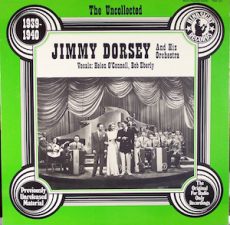
By 1932 he had joined the Isham Jones Orchestra, remaining with Jones until 1936. Concomitantly he played with Benny Goodman in 1934-35. After this stint he went to work with Artie Shaw, Charlie Barnet, Woody Herman, and Bunny Berigan. In 1938 he joined the Jimmy Dorsey Orchestra, where he played until 1946.
Trombonist Sonny Lee, who is credited on nearly 200 recording sessions between 1925 and 1946, transitioned on May 17, 1975 in Amarillo, Texas.
More Posts: history,instrumental,jazz,music,trombone

Daily Dose Of Jazz…
Lou Colombo was born on August 22, 1927 and raised in Brockton, Massachusetts. He began playing trumpet in the 1940s, at age 12. Aftere serving in the Army band in World War II he had hopes of playing professional baseball, saw him signed to the Brooklyn Dodgers, but a broken ankle forced him to curtail that dream. He then formed his own band in the 1950s and toured with Buddy Morrow, Perez Prado, Dick Johnson and the Artie Shaw Orchestra. He also played with Dizzy Gillespie and Louis Armstrong during his career.
So he dove into music and his trumpet. His career included stints with the Charlie Spivak and Perez Prado bands and the Artie Shaw Orchestra. On Cape Cod, Lou’s gigs with Dick Johnson and Dave McKenna were legendary, as is their superb Concord album, I Remember Bobby, a tribute to Bobby Hackett.
Known for his one-handed trumpet style, he was a mainstay in the Cape Cod, Massachusetts jazz scene for more than six decades and maintained a home in Fort Myers, Florida. Trumpeter Lou Columbo, who also played flugelhorn, baritone horn and pocket trumpet, transitioned unexpectedly at 84 on March 4, 2019 in a car crash in Fort Myers after making a turn and his vehicle was struck by another.
More Posts: bandleader,history,instrumental,jazz,trumpet
Daily Dose Of Jazz…
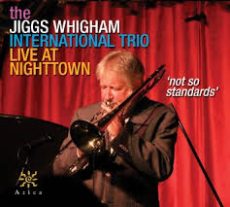
Jiggs Whigham was born Oliver Haydn Whigham III on August 20, 1943 in Cleveland, Ohio and began his professional career at the age of 17, joining the Glenn Miller/Ray McKinley orchestra in 1961. He left that band for Stan Kenton, where he played in the touring mellophonium band in 1963 before settling in New York City to play commercially.
Finding commercial playing frustrating, Whigham migrated to Germany where he still lives. He played for many years in the big band of Kurt Edelhagen, was a featured soloist in the Bert Kaempfert orchestra, and was also a member of the Peter Herbolzheimer band.
He has produced an extensive discography as a leader, including work with Bill Holman, Niels-Henning Ørsted Pedersen, Carl Fontana, and many others.
Recent years have seen Jiggs as musical director of the RIAS Big Band in Berlin, Germany. He is formerly conductor of the BBC Big Band in Great Britain and currently co-director of the Berlin Jazz Orchestra with singer Marc Secara.
As an educator he has taught at the Hochschule für Musik in Berlin, been a visiting tutor and artist at the Guildhall School of Music and Drama in London, England and the Royal Northern College of Music in Manchester and KUG in Graz, Austria
He is featured on the Berlin Jazz Orchestra albums Update, You’re Everything, Songs of Berlin and music DVD Strangers In Night – The Music Of Bert Kaempfert. He is artist-in-residence for the Conn-Selmer company, maker of the King Jiggs Whigham model trombone.
Trombonist Jiggs Whigham is the musical director for the Bundesjazzorchester working with the top student jazz musicians in Germany. He continues to tour worldwide as soloist, conductor, and educator.
More Posts: bandleader,educator,history,instrumental,jazz,music,trombone