Daily Dose Of Jazz…
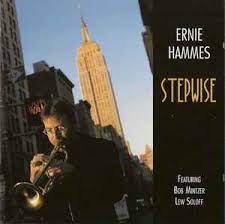
Ernie Hammes was born on August 18, 1968 in Esch-sur-Alzette, Luxembourg and studied at the Conservatories of Esch-sur-Alzette and Metz, France. He would later study at the Manhattan School of Music and the Berklee College of Music in Boston, Massachusetts.
Since 1997, Hammes has performed in New York City, traveled widely to jazz venues and festivals across Europe and North America. The Duke Ellington Orchestra has flourished for over forty-eight years since the death of the Duke, himself. As of 2013, Hammes is the only European known to have been a member of the Duke Ellington Orchestra from any era.
In his native Luxembourg, Ernie is the founder, director and lead trumpet in the Luxembourg Jazz Orchestra and since 1987 he has been a member of the Musique Militaire Grand-Ducale (the Luxembourg Army Band) where he is lead trumpet and, since 1994, leader of the big band.
Trumpeter Ernie Hammes continues to perform, compose and lead orchestras.

More Posts: bandleader,history,instrumental,jazz,music,trumpet
Daily Dose Of Jazz…
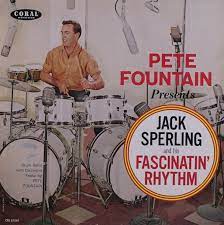
Jack Sperling was born on August 17, 1922 in Trenton, New Jersey. In 1941 he played with trumpeter Bunny Berigan. After World War II, he and Henry Mancini joined the Glenn Miller band when it was led by Tex Beneke. Drawing attention with his performance on the song St. Louis Blues in 1948, he then joined Les Brown and His Band of Renown, which played regularly for the Bob Hope radio program.
Sperling and other members of Brown’s band joined Dave Pell’s octet in 1953, recorded with the octet on Plays Irving Berlin and The Original Reunion of the Glenn Miller Orchestra. From 1954 to 1957 he was a member of Bob Crosby’s Bobcats. During the rest of his career, he worked in bands led by Charlie Barnet, Page Cavanaugh, Pete Fountain, and Benny Goodman.
He was among the studio musicians who accompanied Henry Mancini on the television show Peter Gunn. Jack recorded with him on the film soundtracks Charade and Days of Wine and Roses. He was the featured solo drummer on the theme song for the TV show Hogan’s Heroes and from 1959 to 1972 he was under contract with the NBC Orchestra. He worked on The Tonight Show Band, Rowan & Martin’s Laugh-In, and TV variety shows hosted by Bob Hope, Dean Martin, and Andy Williams.
In the music world, he recorded with Rosemary Clooney, Bobby Darin, Sammy Davis Jr., Doris Day, Ella Fitzgerald, The Four Freshmen, Lena Horne, Peggy Lee, Elvis Presley, Frank Sinatra, and Mel Tormé.
Drummer Jack Sperling, who was a big band and studio musician, transitioned on February 26, 2004.
More Posts: drums,history,instrumental,jazz,music
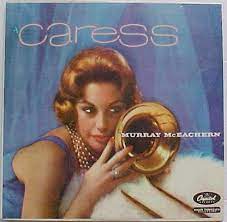
Daily Dose Of Jazz…
Murray McEachern was born in Toronto, Ontario, Canada on August 16, 1915 and studied the violin at the Toronto Conservatory of Music as a boy, and played his first concert recital at Massey Hall at age 12. As a teenager he studied both the saxophone and clarinet, playing with Lucio Agostini and also appearing on CRBC with Percy Faith. Over time he became proficient on several instruments, including the trombone, bass and trumpet.
In 1936, he went to Chicago, Illinois in search of work and got a break as soloist on trombone for Benny Goodman’s big band. He also worked with the Jack Hylton orchestra and then with the Casa Loma Orchestra led by Glen Gray from 1937-41. In 1941, McEachern joined the Paul Whiteman orchestra and shortly after began entertaining U.S. troops during World War II. Two years after the end of the war he went to work with the Phil Moore orchestra.
Murray did studio work in his later career for Hollywood films, including solo performances in The Glenn Miller Story, Paris Blues and The Benny Goodman Story. In the 1960s he was in the Morey Amsterdam Orchestra for the Morey Amsterdam Show on Television Station KTLA in Los Angeles.
A successful recording artist as leader, McEachern toured Europe in 1972 and briefly worked with the Duke Ellington orchestra the following year. He was owner/director of the Tommy Dorsey orchestra from 1974-77.
Trombonist and alto saxophonist Murray McEachern transitioned on April 28, 1982.
More Posts: bandleader,history,instrumental,jazz,music,saxophone,trombone
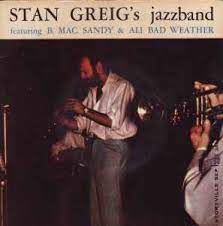
Daily Dose Of Jazz…
Stanley Mackay Greig was born on August 12, 1930 in Joppa, Edinburgh, Scotland to a father who was a drummer and piano tuner. While still in high school he played with Sandy Brown in 1945, then played piano and drums with him from 1948 to 1954. Moving to London, England in the mid-Fifties he played with Ken Colyer, Humphrey Lyttelton, and Bruce Turner, then with the Fairweather-Brown All-Stars in 1958-59.
He played with Turner again briefly before becoming a member of Acker Bilk’s Paramount Jazz Band from 1960 to 1968. After 1969 Greig made piano his primary instrument, leading his own small groups and playing boogie woogie and blues piano. He played with Dave Shepherd and Johnny Hawksworth as a sideman in the early 1970s, then formed the London Jazz Big Band in 1975.
From 1977-80 he played with George Melly, then toured as a bandleader in Europe in the early Eighties. He worked again with Lyttelton for a decade beginning in 1985, then worked with Wally Fawkes later in the 1990s. The Stan Greig Trio played many gigs in and around London, with the Rolling Stones’s Charlie Watts sometimes turning out on drums.
Pianist, drummer, and bandleader Stan Greig transitioned on November 18, 2012 after suffering from Parkinson’s disease.
More Posts: bandleader,drums,history,instrumental,jazz,music,piano
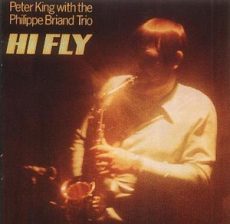
Daily Dose Of Jazz…
Peter John King was born on August 11, 1940 in Kingston upon Thames, Surrey, England. He took up the clarinet and saxophone as a teenager, entirely self-taught. His first public appearances were in 1957, playing alto in a trad jazz group at the Swan Public House in a group organized by trumpeter Alan Rosewell. After the performance he chose to be a professional musician. He came under the strong musical influence of Charlie Parker developing a bebop style inspired by Parker.
In 1959, at the age of 19, he was booked by Ronnie Scott to perform at the opening of Scott’s club in Gerrard Street, London, England. In the same year, he received the Melody Maker New Star award. He worked with Johnny Dankworth’s orchestra from 1960 to 1961, and went on to work with the big bands of Maynard Ferguson, Tubby Hayes, Harry South, and Stan Tracey, the Brussels Big Band, and the Ray Charles band on a European tour.
He played in small groups with musicians such as Philly Joe Jones, Zoot Sims, Al Cohn, Red Rodney, Hampton Hawes, Nat Adderley, Al Haig, John Burch, Bill Watrous, and Dick Morrissey, Tony Kinsey, Bill Le Sage, Jimmy Witherspoon, Joe Williams, Jon Hendricks, and Anita O’Day. His musical curiosity led him to associate with freer idioms in John Stevens’ ‘Freebop’ group in the 1980s. He appeared on the soundtrack of the 1969 film The Italian Job. He was a member of the Charlie Watts Tentet.
From the early 1990s, his style matured and flourished as an improviser and a composer. He found ways to combine jazz and classical techniques without diluting either and he recorded the results on his albums Tamburello, Lush Life and Janus with the Lyric String Quartet.
He won the BBC ‘Musician of the Year’ award, appeared in the documentary film, No One But Me, discussing jazz vocalist Annie Ross and appeared in the movies Blue Ice and The Talented Mr. Ripley. His autobiography Flying High was widely praised for its candour and honesty about his musical career and personal life, his international associations in the jazz world, and the many years in which he battled addiction. Saxophonist, clarinetist and composer Peter King transitioned on August 23, 2020 in Putney, South London, England at 80.