

Daily Dose Of Jazz…
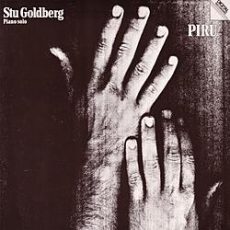
Stuart Wayne Goldberg was born on July 10, 1954 in Malden, Massachusetts but was raised in Seattle, Washington. He attended the University of Utah, taking his bachelor’s in music in 1974, then relocated to Los Angeles, California.
The following year Goldberg played with the Mahavishnu Orchestra and subsequently worked through the 1970s with Al Di Meola, Freddie Hubbard, Alphonse Mouzon, Michal Urbaniak, and Miroslav Vitous.
Booking a European tour in 1978 as a solo keyboardist, Stu released several albums under his own name and with Toto Blanke’s Electric Circus. Returning to Los Angeles in 1985 he worked extensively in film soundtracks with Lalo Schifrin and Ira Newborn. He also worked as a studio musician.
Keyboardist Stu Goldberg, who played with Ray Brown at the Monterey Jazz Festival in 1971, continues to perform and record.

More Posts: bandleader,history,instrumental,jazz,keyboard,music
Daily Dose Of Jazz…
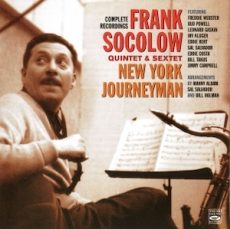
Irv Kluger was born in New York City, New York on July 9, 1921 and early in life he played violin before settling on drums. His first professional gigs came at age 15 and by the time he was 17 he played with Georgie Auld, then with Bob Chester and Freddie Slack. The mid Forties saw him playing with Dizzy Gillespie, Boyd Raeburn, Bobby Byrne and Herbie Fields. Following this he played with Stan Kenton, Artie Shaw, then for a short time in 1950 with Tex Beneke.
He played less jazz after 1950, working in the pit orchestras of Broadway shows such as Guys and Dolls. He returned to play with Artie Shaw again in 1953–54 as a member of the Gramercy Five. In the middle of the 1950s he moved to California and played at the Moulin Rouge in Hollywood as the house drummer.
He played with Dave Pell in 1956, and with Benny Goodman and Woody Herman later in life, doing much freelance work through the 1960s and 1970s. As a studio musician he played with Johnny Cash.
Drummer Irv Kluger, never led a recording session and transitioned on February 28, 2006.
More Posts: drums,history,instrumental,jazz,music
Daily Dose Of Jazz…
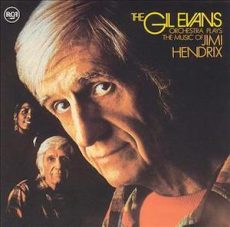
Sue Evans was born on July 7, 1951 in New York, New York and played piano, violin and clarinet as a young child before switching to drums. She studied under Warren Smith and Sonny Igoe, and graduated in 1969 from The High School of Music & Art. She went on to earn a BA in Music from Columbia University, as well as a Master of Music and Doctorate from the Juilliard School.
Becoming one of the top recording percussionists in New York she has recorded jingles, movie scores, and numerous albums with many jazz, folk and pop artists. She was Judy Collins’s touring drummer from 1969 to 1973 and worked with Gil Evans from 1969 to 1982. During the Seventies she worked with Steve Kuhn, Art Farmer, Bobby Jones, George Benson, Urbie Green, Yusef Lateef, Idris Muhammad, Lalo Schifrin, Jeremy Steig and Roswell Rudd’s Jazz Composers Orchestra. In addition Sue played with The New York Pops, the New York Philharmonic, the Brooklyn Philharmonic and the New Jersey Symphony Orchestra.
The 1980s saw her working with Michael Franks, Mark Murphy, Suzanne Vega, Tony Bennett, and Morgana King. Other associations include touring or recording with Aretha Franklin, Sting, Spike Lee, James Brown, Billy Cobham, Blood, Sweat & Tears, Philip Glass, Peter, Paul, and Mary, Don Sebesky, Sadao Watanabe, Hubert Laws, Randy Brecker, David Sanborn and Terence Blanchard.
For several years she played at the Tony Awards and the Grammy Awards. She won National Academy of Recording Arts and Sciences Most Valuable Awards in 1984, 1987 and 1989. Drummer and percussionist Sue Evans continues to perform and record.
More Posts: drums,history,instrumental,jazz,music,percussion
Daily Dose Of Jazz…
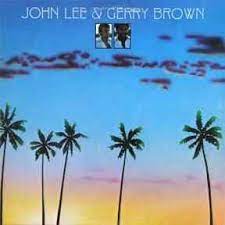
John Lee was born June 28, 1952, in Boston, Massachusetts. He is the son of a minister and a social worker. Growing up in Greenwich, Connecticut, Amityville, New York, and Philadelphia, Pennsylvania he began string bass lessons at 10 with Carolyn Lush. At Philadelphia’s Overbrook High School he met drummer Gerry Brown, who together studied at the Philadelphia Musical Academy for two years.
In 1971 Lee began performing with Carlos Garnett and Joe Henderson, and toured with Max Roach thru the spring of 1972 while still a student in Philadelphia. The same year he and Brown relocated to Europe with Den Haag, Holland as their base. Together they toured Europe and recorded in bands led by Chris Hinze, Charlie Mariano, Philip Catherine, Joachim Kühn, and Jasper Van’t Hof.
Moving to New York City in 1974, John played with Joe Henderson, Lonnie Liston Smith, and Norman Connors before joining The Eleventh House with Larry Coryell. The following year he and Gerry Brown signed a recording contract with Blue Note Records and formed a working band. In 1977 they moved over to Columbia Records and began producing records the same year.
From 1982 to 1984, Lee worked with McCoy Tyner, then became Dizzy Gillespie’s bassist, touring and recording with Dizzy’s Quintet, his Big Band, his Grammy winning United Nation Orchestra and the Back to the Future Band that Dizzy co-lead with Miriam Makeba until 1993 when Makeba died.
Lee has performed in over 100 countries around the world and has toured in the bands of Sonny Rollins, James Moody, Jimmy Heath, Pharoah Sanders, Jackie McLean, Gary Bartz, Hank Jones, Walter Davis Jr., Wolfgang Lackerschmid, Alphonse Mouzon, Claudio Roditi, Jon Faddis, Slide Hampton, Roy Hargrove, and Roberta Gambarini, as well as Aretha Franklin and Gregory Hines.
He is a founding member of The Fantasy Band with Chuck Loeb, Marion Meadows, and Dave Samuels. In 1996, at the bequest of Dizzy’s wife Lorraine Gillespie and the Dizzy Gillespie Estate, he became the director and bassist of the Dizzy Gillespie Alumni All-Stars as well as the Dizzy Gillespie All-Star Big Band, and the Dizzy Gillespie Afro-Cuban Experience. They have recorded five albums and toured extensively around the world.
In 2009 he co-founded the jazz recording label JLP (Jazz Legacy Productions), with partner Lisa Broderick. As a producer he has produced over 60 albums and CDs, and as a recording engineer he has recorded and mixed over 100 albums and CDs.
Bassist John Lee, who is a Grammy winning record producer and audio engineer, continues to explore the boundaries of music.
More Posts: audio engineer,bandleader,bass,history,instrumental,jazz,music,record producer
Daily Dose Of Jazz…
Kenneth John Moule was born on June 26, 1925 in Barking, Essex, England and was the only child of Frederick and Ethal Moule. Surviving an early childhood illness, left him with a cadaverous look which went well with his ridiculous sense of humor.
In the Forties Moule played piano with the Johnny Dankworth Quartet before leaving to join Oscar Rabin in 1945. He would go on to perform with Remo Cavalotti for a summer season and Joe Daniels before working on the Queen Mary in Bobby Kevin’s Band, with Ronnie Scott and Johnny Dankworth. He closed out the decade working with several bands including Jiver Hutchinson, Bert Ambrose, Frank Weir and Ken Mackintosh.
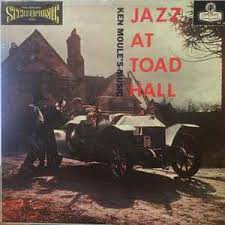
During the early 1950s Ken worked with Raymonde’s Orchestra, again with Ambrose and then with Frank Weir on several occasions. 1954 saw him form under his own name a septet, which was comprised of two-tenor, baritone, trumpet and three rhythm group. He resigned from the septet in 1955 and from 1956–1959 he arranged for Ted Heath’s orchestra. During this time he composed the suite Jazz at Toad Hall, and was released on Decca Records in 1958. He worked in Sweden and toured Europe with Kurt Weill’s Band until 1960.
The 1960s saw his return to England and worked freelance as an arranger, especially with Lionel Bart. He was the musical director for the shows Fings Ain’t Wot They Used T’Be and Twang!!. From 1962 he broadcast regularly with his 15 piece orchestra, and later broadcasted and recorded with a larger band called The Full Score. His Adam’s Rib Suite was recorded by the London Jazz Chamber Group in 1970 with Kenny Wheeler on the recording issued on Ember Records.
He scored Cole Porter songs for the musical Cole! performed at the Mermaid Theatre in 1974, and worked with Dankworth again around that time with his London Symphony Orchestra collaborations. He worked out of Germany for part of the 1970s before ill health caused him to move to the warmer climate of Spain.
Pianist, composer and arranger Ken Moule transitioned in Marbella in January 27, 1986, aged 60.

More Posts: arranger,bandleader,composer,history,instrumental,jazz,music,piano