

Daily Dose Of Jazz…
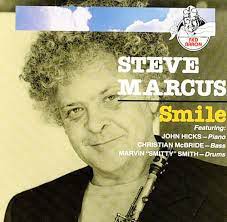
Steve Marcus was born September 18, 1939 in The Bronx, New York, and studied at the Berklee College of Music in Boston, Massachusetts between 1959 and 1961. He gained experience playing in the bands of Stan Kenton, Herbie Mann and Larry Coryell from 1963 to 1973.
His debut album as a leader included an arrangement of the Beatles’ song, Tomorrow Never Knows, which also was the album’s title. He worked with jazz drummer Buddy Rich for the last twelve years of the drummer’s life. After Rich died, Marcus led the band and renamed it Buddy’s Buddies.
Saxophonist Steve Marcus transitioned on September 25, 2005 in New Hope, Pennsylvania. He was 66.

More Posts: bandleader,history,instrumental,jazz,music,saxophone
Daily Dose Of Jazz…
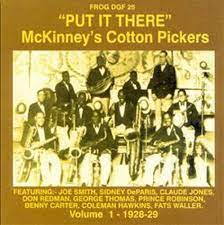
Bill McKinney was born William McKinney on September 17, 1895 in Cynthiana, Kentucky. Early in his career he worked as a drummer in a circus band until he was inducted into the Army in World War I. After service, he settled in Springfield, Ohio where he took over leadership of the Synco Jazz Band.
After hiring drummer Cuba Austin, McKinney worked as leader and business manager. After touring the U.S. Midwest, they got a residency at the Arcadia Ballroom in Detroit, Michigan in 1926. While there, they were heard by bandleader and music promoter Jean Goldkette, who arranged a more lucrative home base for the band in Detroit’s Graystone Ballroom. The band was renamed McKinney’s Cotton Pickers.
During the Great Depression the band broke up in 1934 and Bill led and played with a dance band in Boston, Massachusetts for a time. From 1937 on McKinney managed a Detroit Cafe with a dance floor and live bands who McKinney booked, while booking bands for other locations on the side.
Drummer Bill McKinney retired in the 1950s and spent his last years in his childhood hometown of Cynthiana, where he transitioned on October 14, 1969 at 74.
More Posts: bandleader,drums,history,instrumental,jazz,manager,music
Daily Dose Of Jazz…
Fred Stone was born on September 9, 1935 in Toronto, Ontario, Canada and was the son of saxophonist Archie Stone. His initial musical studies were with his father. At the age of 14 he began studying the trumpet with Donald Reinhardt in Philadelphia, Pennsylvania and spent every summer in that city from 1950–1955. At home he studied music theory and music composition with Gordon Delamont and John Weinzweig.
Commencing his performance career in 1951 at the age of 16 he played in Benny Louis’s big band. From 1955 to 1967 he was a trumpeter in various orchestras related to the Canadian Broadcasting Corporation, including the CBC Symphony Orchestra. During the late 1950s and 1960s he performed widely as a concert soloist with orchestras throughout North America. He was an active performer as a jazz musician, playing regularly with Ron Collier , Phil Nimmons , the Boss Brass, and Lighthouse and he toured North America and Europe with the Duke Ellington Orchestra.
Returning to Toronto in 1971, Stone became highly involved with his work as a teacher, and operated his own private studio where he taught improvisational theory and music composition. His performance career virtually ceased for the remainder of the decade, although he remained active as a composer. Between 1971 and 1983 he mainly focused on his work as a composer and teacher, making only periodic public performances, and often with ensembles composed largely of his students.
In 1984 he formed Freddie’s Band, a jazz ensemble in residence at The Music Gallery in Toronto. Flugelhornist, trumpeter, pianist, composer, writer, and music educator Fred Stone recorded eleven albums as a sideman before he transitioned on December 10, 1986.
More Posts: educator,flugelhorn,history,instrumental,jazz,music,trumpet,writer

Daily Dose Of Jazz…
Joki Freund was born Walter Jakob Freund on September 5, 1926 in Höchst, Frankfurt am Main, Germany. He began playing the accordion as a child, switching to tenor saxophone after World War II ended.
Early in the postwar era, he played with Joe Quitter, Carlo Bohlander, Gerry Weinkopf, Joe Klimm, and Jutta Hipp, before forming his own ensemble. He began performing with American musicians, including Donald Byrd, Art Taylor, and Doug Watkins during their European festival appearances.
He went on to play with and arranged for Albert Mangelsdorff in the jazz orchestra of Hessischer Rundfunk, and Erwin Lehn in the Süddeutscher Rundfunk orchestra. He played with the Frankfurt Jazz Ensemble on soprano saxophone in the 1970s, also performing as a leader around this time.
Saxophonist Joki Freund, who predominantly played in a quintet setting but also in orchestras or big bands, transitioned on February 15, 2012 in Schwalbach am Taunus, Germany.
More Posts: arranger,bandleader,history,instrumental,jazz,music,saxophone
Daily Dose Of Jazz…
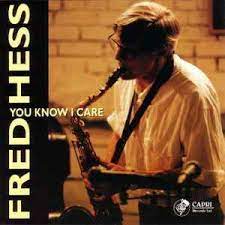
Fred Hess was born in Abington, Pennsylvania on September 3, 1944 but was raised in New Jersey. He studied at Trenton State College with his early studies with saxophonist Phil Woods, a stint with bandleader Fred Waring, and composing music for the world premiere of a Sam Shepard play.
As a composer, his influences encompass avant-garde classical sources, as well as Anthony Braxton and the members of the AACM. Moving to Boulder, Colorado in 1981, he founded the Boulder Creative Music Ensemble. Fred then completed further studies at the University of Colorado, Boulder, taking his doctorate in composition in 1991.
He recorded his debut album Sweet Thunder in 1991 and by 2012 had sixteen albums as a leader in his catalog. He was the Director of Music Composition at Metro State College in Denver, Colorado.
In addition to his own projects as a leader, BCME, The Fred Hess Group and the Fred Hess Big Band, he was the founding director of Denver’s Creative Music Works Orchestra and was a member of drummer Ginger Baker’s Denver Jazz Quintet, as well as ensembles led by trumpeter Ron Miles.
His playing was influenced by Lester Young, John Coltrane, the Association for the Advancement of Creative Musicians, and Eric Dolphy. Tenor saxophonist Fredd Hess transitioned on October 27, 2018.
Bestow upon an inquiring mind a dose of a Abington saxophonist to motivate the perusal of the genius of jazz musicians worldwide whose gifts contribute to the canon…
More Posts: bandleader,history,instrumental,jazz,music,saxophone