


Daily Dose Of Jazz…
Terry Vosbein was born in New Orleans, Louisiana on February 8, 1957. He received his Masters in Composition from James Madison University and his Doctorate in Composition from the Cleveland Institute of Music. He has composed works for orchestra, wind ensembles, chamber ensembles and choirs. He has written works for jazz bands of all sizes and his compositions have been performed all over the world.
His latest release with the Knoxville Jazz Orchestra is titled Fleet Street and is infused with a sense of humor, adding a special dimension that is too often missing in contemporary big band writing. His 2009 Progressive Jazz album also with the Knoxville Jazz Orchestra has garnered critical acclaim.
He has been awarded seven residencies and a fellowship at University College in Oxford, where he composed Masque for Cello and Orchestra. Terry also teaches music composition at Washington and Lee University in Lexington, Virginia.
For over twenty-five years Vosbein was an active jazz bassist and arranger, performing and arranging for a variety of ensembles, including the Glenn Miller Orchestra and the Atlanta Pops. He has performed in a wide range of genres from country western twang to big band swing, disco and country club wallpaper, and continues to play a never ending assortment of jazz combos and studio sessions.

More Posts: arranger,bandleader,bass,composer,history,instrumental,jazz,music

Daily Dose Of Jazz…
Andy Sheppard was born on January 20, 1957 in Warminster, Wiltshire, England. In the late Seventies at the age of 19 he emerged as a musician in the Salisbury-based contemporary quartet Sphere, gigging only three weeks after picking up the saxophone. He honed his skills in the wine bars and jazz clubs of the United Kingdom (UK) and Europe in the early 1980s.
He also played with world music groups and with more established improvisers such as Keith Tippett. While still with Sphere, he moved to Paris, France working with French bands Lumière and Urban Sax. The mid-1980s saw Sheppard returning to the UK, playing often on Ki Longfellow-Stanshall and Vivian Stanshall’s Bristol, England-based Old Profanity Showboat. He released his self-titled debut solo album, featuring trumpeter Randy Brecker and bassist/producer Steve Swallow in 1987 and was awarded the Best Newcomer prize at the 1987 British Jazz Awards, followed by the Best Instrumentalist Award in 1988.
Andy would go on to join George Russell’s Living Time Orchestra and tour with Gil Evans. His sophomore solo album, Introductions in the Dark, also received Best Album and Best Instrumentalist at the 1989 British Jazz Awards. He toured the world and became the first to bring a Western jazz group to play in Outer Mongolia.
The Soft on the Inside Band was Sheppard’s first big band in 1990 for an album of the same name. This band turned into In Co-Motion, and after this he signed a deal with Blue Note Records, who issued Rhythm Method in 1993. That band expanded to Big Co-Motion and recorded a live album Delivery Suite at London jazz club Ronnie Scott’s which was released by Blue Note in 1994.
Saxophonist and composer Andy Sheppard, who has had the television movie The Music Practice, based on his music, continues to perform and compose.

More Posts: bandleader,composer,history,instrumental,jazz,music,saxophone

Daily Dose Of Jazz…
Werner Dies was born on January 15, 1928 in Frankfurt, Germany. An autodidact on guitar and saxophone, he studied clarinet and composition starting in 1947. From 1947 to 1955 he played guitar in the dance band of Willy Berking, and was a member of the bands Hotclub Combo and Two Beat Stompers.
He led his own ensemble, went on a tour of Yugoslavia in 1955 and from 1955 to 1965 he was a member of Hazy Osterwald’s sextet, and also worked as a session musician and arranger. He toured with Joe Turner and, in 1968, Charly Antolini.
He had a hit in Germany in 1954 with Schuster bleib bei deinen Leisten (The Little Shoemaker) that spent eight weeks at #1 on the German hit parade starting in October 1954. He later worked for Howard Carpendale, Adam & Eve, Graham Bonney, and other singers, and produced easy listening music with his own ensemble, the Werner Dies Sax Band.
He wrote a treatise on clarinet improvisation that was published in 1967. He produced the group Bläck Fööss from 1973 to 2003. Tenor saxophonist, clarinetist, guitarist, composer, and arranger Werner Dies died on February 5, 2003.
More Posts: arranger,bandleader,clarinet,composer,guitar,history,instrumental,jazz,music,saxophone
Daily Dose Of Jazz…
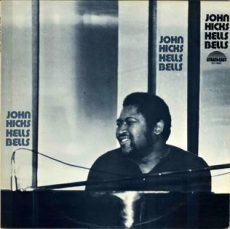
John Josephus Hicks Jr. was born December 21, 1941 in Atlanta, Georgia, the eldest of five children. As a child he moved around the United States as his father, Rev. John Hicks Sr, took up jobs with the Methodist church. His mother was his first piano teacher after he began playing at six or seven in Los Angeles, California. He took organ lessons, sang in choirs and tried the violin and trombone. Once he learned to read music around the age of 11, he started playing the piano in church.
His development accelerated once his family moved to St. Louis, Missouri when Hicks was 14 and he settled on the piano. Attending Sumner High School and played in schoolmate Lester Bowie’s band, the Continentals, which performed in a variety of musical styles. Hicks worked summer gigs in the southern United States with blues musicians Albert King and Little Milton with the latter providing his first professional work in 1958.
He studied music in 1958 at Lincoln University in Pennsylvania, where he shared a room with drummer Ronald Shannon Jackson. He also studied for a short time at the Berklee School of Music in Boston, Massachusetts before moving to New York in 1963.
In New York, John first accompanied singer Della Reese, then went on to play with Joe Farrell, Al Grey, Billy Mitchell, Pharoah Sanders, Jimmy Witherspoon, Kenny Dorham and Joe Henderson before joining Art Blakey’s Jazz Messengers in 1964. From 1965 to 1967 he worked on and off with vocalist Betty Carter, then joined Woody Herman’s big band, where he stayed until 1970, playing as well as writing arrangements for the band.
From 1972 to 1973, Hicks taught jazz history and improvisation at Southern Illinois University. From the 1970s onward he had a prolific career as a leader recording his debut in England followed by fifty-three more albums and as a sideman he recorded 300.
Towards the end of his life, he taught at New York University and The New School in New York. In 2006 John played in a big band led by Charles Tolliver, recorded his final studio album On the Wings of an Eagle.
Pianist, composer and arranger John HIcks, whose collection of papers, compositions, video and audio recordings are held by Duke University, died from internal bleeding on May 10, 2006.

More Posts: arranger,bandleader,composer,history,instrumental,jazz,music,piano
Daily Dose Of Jazz…
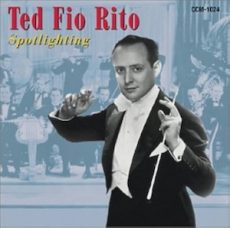
Theodore Salvatore Fiorito, known professionally as Ted Fio Rito, was born December 20, 1900 in Newark, New Jersey into an Italian immigrant couple. His mother had sung light opera in Italy. He attended Barringer High School in Newark.
He was still in his teens when he landed a job in 1919 as a pianist at Columbia’s New York City recording studio, working with the Harry Yerkes bands: the Yerkes Novelty Five, Yerkes’ Jazarimba Orchestra and The Happy Six.
His earliest compositions were recorded by the Yerkes groups and Art Highman’s band. Fio Rito had numerous hit recordings, notably his two number one hits, My Little Grass Shack in Kealakekua, Hawaii and I’ll String Along with You. Over the course of his life he composed more than 100 songs, collaborating with such lyricists as Ernie Erdman, Gus Kahn, Sam Lewis, Cecil Mack, Albert Von Tilzer, and Joe Young.
Moving to Chicago, Illinois in 1921 he joined the Dan Russo band and the following year became the co-leader of Russo and Fio Rito’s Oriole Orchestra and opened at Detroit, Michigan’s Oriole Terrace, with a rebranding as the Oriole Terrace Orchestra. Returning to Chicago they did their first radio remote broadcast in 1924. Throughout the 1920s the orchestra played Chicago, St. Louis, Kansas City, Cincinnati and San Francisco.
The Fio Rito Orchestra’s vocalists included Jimmy Baxter, Candy Candido, the Debutantes, Betty Grable, June Haver, the Mahoney Sisters, Muzzy Marcellino, Joy Lane, Billy Murray, Maureen O’Connor, Patti Palmer, Kay and Ward Swingle.
During the 1940s, the band’s popularity diminished, but Fio Rito continued to perform in Chicago and Arizona. He played in Las Vegas, Nevada during the 1960s. In his last years, he led a small combo at venues throughout California and Nevada until his death.
Composer, orchestra leader, and keyboardist Ted Fio Rito, who was popular on national radio broadcasts in the 1920s and 1930s, died from a heart attack on July 22, 1971 in Scottsdale, Arizona.
More Posts: bandleader,composer,history,instrumental,jazz,music,organ,piano