

Daily Dose Of Jazz…
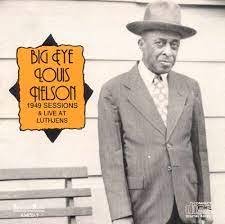
Big Eye Louis Nelson was born Louis Nelson Delisle on January 28, 1885 in New Orleans, Louisiana into a family who were Creoles of color. He spent most of his life in his hometown and studied clarinet with the elder Lorenzo Tio.
By the age of 15, Big Eye was working professionally in the music venues of Storyville, an area of brothels and clubs in New Orleans where Black musicians could find work. He developed a style of hot jazz, also known as Dixieland, and was an influence on clarinetists Johnny Dodds and Jimmie Noone.
In 1917, Nelson joined the reconstituted Original Creole Orchestra that included Freddie Keppard and Bill Johnson. Disbanded in Boston in the spring of that year, it was reassembled in New York City later in the fall. After a short while, he was replaced by Jimmie Noone. He was the regular clarinetist with the Jones & Collins Astoria Hot Eight but did not play on their 1929 recording sessions.
He made his only recordings in his later years in the 1940s, by which time he was often in poor health. Dixieland clarinetist Big Eye Louis Nelson, who also played double bass, banjo, and accordion, transitioned on August 20, 1949.

More Posts: accordion,bandleader,banjo,bass,clarinet,history,instrumental,jazz,music
Daily Dose Of Jazz…
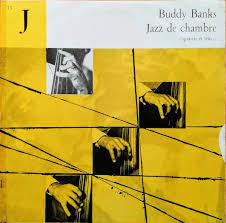
Alvin “Buddy” Banks was born on January 15, 1927 in St. Thomas, Ontario, Canada and grew up in the United States. He became interested in music during high school, starting out on piano before switching to saxophone. During World War II he joined the United States Army Band as a bass player.
Making his first appearance on record was in Vienna, Austria with Thurmond Young, this group also played live at the Colored Club. He played in Paris, France with Gerry Wiggins in 1950, and then with Bill Coleman in Bern, Switzerland, Le Havre, France and Belgium. After problems with his passport in Switzerland, he left for Paris in 1953, where he recorded often with expatriate American jazz musicians as well as local performers.
These include Hazel Scott, Buck Clayton, Lionel Hampton, Mezz Mezzrow, Don Byas, Albert Nicholas, and André Persiany. He toured with Michel Attenoux and with Sidney Bechet through Western and Central Europe in 1954.
Double bassist Buddy Banks transitioned on August 7, 2005 in Las Vegas, Nevada.
More Posts: bass,history,instrumental,jazz,music
Daily Dose Of Jazz…
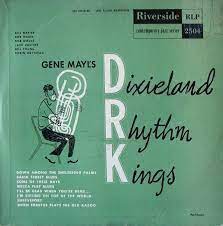
Gene Mayl was born in Dayton, Ohio on December 30, 1928. He lived in France after World War II, where he worked with Claude Bolling, Don Byas, and Claude Luter.
In 1948, he formed his own Dixieland revival ensemble, the Dixieland Rhythm Kings, which recorded for London Records and Riverside Records, and was active through the mid-1970s. Among those he worked with in this group were Speckled Red and Terry Waldo.
Mayl worked extensively with George Brunis in the 1960s and 1970s, and also worked with Wild Bill Davison, Billy Maxted, Bob Scobey, and Muggsy Spanier. Double-bassist, tubaist, and vocalist Gene Mayl transitioned on May 5, 2015 in Harrison Township, Ohio.


Daily Dose Of Jazz…
Merritt Brunies was born on December 25, 1895 into a well-known musical family in New Orleans, Louisiana. Among its members were trombonist George Brunies and cornetist Albert Brunies.
Merritt led his own band, The Original New Orleans Jazz Band, from 1916 to 1918. Though this ensemble never recorded, it existed before both Jimmy Durante’s New Orleans Jazz Band and the Original Dixieland Jazz Band. Following this, he formed another group which played at Friar’s Inn in Chicago, Illinois directly after the stint by the New Orleans Rhythm Kings.
He played regularly in New Orleans in the 1930s, however, by 1946 he moved to Mississippi. There he played with his brothers in a Dixieland jazz band until his retirement. Trombonist and cornetist Merritt Brunies transitioned on February 5, 1973 in Biloxi, Mississippi.
More Posts: bandleader,cornet,history,instrumental,jazz,music,trombone
Daily Dose Of Jazz…
Joe Bishop was born November 27, 1907 in Monticello, Arkansas and learned piano, trumpet, and tuba when he was young. He also played flugelhorn and mellophone. He attended Hendrix College and played professionally with the Louisiana Ramblers in 1927, including in Mexico.
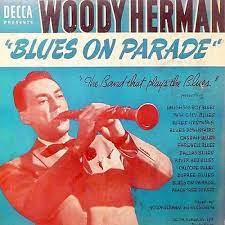
Bishop played with Mart Britt, Al Katz, and Austin Wylie before joining the Isham Jones band for five years. He was a founding member of Woody Herman’s band in the 1930s, but he contracted tuberculosis in 1940 and had to leave the group. He was rehired by Herman as a staff arranger later in the 1940s, and his arrangements and compositions were recorded frequently by Herman, appearing on some 50 of Herman’s albums.
As a performer, Joe played with Cow Cow Davenport and Jimmy Gordon’s Vip Vop Band, but retired from studio work due to his health in the 1950s. Joe quit music and opened a store in Saranac Lake, New York, and later retired to Texas. His compositions include Midnight Blue, Woodchopper’s Ball, and Blue Prelude with Gordon Jenkins.
Tubist, pianist and composer Joe Bishop, whose work has been covered by musicians as diverse as Ten Years After and Lawrence Welk, transitioned on May 12, 1976.

More Posts: composer,history,instrumental,jazz,music,piano,tuba