

Daily Dose Of Jazz…
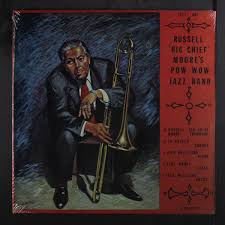
Big Chief Russell Moore was a Pima American Indian born on August 13, 1912 in Komatke, Arizona and lived in Blue Island, Illinois from age twelve, where he studied trumpet, piano, drums, French horn, and trombone. Moving to Los Angeles, California in the early 1930s, he worked freelance with Lionel Hampton, Eddie Barefield, and others. Departing Los Angeles for New Orleans, Louisiana in 1939, he worked with Oscar Celestin, Kid Rena, A.J. Piron, Paul Barbarin, Ernie Fields, Harlan Leonard, and Noble Sissle.
He played with Louis Armstrong’s last big band from 1944 to ‘47, then worked freelance on the Dixieland jazz circuit. The 1950s saw him playing with Ruby Braff, Pee Wee Russell, Eddie Condon, Wild Bill Davison, Jimmy McPartland, Tony Parenti, Mezz Mezzrow, Sidney Bechet, and Buck Clayton. He returned to play in the Louis Armstrong All-Stars in 1964–65, but fell ill and had to leave the group. After recovering he led a Dixieland group of his own, which toured Canada repeatedly.
He worked with pianist Eddie Wilcox shortly before Wilcox died in 1968, then played with Cozy Cole in 1977 and Keith Smith in 1981. Trombonist Big Chief Russell Moore, who recorded as a leader for Vogue, Trutone, and Jazz Art record labels, passed away in Nyack, New York on December 15, 1983.

More Posts: bandleader,history,instrumental,jazz,music,trombone
Daily Dose Of Jazz…
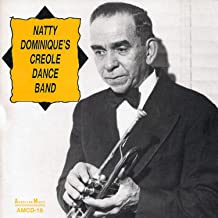
Anatie “Natty” Dominique was born on August 2, 1896 in New Orleans, Louisiana of Afro-Italian descent. Claiming to be a direct descendant of Dominique You, the half-brother of the pirate Jean Lafitte, he studied with Manuel Perez.
Moving to Chicago, Illinois in 1913, over the course of more than three decades there, Dominique played with a number of New Orleans jazzmen, including Louis Armstrong, Jimmie Noone, and especially Johnny Dodds, who employed him from 1928 until his death in 1940.
Shortly afterward, Natty was forced to retire due to a heart condition, keeping him out of the music business for almost a decade. Returning to part-time work with a small combo in the 1950s, he played up till his death.
Trumpeter Natty Dominique, who recorded for American Music Records, Challenge Records, and Black Swan Records, passed away on August 30, 1982 in Chicago.
More Posts: bandleader,history,instrumental,jazz,music,trumpet
Daily Dose Of Jazz…
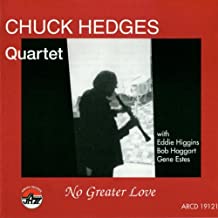
Chuck Hedges was born in Chicago, Illinois on July 21, 1932 and began playing clarinet while attending a military school. He received formal training under Claude Bordy and learned to play jazz on his own.
After studying at Northwestern University, Chuck joined George Brunis’s ensemble in 1953, remaining with Brunis through the end of the decade. He was active on the Dixieland revival scene in the 1960s, playing regularly at clubs in Chicago and Milwaukee, Wisconsin into the 1990s.
Working with Wild Bill Davison for most of the 1980s, he also worked with Alan Vaché and Johnny Varro. He with Ray Leatherwood, Gene Estes, Eddie Higgins, Bob Haggart, Duane Thamm, John Bany, Dave Baney, Charles Braugham, Howard Elkins, Jack Wyatt, Jim Vaughn, John Sheridan, Henry “Bucky” Buckwalter, Gary Meisner, Dave Sullivan, Mike Britz, and Andy LoDuca.
Clarinetist Chuck Hedges released several albums as a leader in the 1990s and 2000s before passing away on June 24, 2010.

More Posts: bandleader,clarinet,history,instrumental,jazz,music
Daily Dose Of Jazz…
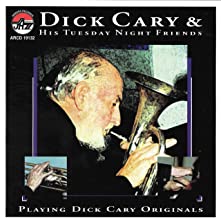
Dick Cary was born in Hartford, Connecticut on July 10, 1916 and earned a bachelor’s degree in music from Wesleyan University in 1938. He began performing in Connecticut and New York and landed a two-year full-time solo gig at Nick’s in Greenwich Village in New York City in 1941. The early 1940s saw him playing with Joe Marsala, the Casa Loma Orchestra, Brad Gowans, and as a staff arranger for Benny Goodman.
During a stint in the Army in 1944-46 while stationed on Long Island, Cary managed to continue recording with Muggsy Spanier and Wild Bill Davison among others. After his discharge, he worked with Billy Butterfield, then the pianist in the initial formation of Louis Armstrong’s All-Stars in 1947–48. In 1949–50 he was in Jimmy Dorsey’s orchestra, and throughout the 1950s worked with Eddie Condon, Pee Wee Russell, Max Kaminsky, Bud Freeman, Jimmy McPartland, and Bobby Hackett.
A move to Los Angeles, California in 1959 saw him becoming an active freelance, touring, and studio musician. Dick began writing and arranging music for the Tuesday Night Friends, who only performed annually at the Los Angeles Classic Jazz Festival and Sacramento Jazz Jubilee.
Trumpeter, composer, and arranger Dick Cary, who recorded eight albums asa leader and two-dozen as a sideman, passed away on April 6, 1994 in Glendale, California.
More Posts: arranger,composer,history,instrumental,jazz,music,trumpet

Daily Dose Of Jazz…
Alex Welsh was born on July 9, 1929 in Edinburgh, Scotland, Welsh and started playing in the teenage Leith Silver Band and with Archie Semple’s Capital Jazz Band. After a move to London in the early 1950s, he formed a band with clarinetist Archie Semple, pianist Fred Hunt, trombonist Roy Crimmins, and drummer Lenny Hastings. The band played a version of Chicago-style Dixieland jazz and was part of the traditional jazz revival in England in the 1950s.
In the 1960s, Welsh’s band played with Earl Hines, Red Allen, Peanuts Hucko, Pee Wee Russell, and Ruby Braff. During that period and into the early 1970s, Welsh frequently toured, including many visits to the United States. Influenced by his fellow trad jazz bandleader Chris Barber, he built up an extensive musical repertoire, working from popular music, jazz, and a large mainstream following for ensembles.
Welsh recorded under the Decca Record label from 1955 and had four records released that year, I’ll Build A Stairway To Paradise, Blues My Naughtie Sweetie Gives To Me, and What Can I Say After I Say I’m Sorry, and Dixielanders. Although none of these recordings charted, he found some success with the single Tansy from the film No My Darling Daughter.
In 1963 he was part of the biggest trad jazz event in Britain and would go on to tour internationally, playing festivals on both the American and European continents. He was a regular in the early 1970s, playing clubs around London and having continued success as a vocalist and playing Dixieland, and trad jazz. Singer, bandleader, cornetist, and trumpeter Alex Welsh passed away on June 25, 1982 in Hillingdon Hospital in London, England, at the age of 52.
More Posts: bandleader,cornet,history,instrumental,jazz,music,trumpet,vocal