

Daily Dose Of Jazz…
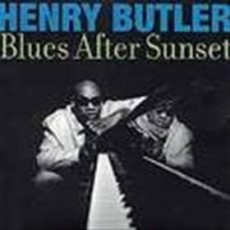
Henry Butler was born September 21, 1949 in New Orleans, Louisiana. Blinded by glaucoma in infancy and his musical training began at the Louisiana State School for the Blind, where he learned to play valve trombone, baritone horn and drums before focusing his talents on singing and piano,
Butler was mentored at Southern University in Baton Rouge by clarinetist and educator Alvin Batiste. He later earned a master’s degree in music at Michigan State University in 1974, receiving the MSU Distinguished Alumni Award in 2009.
Due to the devastation of his home and his vintage 1925 Mason & Hamlin piano by Hurricane Katrina, Henry moved to first Boulder then Denver, Colorado but by 2009 he relocated to New York City. He has pursued photography as a hobby since 1984,and his methods and photos are featured in a 2010 HBO2 documentary, Dark Light: The Art of Blind Photographers, that aired. His photographs also have been shown in galleries in New Orleans.
Pianist Henry Butler has recorded and released nine albums as a leader for Impulse, Windham Hill and Basin Street Records and as a sideman with James Carter and Corey Harris. He joins the lineage of Crescent City pianists like Professor Longhair, James Booker, Tuts Washington and Jelly Roll Morton. He continues to perform and record in a variety of styles of music.

Take A Dose On The Road
Daily Dose Of Jazz…
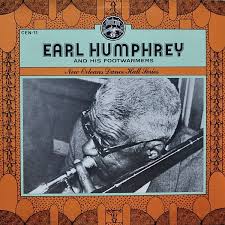
Earl Humphrey was born on September 9, 1902 in New Orleans, Louisiana into a musical family. His father a prominent local clarinetist and music teacher, his older brother Willie was also a clarinetist and his younger brother Percy played the trumpet.
Earl learned to play trombone from his grandfather, joined a traveling circus with his father in 1919 and traveled widely in the 1920s. In 1927 he recorded with Louis Dumaine and played through the 1930s until he decided to retire from music, settling in Virginia in the 1940s.
Returning to New Orleans in 1963, he was urged to resume his musical career. He joined his brother Percy’s band and played on a few albums, including Jazz City Studio. He recorded his first sessions as bandleader in 1966 titled Igor’s Imperial Orchestra and his sophomore project Earl Humphrey & His Footwarmers the following year on the Center label. Trombonist Earl Humphrey passed away on June 26, 1971 in his home in New Orleans at the age of 68.
Inspire A Young Mind
More Posts: trombone
Daily Dose Of Jazz…
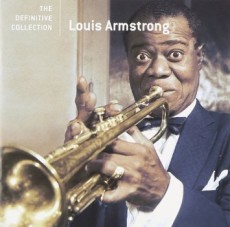
Louis Armstrong was born on August 4, 1901 in New Orleans, Louisiana and grew up in the poverty-stricken, rough neighborhood known as “The Battlefield”, which was part of the Storyville legal prostitution district. Abandoned by his father while still an infant, he and his sister lived with relatives for a period of years. He attended the Fisk School for Boys, getting his early exposure to music, worked as a paperboy, discarded food reseller, and hauled coal to the brothels and clubs and worked for a Jewish junk haulers who treated him like family.
Dropping out of school at age eleven, Louis joined a quartet of boys singing on the corner for money, and listened to the bands in Storyville. He developed his cornet playing skills by playing in the band of the New Orleans Home for Colored Waifs under the tutelage of Professor Peter Davis who instilled discipline in and provided musical training to the otherwise self-taught Armstrong. He eventually became the bandleader, they played around New Orleans and by thirteen-year-old he began drawing attention by his cornet playing, starting him on a musical career. At fourteen he got his first dance hall job at Henry Ponce’s where Black Benny became his protector and guide. He hauled coal by day and played his cornet at night.
Over the next years he played in the city’s frequent brass band parades and listened to older musicians every chance he got, learning from Bunk Johnson, Buddy Petit, Kid Ory and Joe “King” Oliver, who acted as a mentor and father figure to the young musician. He toured with Fate Marable, replaced King Oliver in Kid Ory’s band, and was second trumpet in the Tuxedo Brass Band.
1922 saw Armstrong in Chicago joining King Oliver’s Creole Jazz Band when the city was the center of the jazz universe. He was challenged to “cutting contests” by hornmen trying to displace the new phenomenon, which could blow two hundred high Cs in a row. He made his first recordings on the Gennett and Okeh labels, he met Hoagy Carmichael through his friend Bix Beiderbecke. Taking the advice of second wife Lil Harden Armstrong, he left Oliver and went to work with Fletcher Henderson in New York and developing his own style. By 1924 he switched to trumpet and his influence upon Henderson’s tenor sax soloist Coleman Hawkins, can be judged by listening to the records made by the band during this period.
During this time, Armstrong made many recordings on the side, arranged by Clarence Williams, with the Williams Blue Five pairing him with Sidney Bechet and backing Bessie Smith, Ma Rainey and Alberta Hunter. He began recording under his own name for Okeh with his famous Hot Five and Hot Seven groups Hot Five and Hot Seven groups, producing hits Potato Head Blues, Muggles and West End Blues, the music of which set the standard and the agenda for jazz for many years to come. His recording of Heebie Jeebies turned on both black and white young musicians to his new type of jazz, including a young Bing Crosby.
Over the course of his career he appeared in musical, played clubs, added vocals to his repertoire covering most famously Carmichael’s Stardust that became one of the most successful renditions. His approach to melody and phrasing was radical and evolved into scat singing. As with his trumpet playing, Armstrong’s vocal innovations served as a foundation stone for the art of jazz vocal interpretation. The uniquely gritty coloration of his voice became a musical archetype that was much imitated and endlessly impersonated.
After spending many years on the road, in 1943 Louis settled permanently in Queens, New York in 1943 in contentment with his fourth wife, Lucille. During the subsequent thirty years, he played more than three hundred gigs a year, toured Africa, Europe, and Asia under sponsorship of the US State Department earning the nickname “Ambassador Satch” and inspiring Dave Brubeck to compose his jazz musical The Real Ambassadors.
He has been honored posthumously with a Grammy Lifetime Achievement Award, won a Male Vocal Performance Grammy for Hello Dolly, has 11 recordings inducted into the Grammy Hall of Fame, the Rock and Roll Hall of Fame list his West End Blues as one of the 500 songs that shaped Rock and Roll, had a commemorative U.S. postage stamp issued, and has been inducted into six Halls of Fame, has a star on the Hollywood Walk of Fame, as well as the Louis Armstrong New Orleans International Airport, the US Open main stadium was renamed Louis Armstrong Stadium, and his Hot Five and Hot Seven recordings are now a part of the National Recording Registry in the Library of Congress.
Trumpeter and vocalist Louis Armstrong, also known as Satchmo, Dipper, Pops and the King of Jazz, passed away in his sleep of a heart attack on July 6, 1971. His honorary pallbearers included Bing Crosby, Ella Fitzgerald, Dizzy Gillespie, Pearl Bailey, Count Basie, Harry James, Frank Sinatra, Ed Sullivan, Earl Wilson, Alan King, Johnny Carson and David Frost. Peggy Lee sand The Lords Prayer, Al Hibbler sang Nobody Knows The Trouble I’ve Seen and his long-time friend Fred Robbins gave the eulogy.
Dose A Day – Blues Away
Daily Dose Of Jazz…
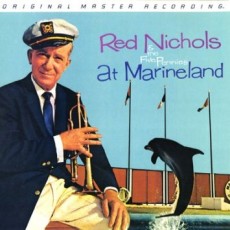
Red Nichols was born Ernest Loring Nichols on May 8, 1905 in Ogden, Utah. A child prodigy, he learned to play the cornet and by the age of twelve he was playing difficult set pieces for his father’s brass band. Hearing the early recordings of the Original Dixieland Jazz Band, and later those of Bix Beiderbecke, they had a strong influence and his style became polished, clean and incisive.
In the early 1920s, Nichols moved to the Midwest and joined a band called The Syncopating Seven, then joined the Johnny Johnson Orchestra and went with it to New York City in 1923. In New York he met and teamed up with trombonist Miff Mole and the two of them were inseparable for the next decade.
Nichols had good technique, could read music, and easily got session and studio work. In 1926 he and Miff Mole began a prodigious stint of recording over 100 sides for the Brunswick label, with a variety of bands, most of them known as “Red Nichols and His Five Pennies”. Very few of these groups were actually quintets; the name was simply a pun on “Nickel”, since there were “five pennies” in a nickel
He also recorded under a number of other names, employing Jimmy Dorsey, Benny Goodman, Glenn Miller, Jack Teagarden, Pee Wee Russell, Joe Venuti, Eddie Lang and Gene Krupa among others. He would go on to record for Edison, Victor, Bluebird, Variety and Okeh record labels.
By the time the Swing Era arrived his recording career stalled even though he formed his own band. The transition from Dixieland to swing was not easy for him and the critics who once lauded him now trashed his output. During the Depression he played in show bands and pit orchestras, moved out to California and led Bob Hopes orchestra and during WWII gave up music for an Army commission. After the war he returned to music playing small clubs, hosting jam sessions and getting better engagements at the top clubs in the city – Zebra room, Tudor room in San Francisco’s palace Hotel and Pasadena’s Sheraton.
He toured Europe as a goodwill ambassador for the State Department, performed in Mickey Rooney film Quicksand, and was the subject of This Is Your Life. By 1965 he was in Las Vegas with his band playing the Mint Hotel. Only a few days into the date, he was sleeping in his suite and was awakened by paralyzing chest pains. He managed to call the front desk and an ambulance was summoned, but it arrived too late.
On June 28, 1965, cornetist, composer, and bandleader Red Nichols, rumored to have appeared on over 4000 recordings during the 1920s alone, passed away. That night the band went on as scheduled, but at the center of the band a spotlight pointed down at an empty chair in Nichols’ customary spot. He has been the subject of a film biography portrayed by Danny Kaye, had a cameo in the biopic the Gene Krupa Story and in 1986 was inducted into the Big Band and Jazz Hall of Fame.
Put A Dose In Your Pocket
More Posts: cornet
Daily Dose Of Jazz…
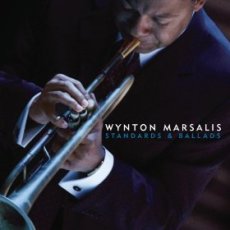
Wynton Learson Marsalis was born October 18, 1961 in New Orleans, Louisiana, the son of a jazz pianist. At an early age he exhibited an aptitude for music and by age eight he was performing traditional New Orleans music in the Fairview Baptist Church band. At 14, he performed with the New Orleans Philharmonic and during high school played with the New Orleans Symphony Brass Quintet, the New Orleans Community Concert Band, the New Orleans Youth Orchestra, the New Orleans Symphony, various jazz bands and with a local funk band, the Creators.
At age 17, Wynton was the youngest musician admitted to Tanglewood’s Berkshire Music Center where he won the school’s Harvey Shapiro Award for outstanding brass student. Moving to New York City he attended Julliard in 1979 and picked up gigs around town. He joined the Jazz Messengers led by Art Blakey in 1980 and in the years that followed he would perform with Sarah Vaughan, Dizzy Gillespie, Sweets Edison, Clark Terry, Sonny Rollins, Ron Carter, Herbie Hancock, Tony Williams and countless other jazz legends.
Marsalis has written, produced and hosted Marsalis On Music, an educational television series on jazz and classical music, National Public Radio aired the first of Marsalis’ 26-week series, titled Making the Music, was awarded a Peabody Award, has written five books, co-founded the jazz program at Lincoln Center that evolved into Jazz at Lincoln Center, opened Frederick P. Rose Hall, the first ever institution for jazz with three performance halls, recording, broadcast, rehearsal and education facilities.
Wynton Marsalis, jazz trumpeter, bandleader, composer and educator is currently the Artistic Director for Jazz at Lincoln Center and Music Director for the Jazz at Lincoln Center Orchestra. He was won nine Grammy Awards in both jazz and classical genres, and received the first ever Pulitzer Prize for Music.
Jazz Is Global – Share
More Posts: cornet,flugelhorn,flumpet,trumpet