


Daily Dose Of Jazz…
Eric Allan Dolphy was born on June 20, 1928 in Los Angeles, California and received his musical education at Los Angeles City College. Performing locally in the big bands of Gerald Wilson and Roy Porter, he played soprano clarinet, baritone saxophone and his main instrument, the alto, on early recordings. But his big break came when he joined Chico Hamilton’s quintet, gaining wider audience recognition.
By 1959 Dolphy had moved to New York City and his early association with then established John Coltrane brought him acclaim amongst jazz lovers. During this period, Dolphy also played in a number of challenging settings, notably in key recordings by Ornette Coleman’s Free Jazz: A Collective Improvisation; Oliver Nelson’s The Blues and the Abstract Truth; and George Russell’s Ezz-thetics. He also worked with Max Roach, Gunther Schuller, Ron Carter, Ken McIntyre and Abbey Lincoln among others.
His first two albums as leader produced Outward Bound and Out There that were deeply rooted in hard bop with trumpeter Freddie Hubbard. This was followed with Far Cry with Booker Little, with whom he would record a series of legendary sets at the Five Spot before Little’s death at 23. In 1964, Dolphy signed with Blue Note and recorded Out To Lunch! with Hubbard, Bobby Hutcherson, Richard Davis and Tony Williams. This record was rooted in the avant-garde, his solos unpredictable and is considered his magnum opus.
Eric Dolphy died in Berlin while touring with Charles Mingus on June 29, 1964. The circumstances are sketchy as to where he died and the cause, though he was a diabetic. Whatever the cause, the jazz world lost an alto saxophonist, flautist, clarinetist who contributed profusely to the genre of jazz during his short-lived 36 years.

Daily Dose Of Jazz…
Jaki (John) Byard was born on June 15, 1922 in Worcester, Massachusetts and began playing professionally at age 15. Adept not only on the piano, he played trumpet and saxophone among other instruments. After serving in WWII he toured with Earl Bostic in the late 40s, based himself in Boston and had his recording debut with Charlie Mariano in 1951.
Known for his eclectic style, Byard added everything from ragtime to free jazz in his delivery. Through the fifties and into the sixties he was a member of Herb Pomeroy’s band followed by a stint with Maynard Ferguson.
Moving to New York, Byard recorded extensively with Charles Mingus from 1962 to 1964 and in 1970, touring Europe with him in 1964. He also made important recordings as a sideman with Eric Dolphy, Booker Ervin and Sam Rivers.
As a leader, he recorded a string of albums for the Prestige label during the 1960s and fronted an occasional big band, the Apollo Stompers. He taught at the New England Conservatory, Manhattan School of Music, Hartt School of Music, and the New School for Social Research.
Jaki Byard was shot dead on February 11, 1999 in New York City. The circumstances surrounding his death have not been determined. Phil Woods described him as “one of the most compelling and versatile pianists in jazz”.

Daily Dose Of Jazz…
Matthew Garrison was born June 2, 1970 in New York. The son of double bassist Jimmy Garrison, he spent the first eight years of his life immersed in a community of musicians, dancers, visual artists and poets. After the death of his father (John Coltrane’s bassist), his family relocated to Rome, Italy where he began to study piano and bass guitar.
In 1988 Matthew returned to the United States and lived with his godfather Jack Dejohnette for two years, studying intensively under him and bassist Dave Holland. In 1989 he received a full scholarship to attend Berklee College of Music in Boston. Along with his studies, he began his professional career with the likes of Gary Burton, Bob Moses, Betty Carter, Mike Gibbs and Lyle Mays to mention a few.
Garrison moved to Brooklyn, New York in 1994 and since then has performed, toured and recorded with artists such as Herbie Hancock, Whitney Houston, Joe Zawinul, Chaka Khan, Meshell Ndege Ocello, Joni Mitchell, Wayne Shorter, Jack Dejohnette, Steve Coleman, Bill Cosby, Paul Simon, Cassandra Wilson, Wallace Roney, Geri Allen, John Mclaughlin, Tito Puente, John Scofield, Pat Metheny and many others.
In 1998 Matthew founded record label and production company, GarrisonJazz Productions, through which he currently produces, promotes and markets his music. Since 2000 he has released two compact discs and a live performance DVD. He is noted for playing his signature series Fodera bass, having created and developed a pizzicato technique that uses four fingers. He continues to perform and record.
More Posts: bass
Daily Dose Of Jazz…
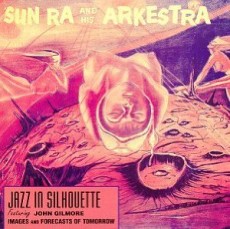
Sun Ra was born Herman Poole Blount in Birmingham, Alabama on May 22, 1914 and as a child was a skilled pianist. By twelve he was writing original songs and could sight read sheet music. With Birmingham being an important stop for touring musicians, during his childhood he was able to see famed musicians like Fletcher Henderson, Duke Ellington and Fats Waller.
By his teenage years he was producing from memory full transcriptions of big band songs he had heard and began playing semi-professional solo piano in ad hoc jazz bands. Attending Birmingham Industrial High School he took lessons the tutelage of John T. “Fess” Whatley, a demanding disciplinarian and producer of many professional musicians.
Claiming that he was of the “Angel Race” and not from Earth, but from Saturn, Sun Ra developed a complex persona of “cosmic” philosophies and lyrical poetry that made him a pioneer of “afro-futurism” as he preached awareness and peace above all. He abandoned his birth name and took on the name and persona of Sun Ra (Ra being the ancient Egyptian god of the sun).
From the mid-1950s to his death, Sun Ra led “The Arkestra”, an ensemble with an ever-changing lineup and names, asserting that the ever-changing name of his ensemble reflected the ever-changing nature of his music. His mainstream success was limited, but Sun Ra was a prolific recording artist and frequent live performer with music ranged from keyboard solos to big bands of over 30 musicians and music touching on virtually the entire history of jazz, from ragtime, swing, bebop, free improvisation, electronic and space music.
Sun Ra had several music periods during his lifetime – late 30s creating a conservatory workshop in his family home, conscientious objector during the war years, Chicago playing blues and jazz with Fletcher Henderson, Coleman Hawkins and Stuff Smith, New York Monday night gig at Slug’s Saloon and praise from Dizzy Gillespie and Thelonious Monk, and Philadelphia that would be the base of operations for the Arkestra until his death.
Sun Ra known for his “cosmic philosophy, musical compositions and performances was inducted into the Alabama Jazz Hall of Fame in 1979. The prolific Jazz composer, bandleader, piano and synthesizer player, poet and philosopher passed away on May 30, 1993, at 79.
Daily Dose Of Jazz…
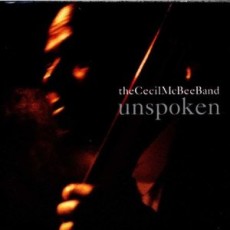
Born May 19, 1935 in Tulsa, Oklahoma bassist Cecil McBee studied clarinet at school before switching to the bass at 17 and began playing in local clubs. After matriculating through Ohio Central State University with a degree in music, he spent two years in the army conducting the band at Fort Knox.
Cecil McBee was working with Dinah Washington by 1959, three years later moved to Detroit and worked with Paul Winters folk-rock band, then moved to New York in the mid-60s where his jazz career took an earnest turn. He began working with Miles Davis, Andrew Hill, Sam Rivers, Jackie McLean, Wayne Shorter, Charles Lloyd, Yusef Lateef, Keith Jarrett, Freddie Hubbard, Wood Shaw and Alice Coltrane all by the time 1972 arrived.
In 1975 he started his own group and made a number of recordings, became a member of the group Almanac but is best known for his as a sideman over the past several decades. One of the most influential bassist in jazz, Cecil McBee teaches at the New England Conservatory in Boston, Massachusetts and remains one of post-bops versatile bassist who delivers a rich, full-bodied tone.
More Posts: bass