

Daily Dose Of Jazz…
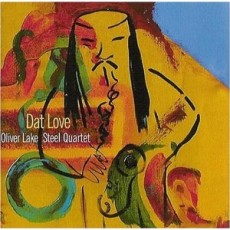
Oliver Lake was born in Marianna, Arkansas on September 14,1942 and his family moved to St. Louis when he was two. He began drawing at the age of thirteen and soon after began playing cymbals and the bass drum in a variety of drum and bugle corps. At 17, he began to take a serious interest in jazz and started playing percussion followed by alto saxophone. His piercing, bluesy, biting sound is his trademark and his explosive unpredictable solos are akin to Eric Dolphy.
During the 1960s Oliver taught school, worked in several contexts around St. Louis and led along with Julius Hemphill and Charles “Bobo” Shaw, BAG, the Black Artists Group. In 1972 Lake moved to Paris for two years working with his colleagues from BAG, returned to New York and immersed himself into the then burgeoning jazz loft scene. Like many other members of BAG, (Black Artists Group) and its Chicago-based sister organization, the Association for the Advancement of Creative Musicians (AACM), he moved to New York in the mid-’70s, working the fertile ground of the downtown loft scene and quickly establishing himself as one of its most adventurous and multi-faceted musician.
Oliver is co-founder of the internationally acclaimed World Saxophone Quartet with Julius Hemphill, Hamiet Bluiett and David Murray in 1977. Over the next two decades the group crossed over to new audiences, in part, due to their late 80s albums of Ellington and popular R&B tunes. He leads his own Steel Quartet and Big Band; has worked with hip hop artists Mos Def and A Tribe Called Quest and Me’shell Ndegeocello; has created a groundbreaking roots/reggae ensemble “Jump Up”; founded Passin’ Thru, Inc. – a non-profit dedicated to fostering, promoting and advancing the knowledge, understanding and appreciation of jazz, new music and other disciplines related to music.
Oliver Lake, the alto saxophonist, flautist, composer, poet and painter has collaborated with numerous notable choreographers, poets and a veritable Who’s Who of the progressive jazz scene of the late 20th century. He has recorded as a leader for Freedom, Black Saint, and Black Lion, Novus, Gramavision, Blue Heron Gazell, Soul Note and other record labels. The mainstay of the avant-garde and free jazz realms continually performs all over the U.S. as well as in Europe, Japan, the Middle East, Africa and Australia. He paints daily, using oil, acrylics, wood, canvas, and mixed media.

Daily Dose Of Jazz…
Karen Borca was born September 5, 1948 in Green Bay, Wisconsin. The jazz bassoonist studied music at the University of Wisconsin where she met Cecil Taylor and became his teaching assistant during her senior year. She went on to play in his Cecil Taylor Unit.
By 1974 she was the teaching assistant to longtime Taylor sideman Jimmy Lyons, who Karen married and played with until his passing in 1986. She has continued to perform on the Lower East Side of New York City with musicians like William Parker, Marco Eneidi, Joel Futterman, Sonny Simmons, Alan Silva and Jackson Krall, while also leading her own band.
An accomplished sideman, she has recorded on albums with Joe Morris, Alna Silva, Paul Murphy, Bill Dixon and with Earth People. She has an impressive facility, playing with the litheness and imagination of a first-rate free jazz saxophonist. Bassoonist Karen Borca is one who has mastered an extremely difficult instrument and adapted it to free jazz that she continues to perform.
More Posts: bassoon
Daily Dose of Jazz…
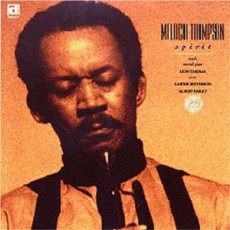
Malachi Richard Thompson was born on August 21, 1949 in Princeton, Kentucky and moved to Chicago as a child. He credited his interest in the trumpet to hearing Count Basie’s band at the Regal Theatre when he was 11 years old. Malachi worked in the rhythm and blues scene on Chicago’s South Side as a teen and in 1968 he joined the Association for the Advancement of Creative Musicians (AACM), spending some time in the AACM big band. Thompson graduated from Governor’s State University in 1974 with a degree in music composition.
He performed and toured with the Operation Breadbasket Big Band, which was affiliated with the Southern Christian Leadership Conference. He has worked with saxophonists Joe Henderson, Jackie McLean, Frank Foster and Archie Shepp among other musicians while living in New York City. He formed his “Freebop” band in 1978, eventually relocating to Washington, D.C., working with Lester Bowie’s Hot Trumpets Repertory Company and formed Africa Brass, inspired by traditional New Orleans brass bands.
With a goal of preserving the Sutherland Theater on Chicago’s South Side, Thompson founded the Sutherland Community Arts Initiative in 1991, a non-profit corporation, and wrote incidental music for a play about the theater. Diagnosed in 1989 with T-cell lymphoma and learning he had one year to live, Thompson claimed he was healed by radiation and reading about jazz. He died in Chicago from a relapse of his cancer on July 16, 2006.
More Posts: trumpet
Daily Dose Of Jazz…
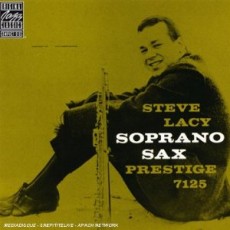
Steve Lacy was born Steven Norman Lackritz on July 23, 1934 in New York City. He didn’t begin his career until age sixteen, coming to prominence in the 1950s as a progressive Dixieland musician playing with the likes of Henry “Red” Allen, Pee Wee Russell, George ”Pops Foster and Zutty Singleton, as well as Kansas City jazz musicians like Buck Clayton, Dicky Wells and Jimmy Rushing.
Working extensively in experimental jazz and dabbling in free improvisation, Lacy’s music was typically melodic and tightly structured over a long and prolific career. He became involved with the avant-garde, performed on “Jazz Advance” in 1956, the debut album of Cecil Taylor, and appeared with his groundbreaking quartet at the 1957 Newport Jazz Festival.
Steve made a notable appearance on an early Gil Evans album, however, his most enduring relationship, however, was with the music of Thelonious Monk, his first recorded album in 1958 as a leader “Reflections” featured only Monk compositions. He briefly played in Monk’s band in 1960 and later on Monk’s Columbia session “Big Band/Quartet” in 1963.
Monk tunes became a permanent part of his repertoire, making an appearance in virtually every concert appearance and on his albums. He often collaborated with trombonist Roswell Rudd in presenting interpretations of Monk, Mingus, Ellington and Herbie Nichols’ compositions, rarely playing standard popular or show tunes. In the 1960s he continued to work with other players involved in the American free-jazz avant-garde, and in the Seventies immersed in the European free improvisation scene that would remain an important element in his work thereafter.
Steve became a highly distinctive composer with his signature simplicity of style. He became a widely respected figure on the European jazz scene for several decades, was the recipient of a MacArthur Fellowship, began teaching at the New England Conservatory of Music in Boston and performed one of his last public performances in front of 25,000 people at the close of a peace rally on Boston Common in 2003.
Steve Lacy, soprano saxophonist, was diagnosed with cancer continued playing and teaching until weeks before his death on June 4, 2004 at the age of 69.
More Posts: saxophone
Daily Dose Of Jazz…
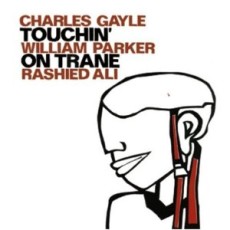
Rashied Ali, born Robert Patterson on July 1, 1933, grew up learning to play drums in Philadelphia, Pennsylvania influenced by his mother who sang with Jimmie Lunceford, and his brother Muhammad, a drummer with Albert Ayler.
Moving to New York in 1963, Ali worked in groups with Bill Dixon and Paul Bley. He would go on to record or perform with Pharoah Sanders, Alice Coltrane, Arthur Rhames, James Blood Ulmer and many others. Scheduled to be second drummer alongside Elvin Jones on John Coltrane’s landmark free jazz album Ascension, he dropped out just before the recording was to take place. Though Coltrane did not replace him, he became best known for playing and recording with Trane from Meditations in 1965 onwards.
Rashied became a driving force in the free and avant-garde drumming world, stimulating the most avant-garde kinds of jazz activities. During the early 1970s, he ran an influential loft club in New York, called Ali’s Alley, briefly formed a non-jazz project called Purple Trap with Japanese experimental guitarist Keiji Haino and jazz-fusion bassist Bill Laswell. In the 1980s, he was member of Phalanx with guitarist James Blood Ulmer, tenorist George Adams and bassist Sirone.
Though most known for his work in the jazz idiom, Rashied Ali also made his contributions to other experimental art forms including multi-media performances and fully improvised large-scale performance pieces. During the last years of his life he played with Sonny Fortune, led his own quintet, served as mentor to young drummers, and was the featured drummer on Azar Lawrence’s 2009 album Mystic Journey.
Over the course of his stellar career drummer Rashied Ali amassed a discography of eighteen albums as a leader with another thirty as a sideman. He continued to record, perform and tour worldwide until his death at age 74 in New York City after suffering a heart attack on August 12, 2009.
More Posts: drums