

Daily Dose Of Jazz…
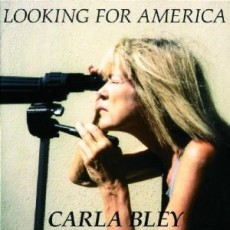
Carla Bley was born Carla Borg on May 11, 1936 is best known for her work as a jazz composer, pianist, organist and band leader in the post bop generation and free jazz movement of the 60s.
Raised in Oakland, California she was encouraged by her father, piano teacher and choirmaster, to sing and learn the piano. Giving up church to immerse herself in roller-skating at fourteen, Carla moved to New York and became a cigarette girl at Birdland. It is here that she met and married Paul Bley, who encouraged her to start composing. Her compositions would later begin to appear on recordings by George Russell and Jimmy Guiffre, with compositions being performed by Gary Burton, Art Farmer and Paul Bley.
In 1964 she was involved in organizing the Jazz Composer Guild bringing together the most innovative musicians in New York and started the JCOA record label, which released albums by Clifford Thornton, Don Cherry and Roswell Rudd, Michael Mantler and herself. With Mantler the two started the New Music Distribution Services, now defunct, that specialized in small, independent labels issuing creative improvised music.
Carla Bley has collaborated with a number of other artists, including Kurt Weill, Jack Bruce, Charlie Haden, Phil Woods, Johnny Griffin, Pink Floyd drummer Nick Mason, Blood, Sweat & Tears, Lew Soloff, Phil Woods and her current partner bassist Steve Swallow. She has continued to record frequently with her own big band and a number of smaller ensembles.
More Posts: bandleader,composer,organ,piano
Daily Dose Of Jazz…
Karl Hanns Berger was born March 30, 1935 in Heidelberg, Germany and began playing piano when he was ten. By the time he reached young adulthood he had landed a job at Club 54 in his hometown as the house pianist and accompanied visiting American musicians such as Leo Wright, Lex Humphries and Don Ellis. During their stays he was able to learn the complexities of modern jazz.
Berger eventually picked up the vibraphone and in the early sixties became intrigued with free jazz. By 1965 he was a part of Don Cherry’s Paris-based quintet and the next year they came to New York to record Symphony For Improvisers on Blue Note. Staying in the U.S. Berger recorded his first album the following year.
Most of his output has been experimental in the free jazz circles playing with the likes of Carla Bley, Lee Konitz, John McLaughlin, Dave Holland, Sam Rivers, Pharoah Sanders, The Mingus Epitaph Orchestra and many others. From 1969 to 1975 Karl Berger continuously won the Down Beat critics poll for best jazz vibraphone player of the year.
In 1972 along with his friend and mentor Ornette Coleman, he founded the Creative Music Studio in Woodstock, New York, which was geared toward encouraging young students to explore their own creative ideas instead of imposing traditional concepts upon them. With visiting educators like Jack DeJohnette, Sam Rivers, and Anthony Braxton amongst other prominent musicians the school flourished until the mid eighties when Berger decided to venture back into performing.
From 1985 on Berger has led a 28-piece big band, played festivals worldwide, recorded as a leader and sideman, extending his educator talents to teaching jazz and ensemble playing in Frankfurt, and chaired the Music Department at U Mass-Dartmouth.
The musicologist, composer, pianist and vibraphonist was directly influenced by Ornette Coleman and his playing eschews four-mallet technique with an understanding and ability to play any meter from standard time signatures to odd meters and polyrhythms based on core elements of swing and coherent melody. Karl Berger continues to pursue the range of his instrument through recording, performing and touring.

More Posts: piano,vibraphone
Daily Dose Of Jazz…
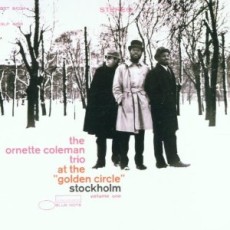
Ornette Coleman was born March 9, 1930 hailing from Fort Worth, Texas where he began performing R&B and bebop on the tenor. He found his way out of Texas taking a job with traveling shows, first Silas Green and then rhythm and blues. After his tenor was destroyed in an attack, Ornette switched to alto that has remained his primary instrument.
From the beginning Coleman was ear was unorthodox, his approach to harmony and chord progression was less rigid than that of bebop musicians who considered him out-of-tune. However there were some who heard the same sound and by the 50s he was making music with Paul Bley, Don Cherry, Billy Higgins, Don Payne, Walter Norris, Shelly Manne and Charlie Haden.
Regarded by some as iconoclastic, others like conductor Leonard Bernstein and composer Virgil Thomson saw his genius and innovation. Ornette became one of the major influences in the free jazz movement and a major player in the genesis of avant-garde jazz. Throughout the sixties and seventies he played with Freddie Hubbard, Eric Dolphy, Scott LaFaro and Ed Blackwell and introduced brief thematic dissonant fanfares, regular but complex pulse and solos where band mates were able to chime in as they wish.
His friendship with Albert Ayler influenced his development of the trumpet and violin. His evolution continued and subsequent quartets included his son Denardo, Sunny Murray, Jimmy Garrison, Elvin Jones, and Dewey Redman. It also forwarded his sojourn into electrified instruments, adopting a jazz-fusion mode fashionable at the time and bringing in such artists as Jerry Garcia of the Grateful Dead. He has brought to his recordings Pat Metheny, Geri Allen, and Joachim Kuhn but seldom appeared as a sideman.
Ornette Coleman is a saxophonist, violinist, trumpeter, and composer whose timbre is easily recognized with his keen, crying sound drawing upon the blues. In 2007 he won a Pulitzer for his album Sound Grammar and honored with a Grammy for lifetime achievement He continued to push the envelope with younger musicians from radically different cultures until his passing on June 11, 2015 in Manhattan, New York.

Daily Dose Of Jazz…
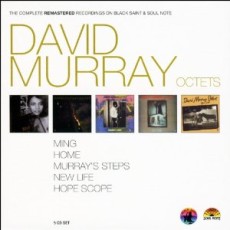
David Murray was born on February 19, 1955 in Oakland, California to musical parents, his mother played piano and his father, guitar. He was introduced to jazz while in the Berkeley school system playing alto in the school band. By thirteen he was in a local group called the Notations of Soul, but it was hearing Sonny Rollins that gave him the inspiration to switch from alto to tenor.
Influenced by Stanly Crouch while attending Pomona College, he moved to New York at 20 during the jazz loft era in lower Manhattan. Joining up with Crouch they opened their own loft space called Studio Infinity and Crouch occasionally played drums in Murray’s trio with Mark Dressler.
Murray’s early work was raw filed with multiphonics, extreme volume and upper register forays. By 1976 he recorded his first album “Flowers For Albert” and along with Julius Hemphill, Oliver Lake and Hamiet Bluiett became a founding member of the World Saxophone Quartet. Around the same time Joseph Papp commissioned David for a big band assemblage that enjoyed a modicum of critical success.
Through the 80’s he continued to play with the WSQ, his octet and various small bands, recording mostly for Italy’s Black Saint label, showcasing his rough and unformed talent as a composer. His recording dates became a flurry for the next two decades, leading more sessions than any other contemporary jazz musician. His playing matured and he began relying on the standard jazz repertoire when playing in small combo configurations. Yet by the time he was 40, his relative predictability was offset by his attention to the craft of playing and his inimitable style while his increased skill as a composer. In addition to winning a Grammy for Best Jazz Instrumental Group Performance for Blues for Coltrane: A Tribute to John Coltrane, over the course of his career he has been awarded a Guggenheim Fellowship, received a Bird Award, the Jazzpar Prize and has been named Musician of the Year by Newsday and Musician of the Decade by the Village Voice.
Murray mainly plays tenor saxophone and bass clarinet influenced in the free jazz genre of Albert Ayler and Archie Shepp. He has played with a host of world-renowned musicians, of which he is a member and continues to perform, record and tour.


Daily Dose Of Jazz…
Jeanne Lee was born on January 29, 1939 in New York City. Attending Bard College for dance, she began singing while still a student, formed a duo with classmate Ran Blake and recorded her first album, The Newest Sound Around. Jeanne was to become one of the foremost exponents of free vocal jazz extending her style to include moods that were sensual, somber, and sensitive while expressing standard lyrics as well as scatting.
During the 60’s and 70’s she recorded her distinctively independent and creative style either as a lead artist or a sidewoman for major performers of the jazz avant-garde, Archie Shepp, Anthony Brown, Rahsaan Roland Kirk, Enrico Rava, Carla Bley, Cecil Taylor and Mal Waldron to name a few, on independent labels in America and Europe. In 1967, she toured and recorded with her husband and vibraphonist Gunter Hampel.
In 1976 she sang in the spiritual tradition in John Cage’s “Apartment House 1776”, composed for the U.S. Bicentennial. By the 80’s Jeanne was concentrating on composing and performing/recording her original works that often included poetic and dance components.
Jeanne Lee combines acrobatic vocal maneuvers with a deeply moving sound and quality that allows her to alternate between soaring, upper register flights and piercing, emotive interpretations. The extremely precise and flexible Jeanne Lee who easily moved from a song or solo’s top end to its middle and bottom accompanying an instrument, passed away due to complications from cancer on October 25, 2000 in Tijuana, Mexico.
More Posts: vocal