

Daily Dose Of Jazz…
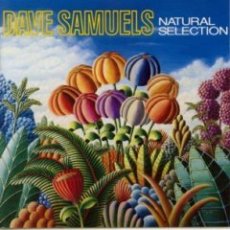
Dave Samuels was born on October 9, 1948 in Illinois. He started his musical career on the drums at age six, attended the New Trier High school in Winnetka, Illinois, known for its superb arts and music programs. He graduated from Boston University with a psychology degree but by this time he was studying mallet instruments.
Samuels next matriculated through Berklee College of Music where he studied under Gary Burton. The vibraphonist first worked with guitarist Pat Metheny and John Scofield while in Boston, then toured with Gerry Mulligan and played with various groups early in his career such as Timepiece, Double Image and Frank Zappa.
In 1979 Dave began recording with Spyro Gyra but it wasn’t until seven years later that he became a member of the group and one of the soloists. His recordings as a leader have been commercial but since leaving Spyro Gyra in the 90s and taking a slot in the Grammy-winning Latin jazz music group Caribbean Jazz Project, one can witness some very impressive output.
Vibraphonist Dave Samuels has worked with Eddie Palmieri in tribute to Cal Tjader, Andy Narrell and Paquito D’Rivera among others. He has taught at his alma mater, Berklee School of Music and continues to perform, record and tour.

Give The Gift Of Knowledge
More Posts: vibraphone
Daily Dose OF Jazz…
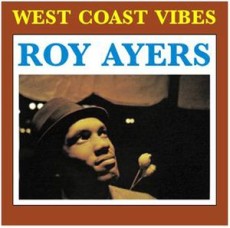
Roy Ayers was born on September 10, 1940 in Los Angeles, California and grew up in the epicenter of southern California Black music scene known as South Park, now called South Central. He received his first set of mallets at age five from Lionel Hampton thus leading him to the vibraphone.
He studied music attending Central Avenue area schools Wadsworth elementary, Nevins Middle and Thomas Jefferson High that also graduated Dexter Gordon. He became part of the West Coast jazz scene in the early ‘60s, played withCurtis Amy as well as Herbie Mann for four years and recorded his first album West Coast Vibes in 1963 and several albums for Atlantic Records as a post-bopper. It was during this period that he became exposed to new styles of music outside bebop.
The 70s saw the advent of jazz funk and Roy was there to help pioneer its rise. With highly successful soundtracks like “Coffy” Ayers went on to record “Mystic Voyage”, “Everybody Loves The Sunshine”, “Running Away” and a string of hits throughout the decade. By 1980 he had teamed with Fela Kuti releasing Afrobeat “Music of Many Colors, went on to produce Sylvia Striplin’s “Give Me Your Love”, and released several albums on the Ichiban label. He collaborated on the Stolen Moments: Red, Hot+ Cool project, turned his attention to house music, founded two record labels – Uno Melodic and Gold Mink, and currently is the feature of the documentary called the Roy Ayers Project.
Roy Ayers, vibraphonist, vocalist, keyboardist, producer, jazz, funk and soul composer has recorded over 50 albums during his long and prolific career and he continues to perform, record and tour.
Give The Gift Of Knowledge
More Posts: keyboard,vibraphone,vocal
Daily Dose Of Jazz…
Wayne Shorter was born August 25, 1933 in Newark, New Jersey and attended Newark Arts High School where his love of music flourished under the encouragement of his father to take up the saxophone. In his youth Shorter had acquired the nickname “Mr. Gone”, which later became an album title for Weather Report.
Graduating in 1952, he matriculated through New York University in 1956, spent two years in the Army, during which he briefly played with Horace Silver and after his discharge, he played with Maynard Ferguson.
In 1959, Shorter became a Messenger joining Art Blakey, stayed five years and became the bands musical director. When Coltrane left Miles Davis’ band he proposed Wayne, as his replacement but his unavailability di not release him from Blakey until 1964. Along with Herbie Hancock, Ron Carter and Tony Williams, the Second Great Quintet was born.
During his tenure with Miles, Wayne would compose “Prince of Darkness”, “E.S.P.”, “Footprints”, “Sanctuary”, “Nefertiti”, and many others; often providing half of the compositions on an album, typically hard bop workouts with long, spaced-out melody lines above the beat. He remained in Davis’s band after the breakup of the quintet in 1968, playing on the early jazz-fusion recordings including “In A Silent Way” and “Bitches Brew”.
Until 1968, he played the tenor saxophone exclusively but the next year he put down the tenor after his final Davis recording of Filles de Kilimanjaro and began playing the soprano, which he used on his own Super Nova release with Chick Corea and John McLaughlin. By the early 1970s, however, he chiefly played soprano.
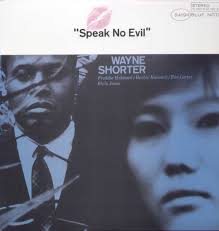
Shorter recorded eleven albums for Blue Note Records featuring almost exclusively his own compositions, with a variety of line-ups, quartets and larger groups. He would enlist the talents of Freddie Hubbard, Lee Morgan, McCoy Tyner, Reggie Workman and Elvin Jones.
Juju, Speak No Evil and Adam’s Apple The All Seeing Eye and Schizophrenia played in the spaces between free-jazz and carefully constructed melodies. Hey incorporated old friends like Hancock, Carter, Curtis Fuller and Joe Chambers. He recorded occasionally in the sideman slot with Donald Byrd, McCoy tyner, Grachan Moncur III, Hubbard, Morgan, Hancock and Williams.
In 1970, Shorter formed the fusion group Weather Report with Joe Zawinul and Miroslav Vitous, Airto Moreira and Alphonse Mouzon. They lasted until 1985. One of the most notable alumni included revolutionary bassist Jaco Pastorious and the band produced funk, bebop, Latin jazz, ethnic music and futuristic recordings.
He would record with Milton Nascimento, Carlos Santana, V.S.O.P Quintet, Joni Mitchell, Steely Dan’s Aja, Terri Lynne Carrington, Marilyn Mazur, Jim Beard, Don Henley, Wallace Roney, and can be heard on the Harrison Ford film soundtrack of The Fugitive. By the mid 90s Wayne released his Verve Records debut High Life and received a Grammy for Best Contemporary Jazz Album in 1997.
Into the millennium Shorter has continued to receive wide acclaim working with Hancock once again in 1997, on the much acclaimed and heralded album 1+1. The song “Aung San Suu Kyithem won them both a Grammy Award. He continues to work in a number of group configurations and winning Grammys for his Beyond The Sound Barrier & Alegria – Best Instrumental Jazz Album amongst his 10 Grammy Awards, and has been a Down Beat reigning critics’ poll winner for ten consecutive years and the readers’ for 18. The soprano saxophonist has amassed an impressive discography and continues to compose, reinvent his music, perform and tour.
Dose A Day – Blues Away
More Posts: saxophone
Daily Dose Of Jazz…
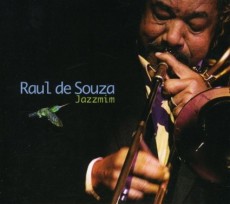
Raul de Souza was born August 23, 1934, in Rio de Janeiro, Brazil. Learning to play to trombone in his youth he went on to perform and record with Sergio Mendes, Flora Purim, Airto Moreira, Milton Nascimento, Sonny Rollins, Cal Tjader, Hermeto Pascoal and the jazz-fusion band Caldera.
Raul’s debut album as a leader came in 1965 with A Vontade Mesmo for RCA Brazil followed up three years later with International Hot on the Equipe label. His American debut release Sweet Lucy, produced by composer and pianist George Duke on the Capitol Records label, also produced his sophomore project, Don’t Ask My Neighbors. Colors, a Milestone recording is now a part of the Original Jazz Classics series from Fantasy Records.
By 1979, de Souza was releasing ‘Til Tomorrow Comes, an Arthur Wright production with many of the top soul session players in Los Angeles. Devoid of any jazz, it was an attempt to jump aboard the disco/funk bandwagon. Since then he has added eight more recordings as a leader to his catalogue and produced a DVD, O Universo Musical de Raul de Souza in 2012.
Trombonist Raul de Souza has appeared at many international jazz festivals and after living and working in the United States for many years, he has returned to live in Brazil where he continues to play and compose.
Give A Gift Of Jazz – Share
More Posts: trombone
Daily Dose Of Jazz…
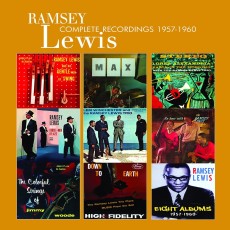
Ramsey Emmanuel Lewis, Jr. was born on May 27, 1935 in Chicago, Illinois and began taking piano lessons at the age of four. By 15 he joined his first jazz band, The Cleffs. The seven-piece group provided Lewis his first involvement with jazz and he would later join Cleffs drummer Isaac “Redd” Holt and bassist Eldee Young to form the Ramsey Lewis Trio.
The trio started as primarily a jazz unit and released their first album, Ramsey Lewis And The Gentlemen of Swing, in 1956. Following their 1965 single hit “The In Crowd” that reached #5 on the pop charts and the album #2 they concentrated more on pop material. Young and Holt left in 1966 to form Young-Holt Unlimited and were replaced by Cleveland Eaton and Maurice White.
By 1966, Lewis was one of the nation’s most successful jazz pianists, topping the charts in addition to “The In Crowd” with Hang On Sloopy” and “Wade In The Water”. All three singles each sold over one million copies and were awarded gold discs. Many of his recordings attracted a large non-jazz audience and in the 1970s, he often played electric piano, although by later in the decade he was sticking to acoustic and using an additional keyboardist in his groups.
In addition to recording and performing, Lewis hosted a syndicated morning show on Chicago “smooth jazz” radio station WNUA. His weekly syndicated Legends of Jazz, featured recordings from artists such as David Sanborn, George Duke, Herbie Hancock, Charlie Parker, Dizzy Gillespie, Kurt Elling, Al Jarreau and Miles Davis.
Ramsey has appeared on the Red Hot Organization’s compilation album, Stolen Moments: Red Hot + Cool, his Ramsey Lewis Morning Show became part of Broadcast Architecture’s Smooth Jazz Network, his Legends of Jazz became a television series, he is the artistic director of Jazz at Ravinia, serves on the Board of Trustees for the Merit School of Music and The Chicago High School for the Arts. His Ramsey Lewis Foundation helps connect at-risk children to the world of music. He continues to perform, record and tour.
Inspire A Young Mind
More Posts: piano