

Daily Dose Of Jazz…
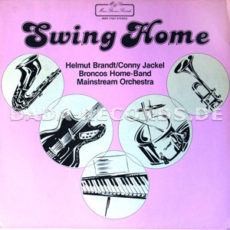
Conny Jackel was born Horst Konrad Jackel on August 30, 1931 in Offenbach am Main, Germany. He first worked as a steel fitter, then in 1951 he played at the conservatory and in the clubs of the US Army in France, the Netherlands and Germany in 1952. In 1955 he became a member of Helmut Brandt Combo, contributing to their success.
By 1959 Jackel had joined the Harald Banter Band in Cologne playing demanding arrangements for two years. In 1961 he joined the orchestra of Erwin Lehn in Stuttgart, where he also worked with Miles Davis, Chet Baker, Dizzy Gillespie and Frank Sinatra on stage.
From 1964 to 1969 he was a member of the Albert Mangelsdorff led Jazz Ensemble of Hessischer Rundfunk . From 1967 Conny played first trumpet in the Dance Orchestra of Hessischer Rundfunk under Willy Berking and the HR Big Band headed by Heinz Schönberger . In addition, he performed with Joki Friendand, Rudi Sehring, Attila Zoller and Charly Antolini. He recorded with Gustl Mayers Swing All Stars and the trio of Manfred Kullmann . Then he was a member of the jazz band Hanauer Sugarfoot Stompers and played with other traditional bands of the region such as the Phoenix Jazz Band.
In 1999 a bout with cancer caused Jackel to have his lower jaw removed forcing him to give up playing trumpet. Occasionally he would play drums as also in the Book Readers active as a drummer. For his contributions to jazz, he was inducted into the Knights of Ronneburg on September 9, 2006.
Trumpeter and flugelhornist Conny Jackel passed away after a long illness and the consequences of an operation on April 28, 2008 in Bad Nauheim, Germany.

Take A Dose On The Road

More Posts: drums,flugelhorn,trumpet
Daily Dose Of Jazz…
Bennie Maupin was born August 29, 1940 in Detroit, Michigan. He started playing tenor saxophone in high school and attended the Detroit Institute for Musical Arts, while playing locally. He moved to New York in 1963, freelancing with many groups, including ones led by Marion Brown and Pharoah Sanders.
Well known for his playing as a part of Herbie Hancock’s Mwandishi sextet and Headhunters band and for performing on Miles Davis’s seminal fusion record, Bitches Brew. Maupin has collaborated with Horace Silver, Roy Haynes, Woody Shaw, Lee Morgan and many others. He has also performed on several Meat Beat Manifesto albums.
Noted for having a harmonically-advanced, “out” improvisation style, while having a different sense of melodic direction than other “out” jazz musicians such as Eric Dolphy.
Maupin was also a member of Almanac, a group with bassist Cecil McBee, pianist Mike Nock and drummer Eddie Marshall. He has recorded a half dozen albums as a leader and another three dozen as a sideman with John Beasley, Marion Brown, Mike Clark, Miles Davis, Jack DeJohnette, Eddie Henderson, Andrew Hill, Darek Oles, Lonnie Smith, McCoy Tyner, Lenny White, Patrick Gleeson and Jim Lang.
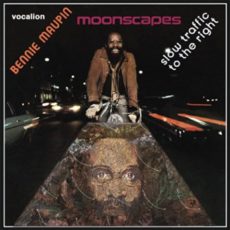
Multireedist Bennie Maupin, who plays various saxophones, flute and bass clarinet, failed to catch on as a bandleader, thus maintained a low profile during the past 15 years, until emerging in 2006 with the critically acclaimed Penumbra followed two years later Early Reflections on the Cryptogramophone label, then on Vocalion with Slow Traffic To The Left, Moonscapes. He continues to perform and tour.
Sponsored By

Daily Dose Of Jazz…
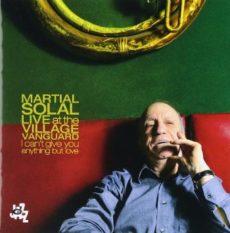
Martial Solal was born on August 23, 1927 in Algiers, French Algeria to an opera singer and piano teacher. He began learning the piano from the age of six. After settling in Paris in 1950, he soon began working with leading musicians including Django Reinhardt and expatriates from the United States like Sidney Bechet and Don Byas. He formed a quartet and also occasionally leading a big band in the late that same year.
Martial began his recording career as a leader in 1953 and began composing film music, eventually providing over twenty scores. By 1963 he appeared at the Newport Jazz Festival in Rhode Island but his Newport ’63 is a studio album recreating the live date. His regular trio featured bassist Guy Pedersen and drummer Daniel Humair and from 1968 he regularly performed and recorded with Lee Konitz in the U. S. and Europe.
Throughout his career Solal has performed solo and during 1993-94 he gave thirty solo concerts for French Radio, releasing a 2-CD set Improvise Pour Musique France on the JMS Records label. Solal has also written a piano method book titled Jazz Works.
In addition, pianist Martial has recorded three-dozen albums and worked with Dave Holland, Jack DeJohnette Francois Moutin, Dave Douglas, Gary Peacock, Peter Erskine, Paul Motian, Marc Johnson, Toots Thielemans, John Scofield, Hampton Hawes, Daniel Humair, Niels Pederson, Joachim Kuhn, Hans Koller and Attila Zoller, among others.
In recent years, Martial Solal, who believes music is a language and each performance is a conversation between the participants, has continued to perform and record with his trio.
Sponsored By

Voices From The Community

More Posts: piano
Daily Dose Of Jazz…
Bruz Freeman was born Eldridge Freeman on August 11, 1921 in Chicago, Illinois. Also known as “Buzz” Freeman with his brothers, guitarist George Freeman and tenor saxophonist Von Freeman, he played for several years in the house band at the Pershing Hotel.
In 1950, he was a member of John Young’s trio with bassist LeRoy Jackson and recorded with Young’s orchestra backing vocalist Lurlean Hunter.
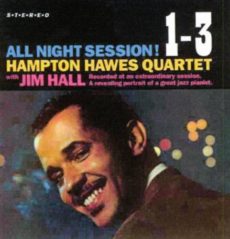
By the mid-1950s, Bruz became a member of the Hampton Hawes Quartet, with Red Mitchell and Jim Hall, and with line-ups led by Herb Geller. In 1950, with his brothers George and Von, LeRoy Jackson, and Chris Anderson, he played with Charlie Parker shortly before his death. This jam session was recorded at Bird’s apartment and was later released in 1960 by Savoy Records.
He went on to record with Clora Bryant in the late Fifties and John Carter, Bobby Bradford, Bob Thiele in the Sixties. Fro 1977-1978 he joined a short-lived band based in California led by Kenny Mann and with Britt Woodman on trombone. Drummer Bruz Freeman never recorded as a leader and passed away on November 21, 2005 at age 84 in Boulder City, Nevada.
Sponsored By
Voices From The Community

More Posts: drums
Daily Dose Of Jazz…
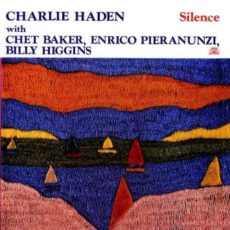
Charles Edward Haden was born on August 6, 1937 in Shenandoah, Iowa into a musical family who performed on the Haden Family radio show. He made his professional debut as a singer on the radio show when he was just two years old. He continued singing with his family until he was 15 but a bulbar form of polio affecting his throat and facial muscles sidelined him but a year earlier he had become interested in jazz after hearing Charlie Parker and Stan Kenton in concert.
Recovering from his bout with polio, Charlie began concentrating on the bass and soon set his sights on moving to Los Angeles, California to pursue his dream of becoming a jazz musician and in 1957 he realized his dream turning down a full scholarship at Oberlin College, which had no established jazz program at the time and attended Westlake College of Music.] His first recordings were made that year with Paul Bley, with whom he worked until 1959. He also played with Art Pepper for four weeks in 1957, and from 1958 to 1959, with Hampton Hawes whom he met through his friendship with bassist Red Mitchell and for a time shared an apartment with the bassist Scott LaFaro.
In May 1959, he recorded his first album with the Ornette Coleman Quartet, the seminal The Shape of Jazz to Come. Later that year, the Ornette Coleman Quartet moved to New York City, secured a six-week residency at the Five Spot Café that would represent the beginnings of free or avant-garde jazz.
By 1960, Haden’s narcotics addiction forced him to leave Coleman’s band, go into rehabilitation in 1963 in California, met his first wife and moved to the Upper West Side of New York City. He resumed his career in 1964, working with John Handy, Denny Zeitlin’s trio, performed with Archie Shepp in California and Europe and freelanced with Henry “Red” Allen, Pee Wee Russell, Attila Zoller, Bobby Timmons, Tony Scott, the Thad Jones/Mel Lewis Orchestra, Roswell Rudd, and returned to Ornette Coleman’s group in 1967.
Charlie went on to work with Keith Jarrett’s trio and his American Quartet, organized the collective Old and New Dreams, which consisted of Don Cherry, Dewey Redman, and Ed Blackwell from Coleman’s band. He founded his first band, the Liberation Music Orchestra at the height of the Vietnam War, working with arranger Carla Bley, exploring free jazz and political music. The original lineup consisted of Haden and Bley and Gato Barbieri, Dewey Redman, Paul Motian, Don Cherry, Andrew Cyrille, Mike Mantler, Roswell Rudd, Bob Northern, Howard Johnson and Sam Brown.
Over the course of his half-century career he established the Jazz Studies Program at California Institute of the Arts in Valencia, been honored as Jazz Educator of the Year and as a leader has won several Grammy Awards, recorded forty-six albums as well as 134 albums as a sideman with Geri Allen, Ray Anderson, Ginger Baker, Bill Frisell, Kenny Barron, Beck, Paul Bley, Jane Ira Bloom, Michael Brecker, Henry Butler, Alice Coltrane, John Coltrane, Robert Downey Jr., Dizzy Gillespie, Jim Hall, Tom Harrell, Joe Henderson, Fred Hersch, Laurence Hobgood, Rickie Lee Jones, Lee Konitz, Brad Mehldau, David Liebman, Abbey Lincoln, Helen Merrill, Pat Metheny, Bheki Mseleku, Yoko Ono, Joe Pass, Enrico Pieranunzi, Joshua Redman, Gonzalo Rubalcaba, John Scofield, Wadada Leo Smith, Ringo Starr and Masahiko Togashi.
Double bassist, bandleader, composer, educator and NEA Jazz Master Charlie Haden, who revolutionized the harmonic concept of bass playing in jazz passed away in Los Angeles, California on July 11, 2014, at the age of 76 after suffering from effects of post-polio syndrome and complications from liver disease.
Take A Dose On The Road
More Posts: bass